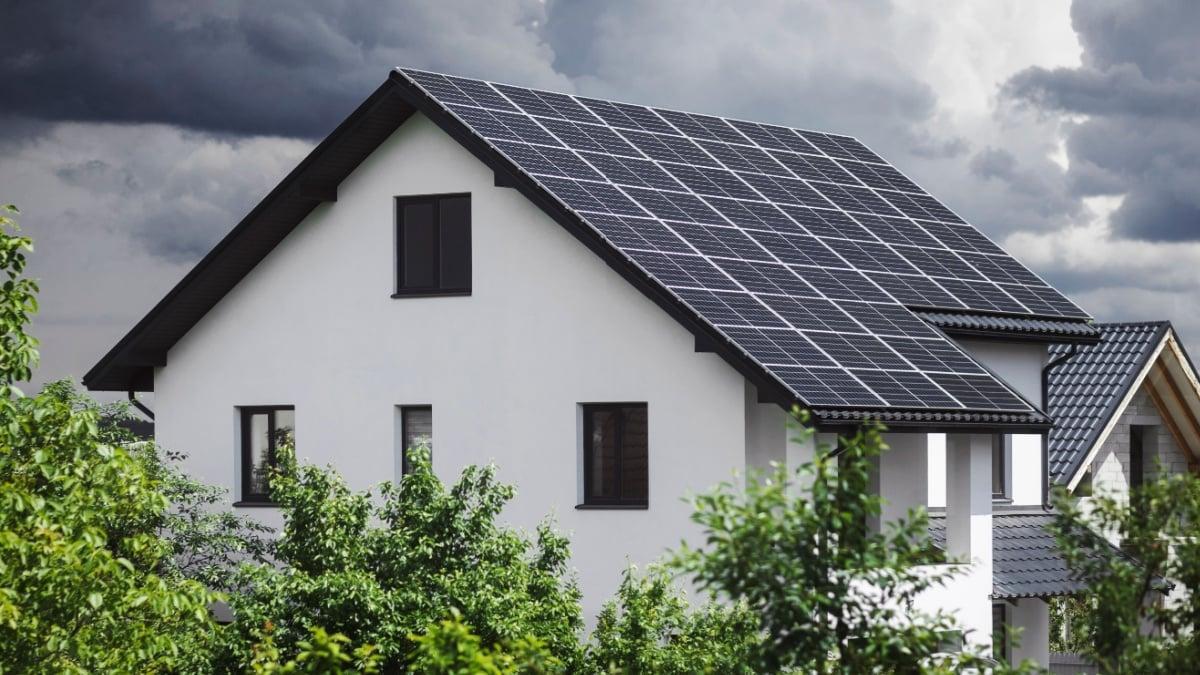
Africa-Press – South-Africa. A confluence of factors could drive up the price of solar panels significantly over the coming months, making them more expensive for South African households and independent power producers (IPPs).
One of these factors, namely the Middle East war, could also present a risk to South Africa’s R440 billion transmission grid expansion plans and other reforms in the local electricity sector.
This is a warning from Allan Gray ESG analyst Raine Adams, who spoke about the potential impact of the war on South Africa’s electricity sector in a recent podcast.
Adams explained that the Middle East conflict could impact the reforms currently underway in South Africa’s electricity sector.
The local electricity market is currently undergoing several changes as South Africa seeks to open the sector to more competitors and diversify its energy mix.
To this end, the National Energy Regulator of South Africa has granted electricity trading licences to around 15 entities, which will serve as energy aggregators and traders in the coming years.
At the same time, South Africa has seen a surge in rooftop solar PV adoption by households and companies, as these consumers have sought to reduce their dependence on Eskom and its coal-fired power plants.
To support the introduction of more energy producers and the increase of renewable energy generation in South Africa, the government is also planning an ambitious expansion of the national energy grid.
At an estimated cost of R440 billion, the government, through the Independent Transmission Projects programme, plans to install 14,000 km of new power lines.
This should help support the estimated 34 GW of wind generation capacity and the 25 GW of solar power set to come online over the next 14 years.
However, Adams warned that supply chain dysfunction stemming from the US/Israel-Iran war and a recent change in China’s tariff structure present significant risks to all of these reforms.
Source: The Outlier
Wars and rebates
Adams explained that a similar risk emerged in the past in Bid Window 5 of South Africa’s Renewable Energy IPP Procurement Programme (REIPPPP).
The approved projects for this programme had submitted their bids at highly competitive prices during an auction.
However, due to post-Covid-19 supply disruptions and the knock-on effects of the Russia-Ukraine war, many of these prices ended up being unrealistic.
“There wasn’t much fat in the system, so when we had these disruptions, a lot of those projects ended up underwater and were not able to proceed on the tariffs that they had bid,” Adams explained.
She said it is a possibility that similar risks will emerge if the Iran war continues for much longer or escalates.
Adams said she is particularly concerned about the conflict’s impact on aluminium prices and supply, as the industrial metal is an important component in both wind and solar projects.
Aluminium is also an important transmission component, presenting a real risk to South Africa’s grid expansion plans.
“I think that a huge part of our reform – it’s not a structural reform, but it is a reform underpinning a change in energy mix over time – and I think we have to think around that,” she said.
“But it’s also just disruption in terms of implications for shipping costs and lead times, because a lot of what we need for these renewable projects is imported.”
“So, I think it is a very real concern if this continues and escalates.”
To make matters worse, Adams said this risk has emerged around the same time as China decided to abolish its 9% value-added tax export rebate for solar PV products.
Starting 1 April 2026, this rebate is no longer available to customers who import solar products like modules and cells from China.
“Considering that panels account for about half of solar project costs, it is also another cost that is coming into the system,” Adams said.
She explained that there has been a glut of solar panel supply from China, and developers worldwide have been benefiting from this rebate, as the Asian country manufactures around 80% of the world’s panels.
“I think this could be a tougher period we’re going into for numerous reasons, and so just something to think about that’s been less on the radar,” she said.
For More News And Analysis About South-Africa Follow Africa-Press