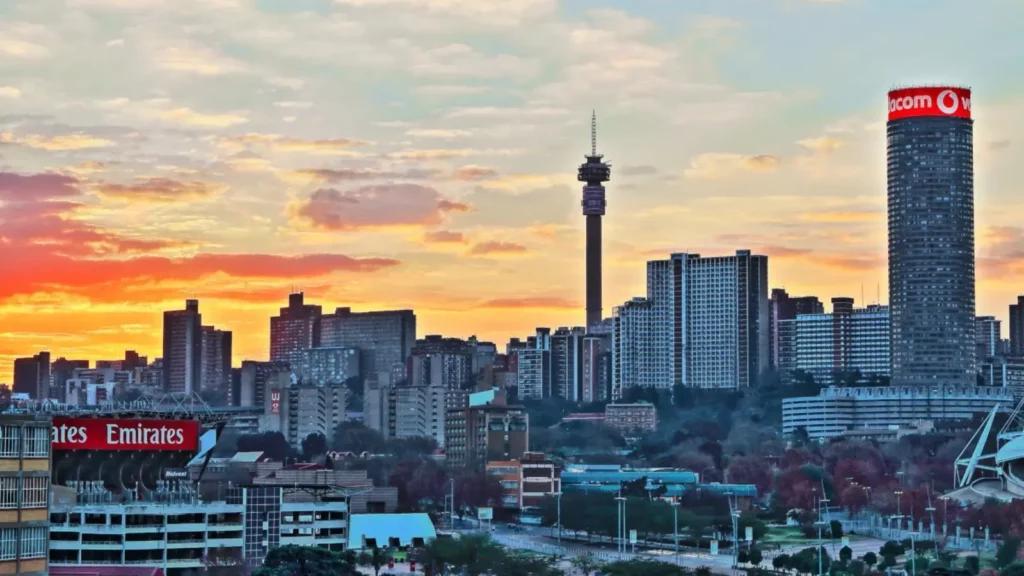
Africa-Press – South-Africa. Global ratings agency Moody’s has placed the City of Johannesburg’s credit ratings under review for a potential downgrade, the latest sign pointing to financial distress in South Africa’s richest city.
This follows the suspension of trading of the city’s bonds on the JSE in late March, as a result of delays in the finalisation of the city’s audited financial statements.
In a statement released on 17 April 2026, the New York-based ratings agency said the suspension does not necessarily mean Johannesburg has defaulted on its debt repayments.
However, they said the delay in publishing the city’s financial statements reflected a severe degradation of its governance and transparency.
Officials from the City of Johannesburg said the delay was due to an unresolved dispute with the Auditor-General of South Africa (AGSA), and that it expects to release its audited statements by 31 May 2026.
“Failure to submit the audited financial statements by May 2026, which could trigger the delisting of Johannesburg’s debt instruments from the JSE, could lead to a downgrade,” Moody’s said.
“In addition, a qualified audit opinion on the city’s fiscal 2024/25 financial statements would likely add downward pressure on the ratings, as it would signal a deterioration in governance and financial reporting.”
The city’s current Baseline Credit Assessment (BCA) level is Ba3, which is already below investment grade, and is now at risk of a further downgrade.
Moody’s identified other areas of concern for the credit rating, including Johannesburg’s ongoing water management crisis, high unemployment, and ageing infrastructure.
South African ratings agency GCR, which Moody’s acquired 100% ownership of in July 2024, also downgraded Johannesburg’s credit rating outlook to “negative” on 9 April 2026.
“During the review period, we will assess the subsequent actions of Johannesburg and the JSE to address the delinquent financial statements,” Moody’s said.
“We will review Johannesburg’s ease of access to financing and capacity to meet upcoming financial obligations, as well as governance capacity with respect to timeliness and transparency of financial information.”
The city responds
City of Johannesburg Chief Operations Officer Tshepo Makola
City of Johannesburg Chief Operations Officer Tshepo Makola appeared on 702 to explain the delay regarding the city’s financial statements.
Makola reiterated the city’s stance that the delay was due to unresolved technical issues raised by the AGSA, and that they did not reflect a city in financial distress.
While the city had completed and submitted the results to the AGSA by the submission deadline of 31 August 2025, issues around the city’s cooperation reportedly delayed the audit process.
Makola said the city had finally concluded the auditing process last month and was now preparing its statements for submission to the JSE.
With the deadline for the statement submission set for the end of May, the city hopes that a timely submission will see its suspension on the JSE lifted.
“Moody’s will then react to that,” Makola said. “It’s a normal course of business where, after the Auditor-General issues an opinion, ratings agencies will review and see if our ratings are still in line.”
“If there is a change in the audit opinion, they will obviously have to look at that. So, that dispute has been resolved.”
Asked what the dispute with the AGSA was about, Makola said there were multiple issues raised during the audit process.
These included disagreements on the impairment of certain assets, such as the building where the Department of Public Safety is headquartered, as well as around certain contract payments.
Makola said that even before the audit process began, tensions between the city and the Auditor-General were already high.
“Right before the audit started, the Auditor-General was speaking at Parliament and said the city does not have the financial capacity or skill,” Makola said.
“Already from there, you could have seen that the audit was going to be difficult. But we finally did reach an agreement on some areas.”
For More News And Analysis About South-Africa Follow Africa-Press