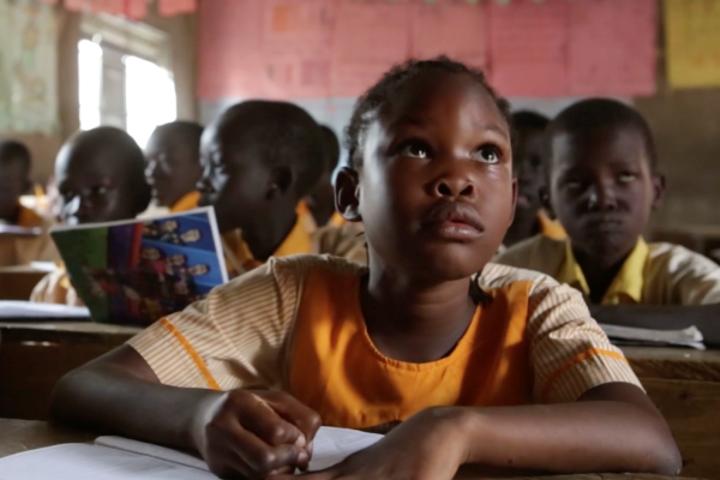
Africa-Press – South-Sudan. On Monday, President Salva Kiir issued a decree ordering the rollout of free and compulsory education at the primary and secondary levels.
The pronouncement came barely days before schools reopen for the new academic year, on February 6, 2023. The new term will make a reversal to the old academic calendar that runs from February–December.
The change of calendar was occasioned by the outbreak of COVID-19 in 20219.
In his decree read out on the national public service broadcaster, SSBC, Kiir directed the ministry of general education and gave instructions to come up with policies that would promote and attract free and compulsory primary and secondary education.
“All levels of government should ensure that free education policy is adhered to as provided by the law, including free registration of pupils and students,” ordered the decree.
President Kiir’s directive resurrected the pre-independence call for free and compulsory primary and secondary education, which has been ineffectively implemented despite remaining on paper as a policy.
According to media reports, free primary school education worked miracles at the time, with enrollment increasing from just over 100,000 in 2006 to over 200,000 in 2009.
However, school dropout rates have risen since the conflict began in 2013, with many government schools among those losing students due to truancy and pregnancy, among other issues.
While this move could mean a return to school for millions of children driven out of the classroom by financial constraints, education experts said the legacy of persistent underinvestment in education may not permit the full realization of the policy.
The hard part of it
Helicopter Mark Bulbul, an education expert at the University of Juba [UoJ], said the government will need to address the problem of low allocation if it intends to make state schools free for learning.
According to a report by the UN agency for children, UNICEF, South Sudan has one of the lowest budget allocations to the education sector in the East African Region. However, in the 2022/2023 SSP1.3 trillion budget, education received an allocation of SSP107 billion which was a significant boost when compared to past budgets. But this still cannot meet all the requirements.
One of the legacies of this underfunding, is the whopping 2.2 million children out of school, according to UNICEF.
He said professional teachers have over the years abandoned teaching to look for other well-paid jobs elsewhere, leaving especially state-owned schools in shortage.
“Free education policy is a good move from the government as free primary and secondary education is a human right for children and anybody who wants to learn,” Bulbul said, adding that mass enrollment of children in schools will lead to a reduction of crimes as most children and teens will be in class.
He said it will also extend learning opportunities to children from disadvantaged families who are not able to school their children due to inadequacy of their income.
“It makes disadvantaged groups send their children to school since it is going to be free,” the expert said.
Bulbul believes that increasing teacher salaries and covering operational costs will be a better way to implement free education.
“Whether it is going to work will depend on the commitment of the government to implement it because there is no way you can say that education is completely free while you have never set up a learning environment where teachers are adequately motivated and there is no fund for running the school,” he argued.
“If these are not provided, the school administrations will demand the same children so that they are able to run the schools, and this will again be a burden on parents,” he said.
“So, the government needs to put a lot of things in place for this policy to work and achieve its objective. The government must provide motivation for the teachers. “If the government can raise the salaries of the teachers; it will make it easier to implement,” he added.
“I think the current fiscal year budget has not reflected this commitment of the government to provide free and compulsory primary and secondary education. So, there is a need for the government to make a huge commitment in budget allocation.”
The presidential decree stipulated that the policy be implemented with immediate effect, but the Ministry of General Education and Instructions has yet to outline how it will implement the policy.
Source: The City Review South Sudan
For More News And Analysis About South-Sudan Follow Africa-Press