Africa-Press – South-Sudan. The debate over whether to dredge the White Nile and Naam rivers, which was put on hold last year after proving to be a potential hot potato, may resurface.
Yesterday, President Salva Kiir led the vice presidents in discussing the prospects of “cleaning” the White Nile and Nam rivers months after their suspension, which divided opinions, with environmentalists expressing fears that the exercise could impact the ecosystem of the Sudd wetlands.
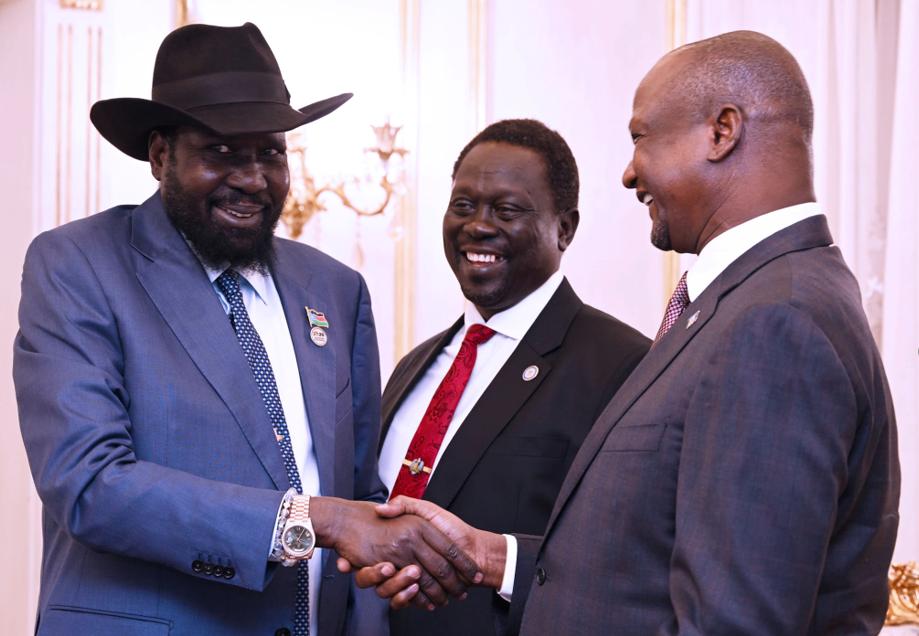
The head of state met First Vice President Dr Riek Machar, Vice President Taban Deng, Vice President Hussein Abdelbagi, and Vice President Nyandeng de Mabior in their first meeting of the presidency since the beginning of 2023.
“The Presidency also discussed cleaning the White Nile River, starting from Bentiu to Lake No and Bentiu to the Nam River in Bahr el Ghazal,” read the statement shared on the Facebook page operated by the Office of the President.
In addition to this, part of the agenda of the meeting bringing together the principals was the cleaning of the section of the White Nile from Bentiu town in Unity State to the country’s largest Lake No in Ruweng Administrative Area.
The statement did not indicate whether the presidency had agreed to allow the cleaning of the rivers, which President Kiir suspended last year amid public pressure.
Other top officials who attended yesterday’s meeting were Tut Gatluak Manime, the Presidential Advisor on National Security Affairs, Dr Benjamin Bol Mel, the newly appointed Presidential Envoy for Special Programs; and Barnaba Marial Benjamin, the Minister in the Office of the President.
Experts such as the Vice Chancellor of the University of Juba (UoJ), Prof. John Akec, argued that the dredging would drain water that goes into the Sudd system and endanger its existence. It is Africa’s largest wetland and home to thousands of rare species of fauna and flora.
The wetland, which is a UNESCO registered world heritage site, covers an estimated area of approximately 57,000 km2 and runs from Central Equatoria State through Jonglei, Unity, and Upper Nile states, among other areas.
Those in support the dredging the rivers said it will ease transportation along the water bodies and reduce flooding as well.
“In the last few weeks, the country has been engaged in an emotive debate over the issue of dredging the Bahr-el-Ghazel basin, especially the Naam River. In this debate, the contending sides have put forward legitimate arguments both for and against dredging,” President Kiir noted in a state of the nation address last year.
He added, “For example, those who support dredging see it as a permanent solution to floods in low areas. Others in some groups see it as a means of opening our waterways for river transport that will ease transportation bottlenecks in the country.”
In October last year, government spokesperson Michael Makuei announced that the cabinet had approved the exercise, this time with the initial term ‘dredging of the rivers’ changed to ‘cleaning and clearing’.
The other concern of those opposing the dredging, was an alleged secret agreement the government made with Egypt to allow it carry out the exercise along the rivers.
Egypt which depends on the waters of the Nile for most of its industrial, agricultural, and domestic uses, has a vested interest in the management of the Nile waters.
Yesterday’s high level discussion on the cleaning of the rivers also came after the visit of the Egyptian Minister of Water Resource and Irrigation, Hani Swelim last month.
Hani Swelim during his stay in Juba, met several top government officials, including Pal Mai Deng, the South Sudan Minister of Water Resources and Irrigation. Even though the office of the president stated that Egypt was working on irrigation projects among others in the country, the dredging issue never surfaced, and most of the discussions were kept under wraps.
Source: The City Review South Sudan
For More News And Analysis About South-Sudan Follow Africa-Press