Keji Janefer
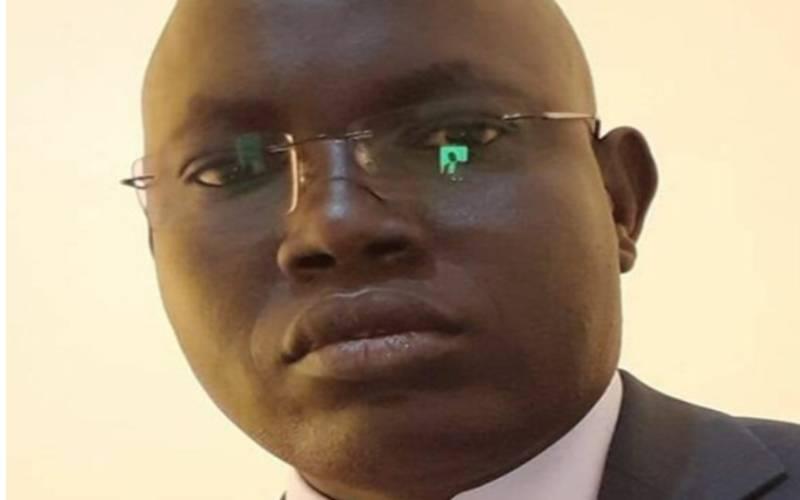
Africa-Press – South-Sudan. There is no information about the whereabouts of a South Sudanese activist who was supposedly detained in Nairobi, Kenya.
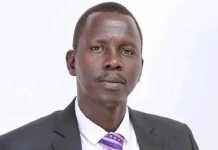
The family claimed Morris Mabior alleged arrested by Kenyan security forces with the aid of a South Sudanese man in civilian clothes.
Though little is known about his whereabouts, some of his family members claim that Mabior had been deported back into the country and could be in detention in Juba.
On Saturday, Amnesty International issued a statement raising concern about Mabior detention.
Amnesty International is now the government to ensure that the activist is given access to a legal representative and a doctor.
“Amnesty International has documented numerous arbitrary detentions by the National Security Service (NSS) in multiple facilities where detainees are often subjected to torture and other ill-treatment—some held incommunicado without access to a lawyer, family members,” it alleged.
The group said the use of surveillance on communications and physical surveillance through a cross-border network of informants and agents, monitoring media and social media, is a breach of rights to privacy.
“The NSS has used these forms of surveillance illegally, in breach of the right to privacy, to arbitrarily arrest and illegally detain individuals and infringe on press freedoms, the freedom of opinion and expression, and the freedom of assembly,” the rights body further alleged.
On Friday, a Juba-based activist called Morris Mabior Awikjok’s arrest a threat and unlawful, as he asked Kenyan authorities to provide accurate information about the safety and protection of the activist, noting that the act was contrary to the basic principles of the Eats Africa community.
Edmund Yakani, Executive Director of Community Empowerment for Progress Organization, said Kenya had become an unsafe place for South Sudanese human rights defenders in need of protection and security in the region and recommended those in need to steer clear of Kenya.
He called on the Kenyan authorities to explain why they were collaborating with actors to take the lives of human rights defenders from South Sudan.
“This act of threatening South Sudanese activists in Kenya is making things worse and clearly demonstrating that Kenya is an unfit location for the protection of human rights defenders at risk from South Sudan.”
“This practice totally undermines the stand of Kenya as a government in the region that respects human rights and protects human rights defenders at risk from situations of armed conflict.” For the third time Kenya authorities compromising with life of human rights defenders from South Sudan at risk” said Yakani on Friday.
Awikjok was allegedly kidnapped by members of the Anti-Terror Police Unit (ATPU) headquartered in the Nairobi area, according to two police officers stationed at the Hurligham East police post who told Citizen TV Kenya, just meters from his home. However, the ATPU has since denied arresting him.
The City Review contacted the South Sudanese ambassador to Kenya, Chol Ajongo, to ascertain whether the embassy had received formal complaints over the matter. However, the diplomat failed to answer this reporter.
The director of public relations for the South Sudan National Security internal bureau—the institution accused of detaining the activist—promised to comment on the situation today after studying Amnesty International’s allegation when contacted by The City Review yesterday.
Awikjok’s alleged abduction comes after similar cases where some other South Sudanese activists were reported to have been forcibly airlifted to South Sudan for unknown reasons. They include Dong Samuel Luak, Aggrey Ezbon Idri, James Gadet, and Marko Lokidor Lochapio.
James Gadet, a spokesman for the SPLM/A-IO, and Marko Lokidor Lochapio, a governor, were both forcibly deported from Kenya to South Sudan between November 2016 and December 2017. They were all freed in October 2018, following the signing of the revitalized peace accord in September 2018.
‘We are clean’
Last April, NSS Spokesperson John Kumuri disputed human rights violation accusations leveled against the force, arguing that it had been streamlined in accordance with the NSS Act 2014.
Kumuri said the NSS was conforming to the human rights protection principles envisaged under the Revitalised Agreement on the Resolution of the Conflict in South Sudan (R-ARCSS).
He noted, “Equally, any individual based on the National Constitution is entitled to freedom of speech and fundamental freedoms as enshrined under Part Two (02) of the Bill of Rights, which states that the “Rights and Freedoms of individuals and groups shall be respected, upheld, and promoted by all the organs and agencies of the government and by all persons.”
This was after Human Rights Watch accused the service of arresting protesters who were demonstrating against the high cost of living in Juba.
Source: The City Review South Sudan
For More News And Analysis About South-Sudan Follow Africa-Press