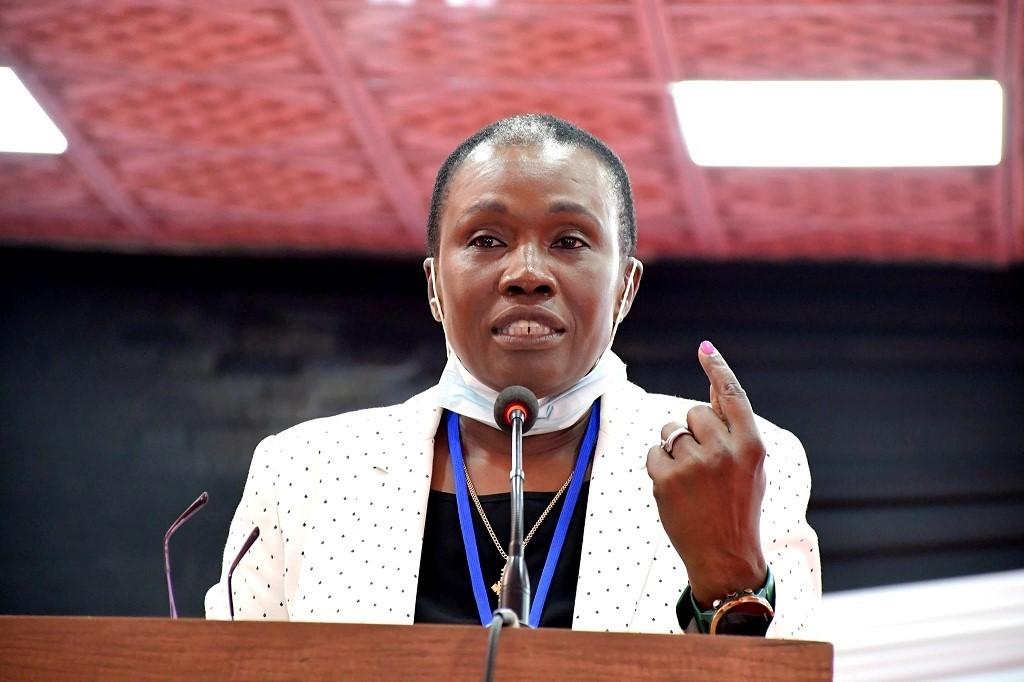
Africa-Press – South-Sudan. The Minister of Defense and Veteran Affairs, Angelina Teny, urged the government to work closely with international partners to ensure that families of displaced persons resettle and women regain their livelihoods.
“We can achieve this through political and diplomatic engagement—political engagement internally, diplomatic engagement with our international partners—and we really must make them see that we need them more than ever,” said Teny, while addressing the International Conference on Women’s Transformational Leadership on Tuesday in Juba yesterday.
“We understand that there are many competing priorities and needs; there is Ukraine, and now you add Syria and Turkey, but you must keep focusing on South Sudan or all of your gains will be for naught,” she stressed.
“We still need that support; we need you to work with us, we need you to hold our hands until we achieve stability in our country,” she appealed.
The women’s conference was conducted under the theme “Guwa TaMara,” meaning “the strength of a woman.”
On the table for discussion were an array of issues such as women’s leadership and governance, climate change, economic challenges, access to education, and gender-based violence.
The Deputy Special Representative of the Secretary-General and Resident and Humanitarian Coordinator in South Sudan, Sara Beysolow Nyanti, said South Sudanese women’s resilience and determination are inspiring and need to be met with support. This, she said, could be done through increased political participation.
“A top priority is to increase women’s representation in political and security institutions to meet and exceed the 35 per cent target set in the 2018 peace agreement,” she said.
She also told the audience that South Sudan would not progress from conflict to peace and development unless women participated entirely and equally.
On Monday, President Salva Kiir said as the 2018 peace agreement enters its final phase, the government would work hard to address challenges facing women by empowering them through skills and removing various obstacles to their success.
Given the challenges of insecurity and lack of power that women face, the government has already increased the percentage of women’s representation from 25 per cent to 35 per cent.
“While we have not fully met this quota, we will work to do so and allow women to compete for the remaining 65 per cent,” President Kiir stated.
Source: The City Review South Sudan
For More News And Analysis About South-Sudan Follow Africa-Press