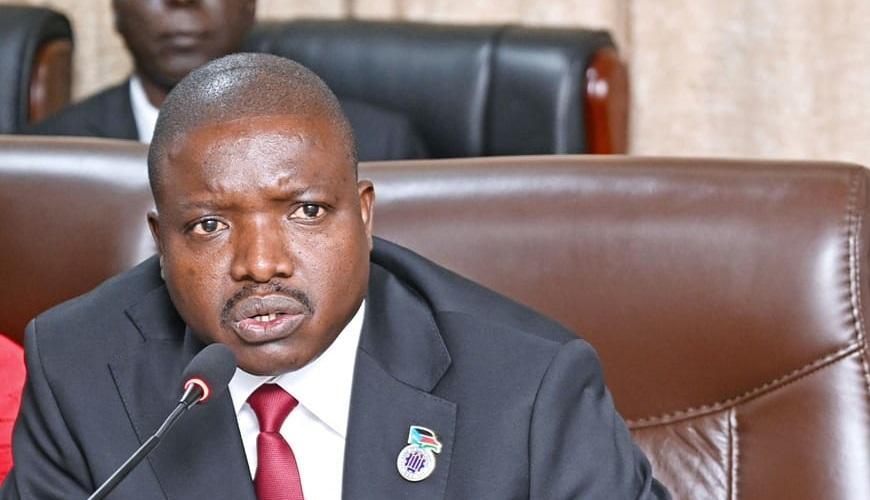
Africa-Press – South-Sudan. South Sudan’s Central Bank Governor, James Alic Garang, said on Monday that foreign inflows from oil sales have declined due to heightened insecurity in the Red Sea, where Yemeni Houthi militias have attacked ships.
Speaking to Sudans Post on Monday, said the crisis in the Red Sea has prompted cautious measures among shippers, resulting in delays and increased costs in transporting cargoes from Port Sudan to the international market.
“Yes, today we have seen the crisis in Yemen, in the Red Sea that has caused lifters to take precautionary measures which involves some cost, and which also slows down the speed at which cargoes leave Port Sudan for the international market,” he said.
“So yes, the sale of the oil has been badly or slightly impacted by the crisis that you are seeing in Yemen,” Garang added.
South Sudan’s local currency, the Pound, has continued to depreciate against the foreign counterparts such as the United States dollar. As of this afternoon, the $1 is traded for SSP1168.60 in the official market, while it is trading at $1200 in the parallel market, according to traders speaking to Sudans Post.
“South Sudan depends heavily on oil revenue to finance nearly 95 percent of its annual fiscal budget. The country currently produces about 150,000 barrels of oil a day compared to the previous 350,000 barrels before the outbreak of conflict in December 2013,” Governor Garang said.
“When the oil is not sold quickly enough or if it takes a long time to go to the market then it also means we will have less at any point and having less foreign exchange in the country will mean that the supply and demand are not aligned and that is one reason why you see the currency depreciating,” he added.
Garang emphasized the adverse effects of delayed oil sales on foreign exchange availability, leading to a mismatch in supply and demand and contributing to currency depreciation. He said they are still making efforts to convince currency traders to register with the bank so they can sell the hard currency.
“We will give them about a month or 45 days, by saying from this time, the small informal traders will have to register with our banking supervisors and obtain documentation so that they are able to sell foreign exchange in their shops,” Gahe stated.
“We are moving very slowly because we are also trying to inform them, to tell them why it’s very important for the foreign exchange market to get organized,” he indicated.
“Today if you go on the streets, sometimes if you are unlucky, you get fake dollars, sometimes you get an amount that is less than what you expect to get and you are cheated and sometimes someone can just come and buy and when they are leaving, they are attacked on the way by people who saw them making exchange. So, this is something dangerous to the members of the public.
“Without a license, your property will be confiscated, and you reap the consequences, but we are not yet there. Right now, we are not yet there but we have made significant progress by eliminating those boys (currency traders) that were standing on the streets,” he concluded.
For More News And Analysis About South-Sudan Follow Africa-Press