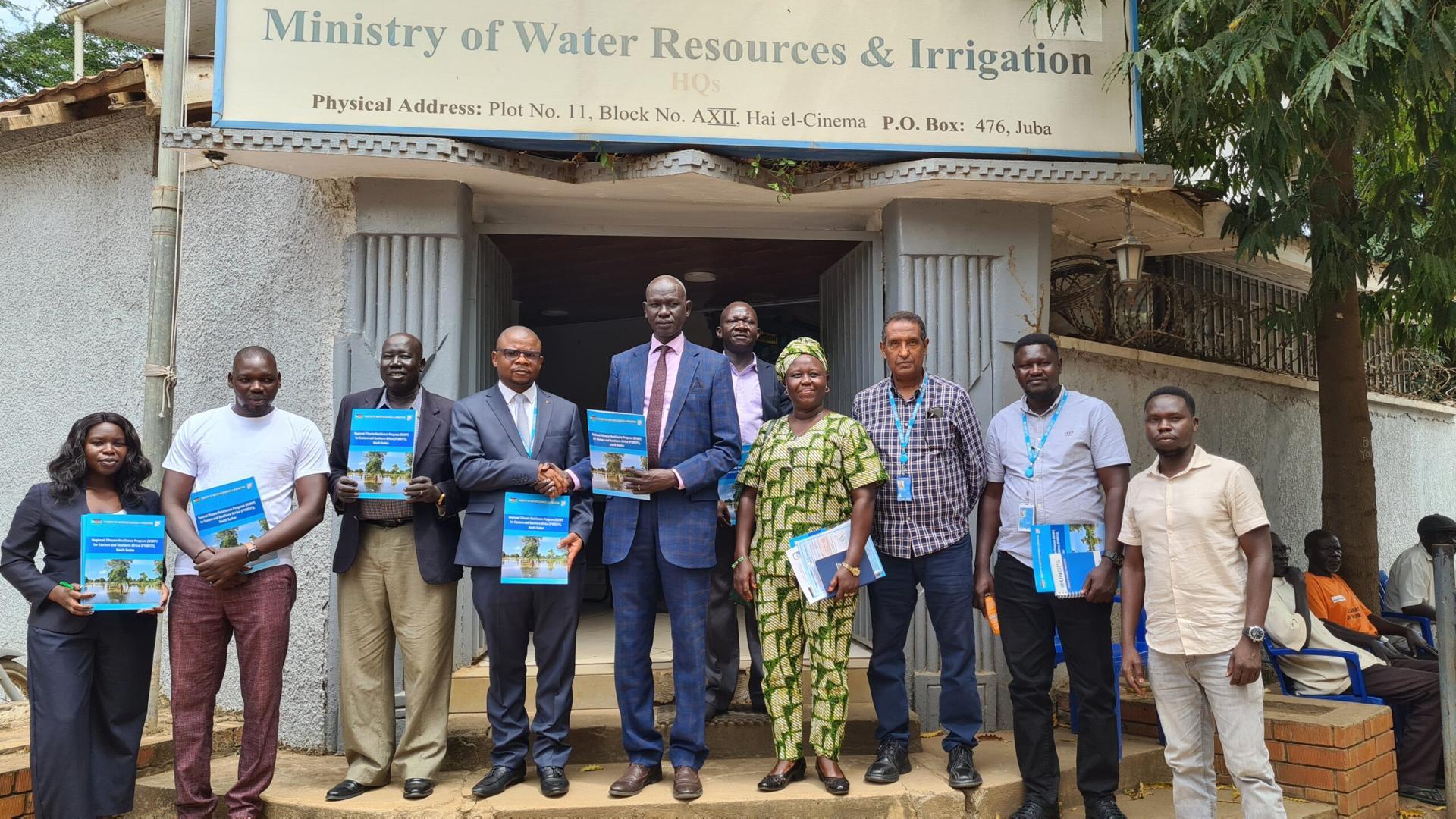
Africa-Press – South-Sudan. The Ministry of Water Resources and Irrigation and United Nations infrastructure agency (UNOPS) have signed an agreement to precure hand tools for flood mitigation in affected communities in the country.
The initiative worth 299,000 US dollars is part of the Regional Climate Resilience Program for Eastern and Southern Africa, funded by the World Bank and implemented by the government through the United Nations Office for Project Services – UNOPS.
Through this initiative, UNOPS is tasked to procure 152,000 pieces of sandbags, 247,750 liters of fuel, 2,200 spades and shovels as well as 2,200 pick-axes.
Others include 700 wheelbarrows, 460 pieces of plastic sheets, 200 digging bars, and 99 empty drums with a capacity of 250 litres.
It aims to enhance South Sudan’s capacity to respond effectively to flooding and support communities affected by climate-induced challenges in Bor, Pibor and Fangak counties.
Peter Mahal, the Undersecretary of the Ministry of Water Resources and Irrigation said the initiative will complement the ongoing response by the Ministry of Humanitarian Affairs and other partners.
He urged the UN agency to expedite the procurement and delivery of the supplies to alleviate the suffering in the affected areas.
“It is a contract that will add to some of the efforts our sisterly ministries of Water Resources and Humanitarian Affairs with the UN and other international bodies that are supporting our population in the affected flood areas,” he said.
“This $300,000 amount is small but it will give some support to a fewer out of the affected 700,000 people at the moment and we urge, UNOPS to address this current scenario affecting our population adding into the hardship that most of our population are facing.”
Leslie Mhara, UNOPS Program Coordinator said UNOPS is committed to ensuring the hand tools are delivered on time.
“The best we can do in this regard is to hope for the best for the people of South Sudan. But we are here as partners to make sure that we put in place mitigatory measures as well as preparatory measures to reduce the impact of such unforeseen events,” he said shortly after the contract signing.
“This commitment from UNOPS is evidence today with this gathering to sign on this key procurement agreement which demonstrates as well one of the critical pillars for UNOPS mandate and expertise with regards to sustainable procurement in support of the original climate resilient project for East and Southern Africa.”
More than 890,000 people have been affected by flooding in 40 counties across South Sudan leading to massive displacement, loss of livelihoods and destruction of critical infrastructures, the UN humanitarian agency said.
UN Office for Coordination of Humanitarian Affairs (OCHA) said about 226,000 people have abandoned their homes – out of whom 114,480 were displaced from Unity State alone.
Data from the Ministry of Water Resources and Irrigation indicate that water level in most rivers put nearby areas under the flood alert category except in Malakal, Anakdiar and Wau which continue to show high risk of flooding.
Koboji Charles Yakata, the Director of Hydrogeology at the Ministry of Water Resources and Irrigation said floods have damaged homes, crops and infrastructures across the country disrupting access to essential services including education and livelihoods.
“With issues of reported damages to homes, crops, infrastructure across South Sudan, you can see almost, more than half of the country is in the flood season.”
Yakata said access by road remains a challenge in Unity State with roads in Koch and the airstrip in Panyijar submerged in floodwaters.
He added that 65 schools in Unity State have been submerged due to flooding affecting about 20,214 students in the state.
The official said the Ministry will install an additional emergency monitoring stations in Maban of Upper Nile State and Mundri of Western Equatoria State to the eight existing eight emergency gauges in the country.
For More News And Analysis About South-Sudan Follow Africa-Press