Africa-Press – South-Sudan. South Sudan produces an estimated five tonnes of gold every year, yet none of it is officially recorded or exported through legal channels, according to new research highlighting the country’s deeply informal and largely unregulated mining sector.
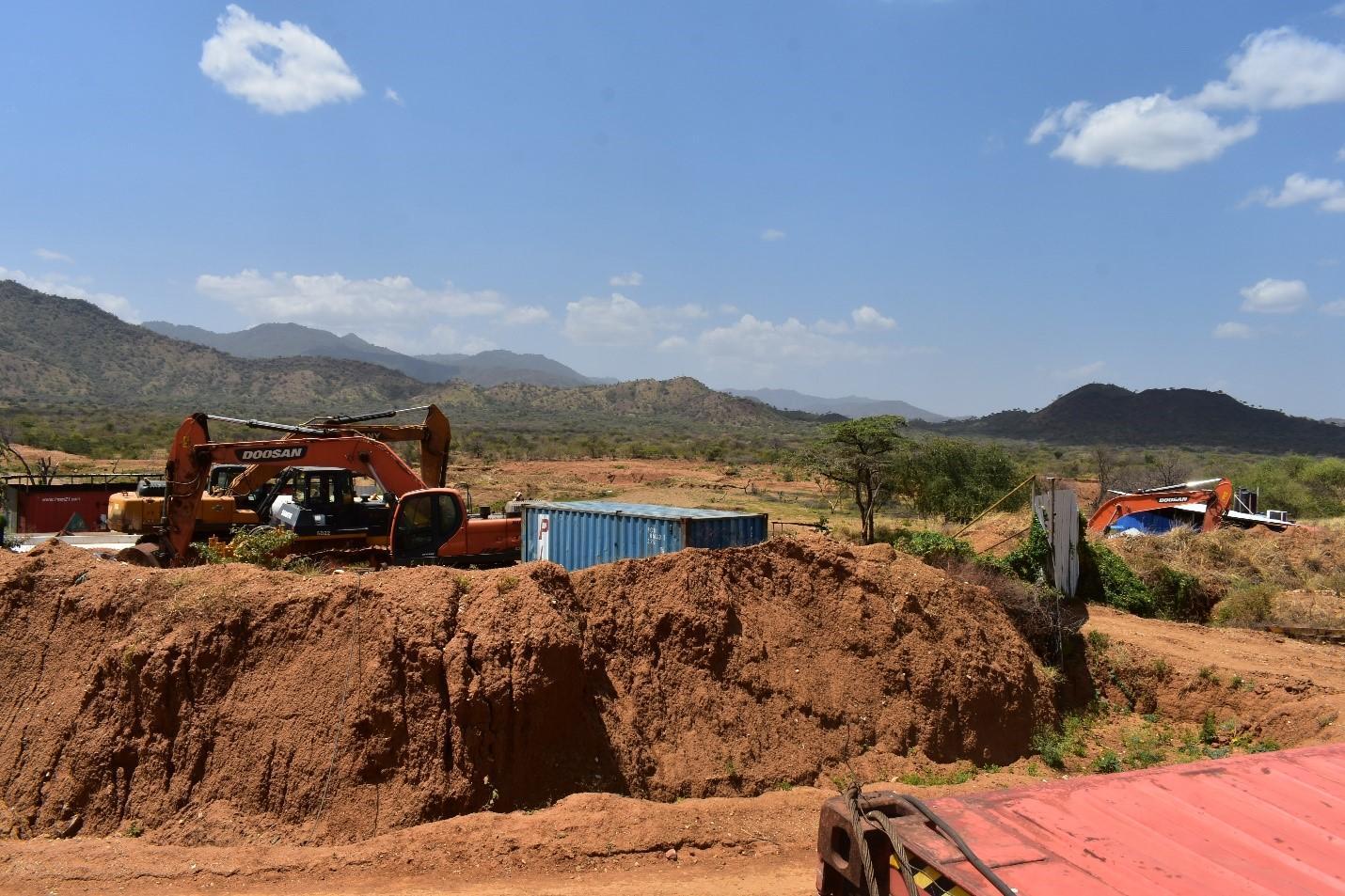
The study, which was released by SWISSAID, depicts a gold economy that is dominated by small-scale and artisanal miners that operate independently of the government and with simple tools.
Government authorities have failed to oversee the extraction of minerals despite the existence of regulations, which has led to the involvement of international dealers, armed organizations, including corrupt officials.
According to the report, “mining in South Sudan is poorly regulated and enforcement is weak,” and the industry is characterized by “informality, opacity, and secretiveness.
South Sudan’s Ministry of Mining does not publish production figures, and the country is not a member of the Extractive Industries Transparency Initiative.
Key institutions, including the Bank of South Sudan and the National Bureau of Statistics, also provide no official data. As a result, neither production volumes nor export values are captured in national records.
A senior Ministry official previously acknowledged that “there is no formal mining in South Sudan,” while the report notes that this data vacuum “should be viewed as more than simply the result of neglect by the authorities.”
Researchers estimate annual production at around five tones based on the value of gold believed to have been smuggled out in 2022.
The Ministry of Mining told SWISSAID that this figure is “more realistic” than earlier estimates of up to 24 tonnes per year, which experts say are excessively high.
An expert consulted by SWISSAID said the higher estimates were “excessively high,” adding that 24 tonnes would be worth nearly USD 1 billion, an amount he described as “implausible for South Sudan.”
It said gold mining in South Sudan is almost entirely artisanal, concentrated mainly in Eastern and Central Equatoria. Tens of thousands of miners work in hazardous conditions, often in areas controlled by armed groups.
According to the report, forces including the South Sudan People’s Defence Force, SPLA-IO, the National Salvation Front and the National Security Service have imposed informal taxes, seized mining areas, or directly participated in mining to supplement low salaries.
Citing a Sentry report, it said: “Some government officials, their relatives, and close associates have fostered a weak regulatory environment susceptible of exploitation.”
Weak governance, porous borders and non-competitive official gold prices have encouraged smuggling. Gold is routinely moved out of the country through unofficial routes into Kenya and Uganda, or flown from Juba to the United Arab Emirates.
Some of this gold is reportedly reclassified as Kenyan or Ugandan before re-export, while other shipments are believed to go directly to China through networks of Chinese buyers operating in Juba.
According to GI-TOC, “Chinese nationals are reported to be the biggest buyers in Juba.”
Official import data only captures a fraction of these flows. The UAE reported USD 20 million in gold imports from South Sudan in 2022 and USD 27 million in 2023—equivalent to less than a tonne per year.
Uganda reported importing nearly two tonnes in 2020. Kenya, a known transit country, reported no imports at all.
The report also said that South Sudan has recently become a transit hub for gold smuggled out of Sudan following the eruption of civil war there in 2023.
That gold is believed to be flown onward to Dubai, with involvement from the Sudanese Rapid Support Forces and elements of Uganda’s security services.
The UN Panel of Experts wrote that “gold had started entering South Sudan from Sudan” and that it was being shipped by air to the UAE in operations involving various armed actors.
Industrial gold mining does not yet exist in South Sudan. Poor infrastructure, decades of conflict, and a political environment described by observers as kleptocratic have deterred foreign investment.
The government allocated USD 65 million in 2023 for geological mapping in an effort to revive interest, but exploration remains limited.
According to one observer cited in the research, South Sudan’s political climate has “severely limited exploration activities and dissuaded international mining companies from investing in the country.”
SWISSAID concludes that South Sudan’s gold sector operates “largely outside the law,” driven by political interference, insecurity and corruption.
The organization went on to say the ongoing lack of reliable data, the report warns, makes meaningful oversight impossible and leaves the country losing millions of dollars in potential revenue every year.
The organization states bluntly: “South Sudan’s gold reserves are largely exploited through a system characterized by corruption, impunity, conflict and instability.”
For More News And Analysis About South-Sudan Follow Africa-Press