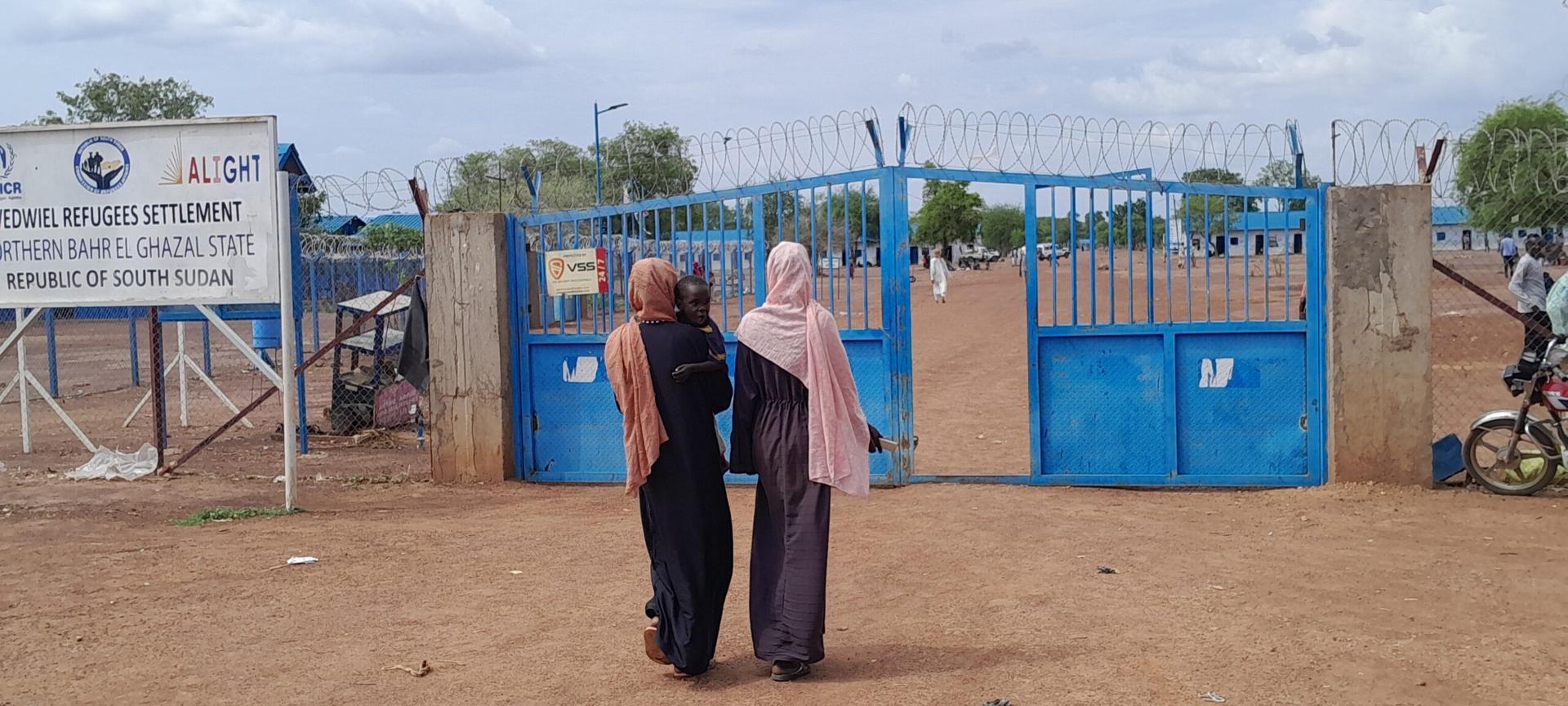
Africa-Press – South-Sudan. South Sudan’s authorities on Tuesday called for stronger legal and institutional protection for the country’s growing refugee population, as fresh arrivals continue to cross the border fleeing conflict in neighbouring Sudan.
Maj. Gen. Elia Costa, Director General for Civil Registry, Nationality, Passport and Immigration, said safeguarding refugees’ rights requires closer cooperation between the government, communities and humanitarian partners.
Speaking at an access-to-justice roundtable in the capital under the theme “Promoting Access to Justice for IDPs, Refugees, and Returnees in South Sudan,” Costa said refugees must be fully protected under the law.
He said his directorate is responsible for protecting refugees and issuing documents that allow them to move freely inside and outside the country, but acknowledged gaps in the legal framework.
“Many urban refugees have been residing in South Sudan for a long time, working in markets and engaging in various business activities. But after the conflict in the Republic of Sudan, many of them obtained refugee identification cards,” he said.
Costa said the 2012 Refugee Act categorises refugees into two groups – those living in urban areas and those in camps – a division that often complicates enforcement.
“Under the Refugee Act, we do not have the authority to question the identity of anyone holding a valid refugee ID, and at times this creates difficulties for our officers.”
He said improving legal awareness and coordination among agencies was critical as numbers continue to rise.
“Through this workshop, we will have the opportunity to identify better ways of handling refugees—both those who were here before and those newly arrived,” he said.
Costa added that the government is working with UNHCR and the Refugee Commission to help refugees obtain travel, medical and education documents.
The executive director of the Commission for Refugee Affairs, Raja Gabriel, said the government is coordinating closely with UN agencies to expand protection and services.
“This is why we currently have seven refugee camps. We host two main groups of refugees—those living inside designated camps and those living within host communities,” she said.
She said South Sudan hosts camps in areas including Kaya, Yei, Maban and Renk, noting that Maban alone has three major camps.
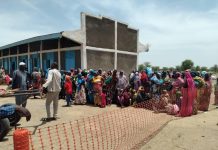
“Right now, as I speak, our borders are full of people arriving from Sudan due to the ongoing crisis,” she said.
She added that South Sudan also hosts Rohingya refugees and others fleeing conflicts in Egypt, Yemen, the Middle East and particularly Sudan.
“We continue to pray for peace so that those who have been displaced can one day return home.”
Raja said the country continues to uphold an open-door refugee policy.
“Refugees need access to justice, the rule of law, protection, and security. At the CRA, our responsibility is to ensure that every refugee is safe and protected by the Government of South Sudan,” she said.
By the end of 2024, UNHCR estimated that South Sudan was hosting more than 500,000 refugees and asylum-seekers — the vast majority arriving from neighbouring Sudan.
The agency noted that the renewed conflict in Sudan and ongoing instability across the region — including in Ethiopia, the Central African Republic (CAR) and the Democratic Republic of the Congo (DRC) — have triggered new waves of displacement, sending people toward South Sudan either directly or via secondary movement.
For More News And Analysis About South-Sudan Follow Africa-Press