
South Sudan has made notable progress in mapping and planning interventions against several neglected tropical diseases (NTDs), but major gaps persist in addressing some of the country’s most debilitating infections, health officials revealed on Wednesday.
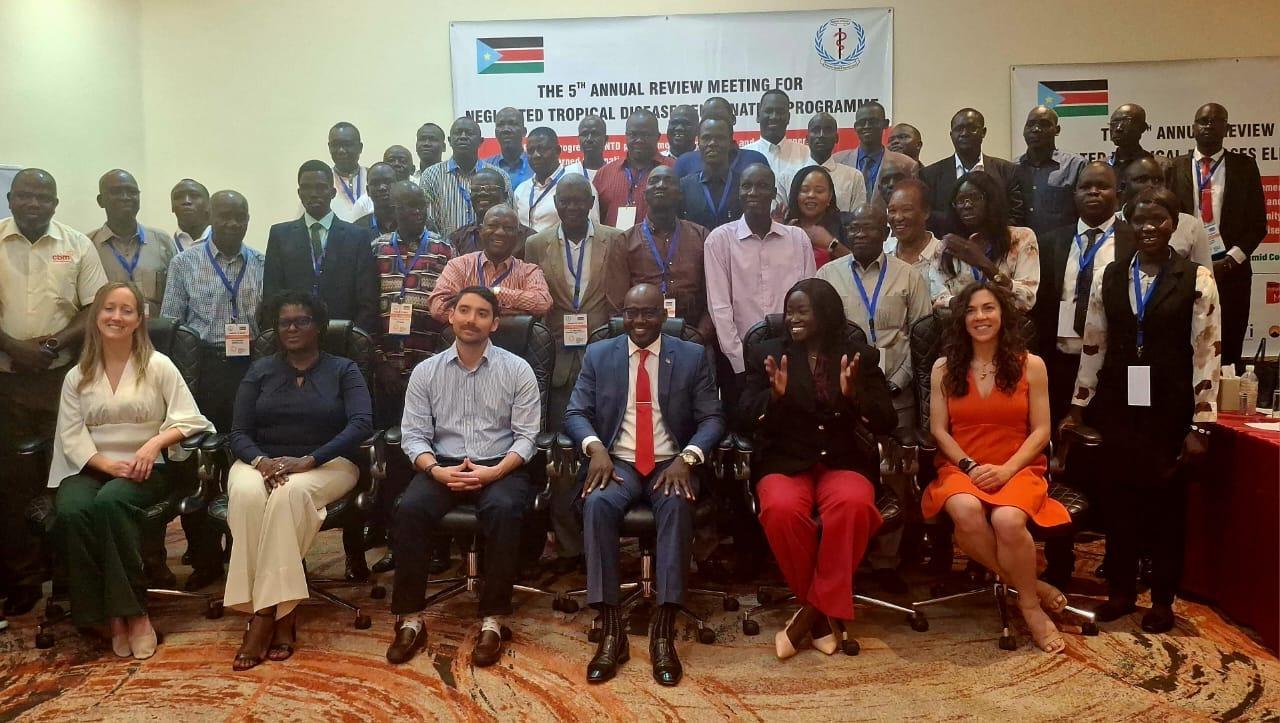
The update was presented during the 5th Annual Review Meeting of the Neglected Tropical Diseases (NTDs) Elimination Programme, convened by the Ministry of Health in partnership with development partners and donors.
Presenting the 2026 national NTD status, the Ministry reported that full mapping has been completed in endemic counties for Trachoma, Lymphatic Filariasis, Soil-Transmitted Helminths, and Loiasis, marking a significant milestone in the country’s elimination efforts.
According to the data, Trachoma affects 35 counties, Lymphatic Filariasis 51 counties, Soil-Transmitted Helminths six counties, and Loiasis 58 counties — all of which have been identified and targeted for preventive chemotherapy interventions.
However, the review also highlighted serious challenges in the mapping of Onchocerciasis and Schistosomiasis, two diseases that continue to affect vulnerable and hard-to-reach communities.
Onchocerciasis, commonly known as river blindness, is caused by parasitic worms transmitted through the bites of infected blackflies that breed near fast-flowing rivers. The disease can lead to severe itching, skin damage, visual impairment, and, in advanced cases, permanent blindness. Of the 48 counties endemic for the disease, 32 counties are yet to be fully mapped.
Schistosomiasis, also known as bilharzia, remains the most under-mapped neglected tropical disease in the country.
The water-borne parasitic infection is contracted through contact with contaminated freshwater and can cause serious intestinal, urinary, and reproductive health complications. Nationally, 238 out of 278 endemic payams are still awaiting mapping.
Officials from the Ministry of Health described the annual review as a critical platform for assessing progress, identifying operational gaps, and mobilizing resources to complete disease mapping and expand preventive chemotherapy.
They reaffirmed the government’s commitment to eliminating neglected tropical diseases as part of broader public health efforts aimed at protecting vulnerable populations.
Development partners commended the progress achieved so far but stressed the need for sustained funding, stronger coordination, and community engagement to close remaining gaps.
The meeting concluded with renewed calls for continued collaboration to ensure no community is left behind in South Sudan’s journey toward eliminating neglected tropical diseases.