Africa-Press – South-Sudan. The Commissioner General of the South Sudan Revenue Authority (SSRA) has directed officials at the Nimule Border Station to strictly enforce electronic revenue collection and bring an immediate end to all cash transactions at the border point.
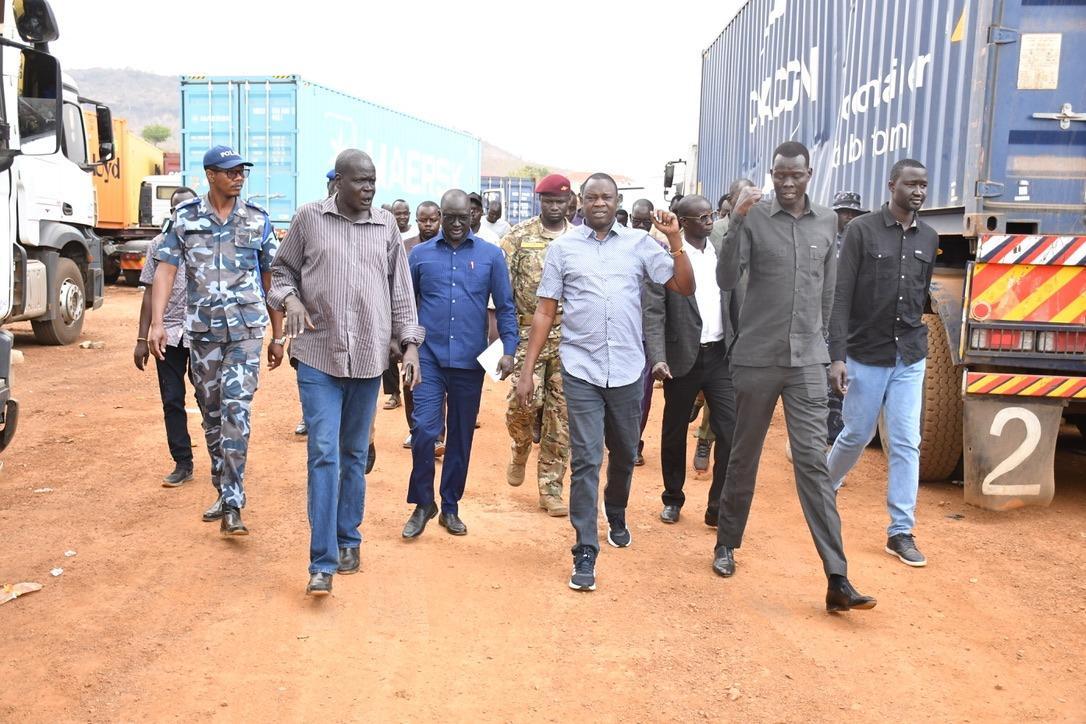
Speaking during an engagement with senior officers on Friday, William Anyuon Kuol, emphasized that only payments made through official, system-generated invoices and deposited directly into banks are now permitted. He warned that any officer found handling cash would face strict accountability measures.
The visit formed part of the Authority’s broader efforts to strengthen revenue collection and address operational challenges across the region. The meeting provided an opportunity for officers at the border station to raise concerns and share practical issues encountered in their day-to-day operations.
“Our visit here is to strengthen your efforts and to listen to challenges that need our attention, so this team can take action. Above all, our goal is to ensure that we collect revenue efficiently,” Kuol said.
The Commissioner General underscored the SSRA’s commitment to modern, transparent, and risk-free revenue systems, noting that electronic collection minimizes losses and improves accountability.
Reinforcing the directive, the Commissioner for the Domestic Tax Revenue Division, Chop Paul, stated that cash collection has been completely phased out in areas where banking services are available.
“There is no cash collection anymore. We now rely solely on invoices generated from the system, and payments are made directly through the bank using those invoices. Such a risky practice cannot be allowed in areas where banks are available,” he said.
Paul clarified that limited exceptions apply only in remote locations with no access to banks or internet connectivity, such as parts of the far northern region around Renk. In such cases, only non-tax revenue officers are permitted to collect funds, which must be reported within 24 hours.
The meeting also addressed concerns over revenue losses arising from exemptions on fuel and other goods.
The Head of the Tariff Department, Lt. Col. Zendia Agness Mike, questioned the fiscal impact of granting large fuel exemptions to companies and the importation of luxury vehicles by government institutions.
“When companies are given ten million litres of fuel, we must ask ourselves how much revenue we are losing. What benefit does the government gain from such companies when this is money we are supposed to collect from them?” she asked.
She further raised concerns over the importation of luxury vehicles, warning that many of these exempted goods often end up on the open market instead of serving their intended purpose.
“Exemptions may be justified for humanitarian organizations and, in some cases, for government use, but not for tradable goods. When a government institution imports 50 or even 100 V8 vehicles, are all those vehicles truly meant for officials? In reality, many end up on the market. This is an issue we must seriously look into,” she said.
For More News And Analysis About South-Sudan Follow Africa-Press