Africa-Press – South-Sudan. A South Sudanese community group has warned that alterations to the country’s electoral map ahead of the 2026 general elections lack legal basis and risk igniting inter-communal violence in the volatile Eastern Equatoria state.
In an open letter to the National Election Commission (NEC) issued on Saturday, representatives of Budi County accused the electoral body of “political gerrymandering” by transferring key administrative areas to a rival constituency.
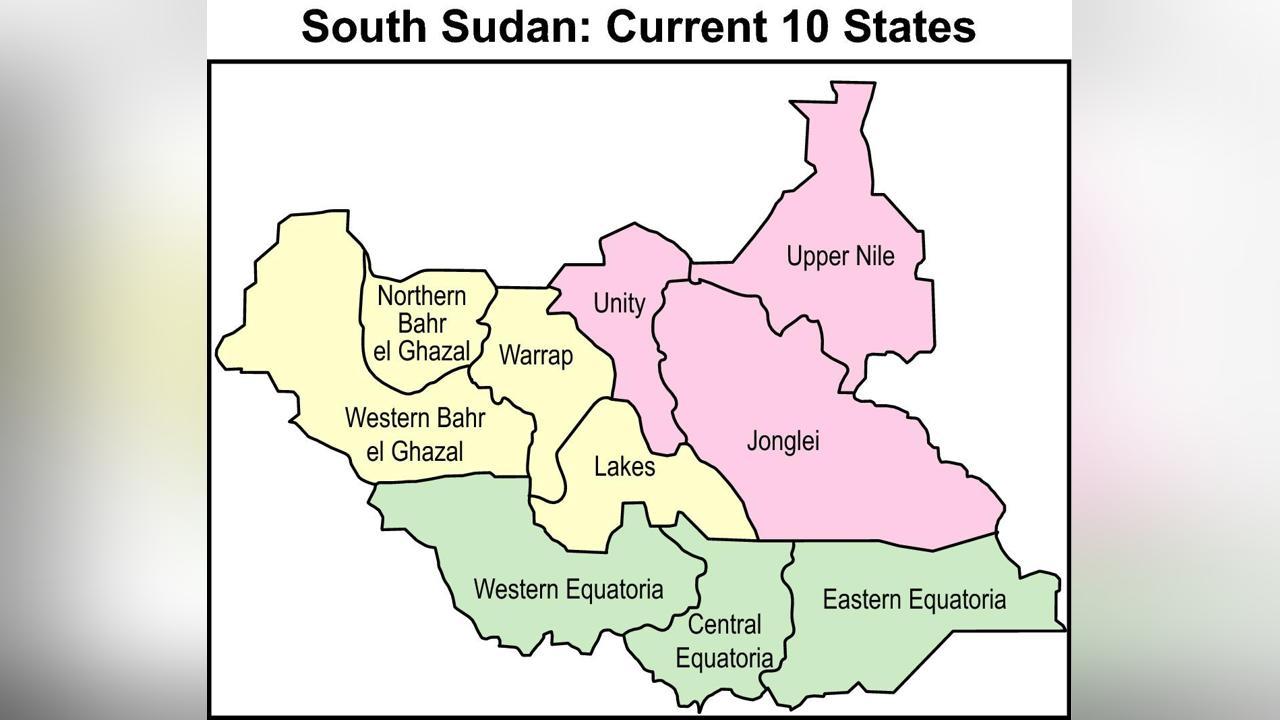
The dispute centers on the NEC’s recent publication of geographical constituencies, which reassigns Ngauro Payam and Natinga Boma from Budi County (Constituency No. 8) to Kapoeta East 2 (Constituency No. 6).
Lokonyen Aldo, writing on behalf of the People of Budi County, demanded an immediate review, arguing the changes violate the constitution and the National Elections Act of 2012.
“Its reassignment, absent lawful justification, transparency, or demonstrated compliance with established delimitation criteria, raises serious constitutional and legal concerns and strongly suggests an act of political gerrymandering designed to manipulate electoral outcomes and dilute the voting strength of Budi County communities,” the letter stated.
The group claims the commission has also attempted to rename Ngauro Payam as “Lohuro,” a designation they reject as a fabrication intended to obscure the transfer of historical Didinga lands to the neighboring Toposa-dominated constituency.
Control over administrative boundaries in South Sudan is often synonymous with access to resources and political representation. In a region awash with small arms and a history of cattle raiding, shifts in land ownership can quickly escalate into armed confrontation.
“The integrity of electoral delimitation is foundational to representative democracy. Unilateral or unexplained boundary modifications, particularly those suggestive of political gerrymandering, risk administrative illegality, distortion of community representation, and erosion of public confidence in the electoral process,” Aldo wrote.
“In a context where territorial boundaries are intrinsically linked to identity, governance, and resource stewardship, such alterations further carry the potential to generate inter-communal tension and destabilize peaceful coexistence.”
The controversy highlights the immense challenges facing South Sudan as it prepares for its first general election since gaining independence in 2011. The vote has been postponed multiple times due to a civil war that killed an estimated 400,000 people and displaced millions.
Under the 2018 revitalized peace agreement, which formed the current unity government, elections were initially slated for earlier dates but are now scheduled for late 2026. A key sticking point has been the lack of a permanent constitution and a new national census.
To bypass the need for a new census, the NEC previously announced it would use the 2008 census data and the constituency boundaries from the 2010 general elections as the baseline for the upcoming vote.
The Budi County representatives argue that the NEC’s new map violates this agreement by altering the “historically recognized administrative boundaries of Budi County, as they stood in 1956.”
The NEC has faced logistical and funding hurdles, and public trust in the institution remains fragile. The open letter criticized the commission’s competence, citing “widespread misspellings” of residential units in official documents.
“Article 97 of the Transitional Constitution of the Republic of South Sudan, 2011 vests the National Election Commission with the solemn duty to conduct and supervise elections in strict conformity with the Constitution and the law, guided by principles of impartiality, transparency, and accountability,” the letter reminded the chairperson.
The Budi representatives called on the commission to “rescind the reassignment” and issue a “transparent, reasoned legal explanation” for the changes, warning that failure to do so would undermine the credibility of the entire electoral process.
The National Election Commission has not yet publicly responded to the allegations.
For More News And Analysis About South-Sudan Follow Africa-Press