Africa-Press – South-Sudan. JUBA, South Sudan (Eye Radio) – The Executive Director of the Nile Basin Initiative states the South Sudan–Uganda Power and Teleconnection Project will increase national electricity access from 7% to 10% while lowering energy costs.
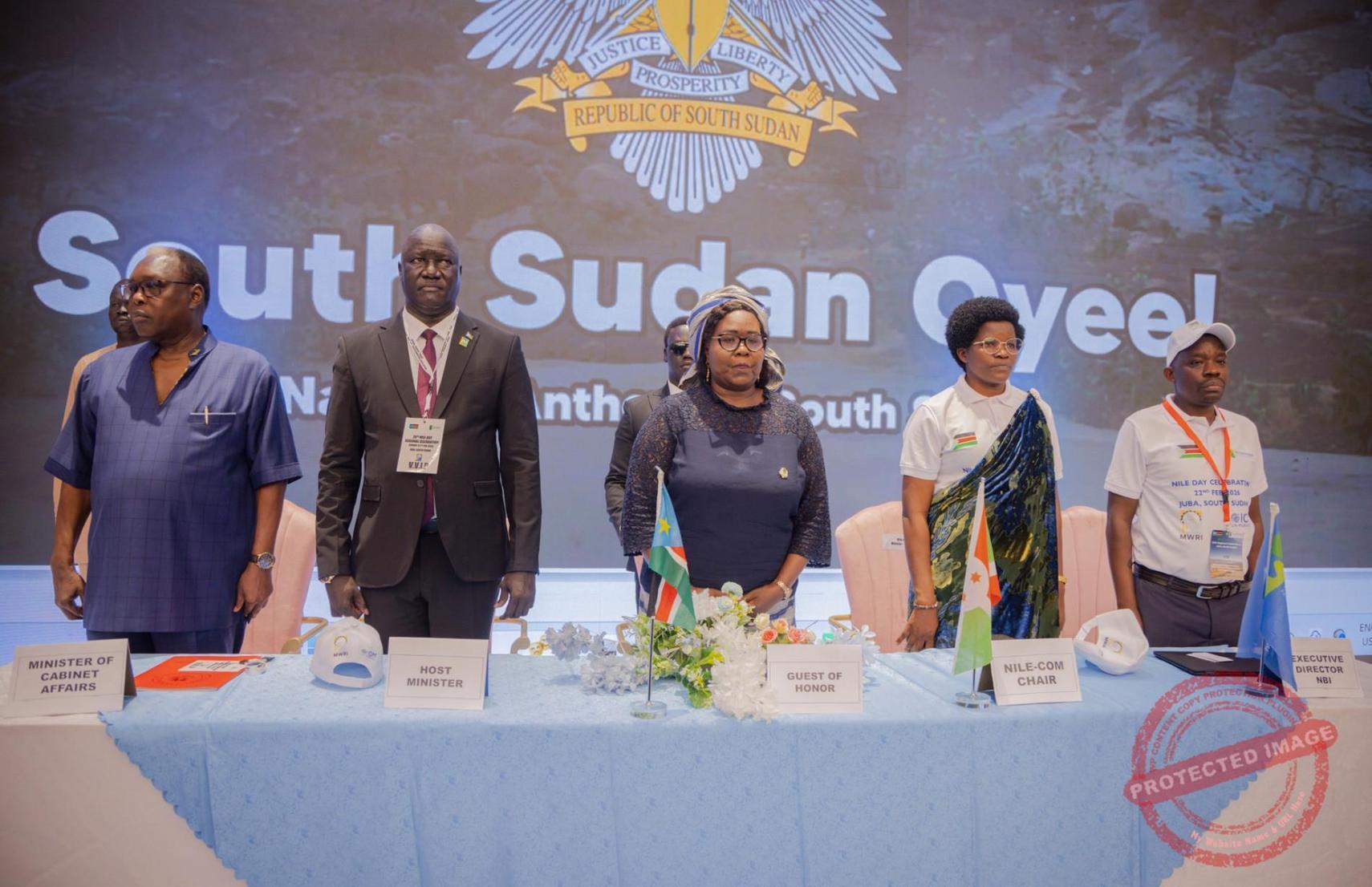
Addressing participants at the Nile Day commemoration on Sunday, February 22, NBI Executive Director Dr Eng. Nestor Niyonzima stated that the South Sudan–Uganda power link addresses one of the lowest electrification rates in the world.
“The Olwiyo-Juba-South Sudan and Uganda Power and Teleconnection Project will be transformative. South Sudan currently has around 7% electricity coverage, and the directional line will raise coverage to about 10%,” Eng. Niyonzima stated. “Uganda will generate significant trade revenue while connecting South Sudan to the North-South National Electricity Highway.”
The South Sudan–Uganda Power Interconnection Project (SUPIP) is a transformative regional energy infrastructure initiative being implemented by the governments of South Sudan and Uganda, with coordination by the Nile Equatorial Lakes Subsidiary Action Program Coordination Unit (NELSAP-CU), a subsidiary arm of the Nile Basin Initiative (NBI).
According to the Nile Basin Initiative, the project is jointly financed by the African Development Fund (ADF), the European Union (EU), and participating governments, under the guidance of the African Development Bank (AfDB).
It states that the SUPIP seeks to connect South Sudan to the Eastern Africa Power Pool (EAPP) and enable it to import affordable, reliable electricity from Uganda. By doing so, it aims to address South Sudan’s severe power deficit, reduce dependence on diesel generators, and promote regional energy trade, peace, and economic integration.
Project Objectives
Key Technical Components
SUPIP comprises the construction of a 300.5 Km 400kV double-circuit transmission line149 km in South Sudan (Gumbo to Nimule) and 151.5 km in Uganda (Nimule to Olwiyo). The line is designed to carry up to 1,000 MW of power and will serve as a backbone for future regional electricity exchanges.
The project also includes:
Institutional and Capacity Building
The project also invests in institutional strengthening, including:
For More News And Analysis About South-Sudan Follow Africa-Press