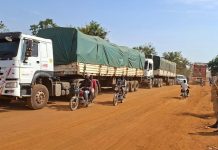
Africa-Press – South-Sudan. Some South Sudanese citizens have raised concerns over the government’s credibility in implementing the proposed $2 billion road construction project, which is expected to be funded through revenue from gold reserves.
Many are expressing doubts about whether the government will fulfill its promises this time.
Several citizens have questioned why the project does not include areas in Eastern Equatoria, one of the country’s most active gold-mining regions.
Suleiman Kenyi argued that Eastern Equatoria, being rich in minerals including gold, should be part of the national infrastructure plan.
“We all know that Eastern Equatoria produces gold, but we don’t know where it goes. It all ends up in the pockets of individuals. So, if there is such a plan, the region should be included,” Kenyi said.
He also questioned the feasibility of the project, asking, “Will this project see the light of day?”
Meanwhile, David Magok from Wau questioned why mineral-rich states such as Eastern Equatoria must wait for the national government to design road projects for them.
He also criticized the long-serving governor of Eastern Equatoria, Louis Lobong Lojore, noting that even connecting counties within the state has not been achieved.
“The longest-serving governor in South Sudan now is Louis Lobong Lojore. He did not even initiate a project to connect counties. Even the project people are talking about now, they are not sure whether it will work or not,” Magok said.
He suggested that state governments should design and implement their own road projects instead of relying entirely on the national government.
Another citizen, identified only as Kochok, downplayed expectations about the project’s implementation. He cited oil-producing regions such as Upper Nile and Unity, which remain underdeveloped despite years of oil production and repeated promises of development.
“There is oil in Upper Nile, but there are no proper roads, hospitals, or quality education. If you look at the Juba to Bahr el Ghazal Road project, it was initially funded through crude oil. Why don’t they implement similar projects in Upper Nile?”
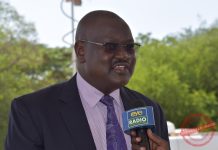
Government spokesperson Ateny Wek Ateny acknowledged that Eastern Equatoria is rich in gold but was not included in the current agreement.
He said that if the community insists, the contract could be reviewed through the Ministry of Mining.
“I think the Ministry of Mining should be asked to review the contract. Even during implementation, the agreement could still be revised, provided the company involved is willing to do business,” Ateny said.
He added that there is room for amendments and that Eastern Equatoria could potentially be added to the agreement.
“I don’t think other places have more gold than Eastern Equatoria,” he concluded.
For More News And Analysis About South-Sudan Follow Africa-Press