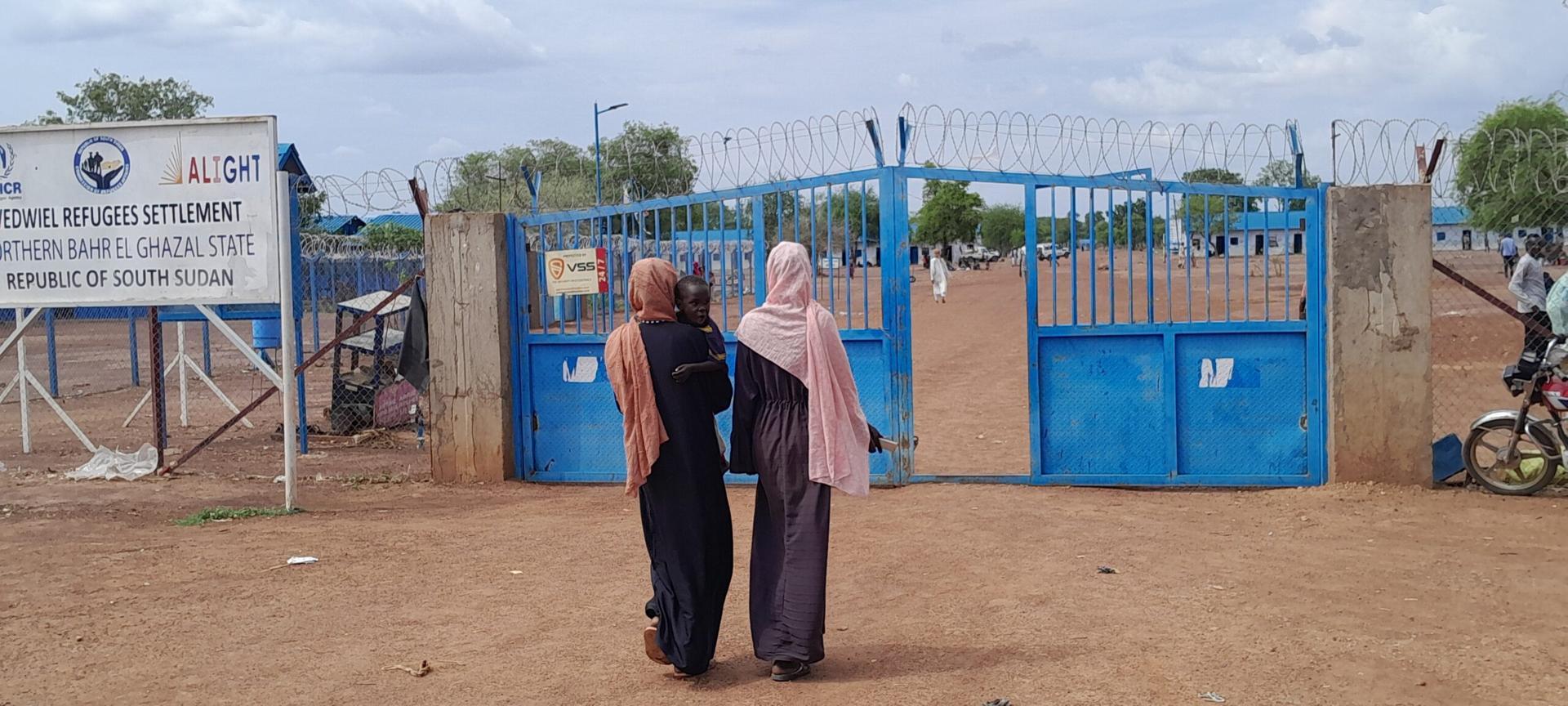
Africa-Press – South-Sudan. More than 30,000 Sudanese refugees camping in Wadweil Refugee Settlement in South Sudan’s Northern Bahr el Ghazal State are appealing for urgent humanitarian support as living conditions deteriorate and funding shortfalls bite.
Nicodemus Nguet Nguet, Assistant Commissioner for Refugee Affairs at Wadweil, said more than 31,700 refugees are currently hosted at the camp, the majority of them Sudanese who fled violence across the border. He warned that limited resources and shrinking humanitarian funding are leaving many families in increasingly desperate conditions.
“The refugee population in Wadweil is 31,727 individuals, and they are in dire need of humanitarian assistance given that partners are facing funding shortfalls,” Nguet said.
According to camp authorities, 30,696 of the refugees are Sudanese nationals, while the remainder include individuals from Ethiopia, Eritrea, the Central African Republic, and South Sudanese with Sudanese ties.
Nguet described the humanitarian situation as particularly severe in the health sector, noting that many refugees are living with chronic illnesses that cannot be adequately treated at the camp’s basic facilities.
“Many of them are suffering from diabetes, hypertension, eye problems, and injuries. IRC provides primary healthcare, but these chronic conditions cannot be managed at Wadweil, especially as UNHCR is facing a global funding crisis,” he explained.
Severe cases, including war-related injuries, are referred to better-equipped facilities such as Aweil Hospital and Madhol Field Hospital. “Some of these people were wounded either at the frontline or while fleeing the conflict,” he added.
Beyond healthcare, livelihoods remain a major concern. Nguet said cash assistance provided by the World Food Programme (WFP) is insufficient to meet basic needs.
“WFP gives 72,000 South Sudanese pounds per person per month, but that amount cannot sustain an individual for the whole month,” he said.
As a result, many refugees have turned to informal and precarious survival strategies, including small-scale trade and bartering at markets along the Kiir (Bahr el Arab) River, particularly in areas such as Kiir-Adem.
However, these efforts have been undermined by recurring shocks, including a fire outbreak last year that destroyed shops owned by refugees, further eroding their already fragile livelihoods.
Nguet also noted that while some reports suggest refugees are returning to Sudan, there is no confirmed large-scale movement back. Instead, he said those leaving the camp are often individuals with financial support from relatives abroad who seek better opportunities in other countries.
With the conflict in Sudan showing no signs of ending, officials warn that without increased international funding and sustained humanitarian support, conditions at Wadweil could worsen further, leaving thousands at risk.
For More News And Analysis About South-Sudan Follow Africa-Press