Africa-Press – South-Sudan. A grassroots legal support group, with backing from Norwegian People’s Aid (NPA), has called for increased funding for community-based paralegal programs, saying limited resources are hampering efforts to address land disputes in the capital.
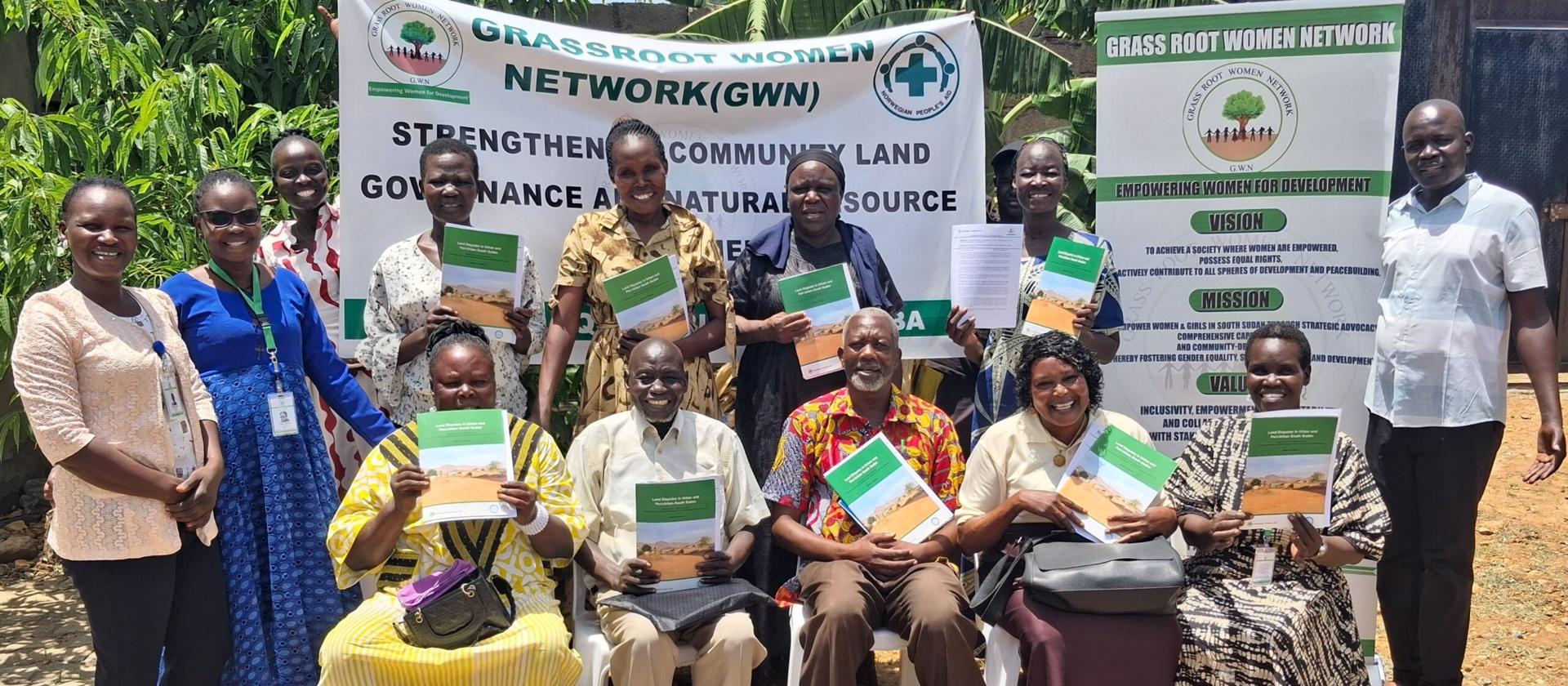
The Grassroots Women Network (GWN) on Wednesday held a one-day advanced mentorship session for 10 paralegals, mostly community leaders from across Juba, aimed at strengthening their ability to support legal officers in delivering community-based justice.
The training focused on alternative dispute resolution skills, provisions of the 2009 Land Act and improved evidence-gathering techniques to support legal experts handling land registration and dispute cases.
Paralegals are trained community-based volunteers who assist lawyers and provide basic legal support in areas where access to formal legal services is limited.
Speaking to Radio Tamazuj, participant Daniel Dakolo Gamunde, who chairs a quarter council in Joppa Block 6, urged donors to sustain and expand funding for grassroots justice initiatives, saying inadequate support is weakening efforts to resolve land conflicts.
“I want to appreciate the Grassroots Women Network for organizing this workshop,” Gamunde said. “It has improved our capacity on how to handle community issues, especially land disputes.”
He said land conflicts remain widespread in Juba, with vulnerable groups, particularly women, facing barriers to accessing land rights due to corruption and cultural constraints.
“Land issues in South Sudan, particularly in Juba, are very common in the community,” he said. “I encourage donors to continue supporting these programs, especially for vulnerable people, especially women who are unable to access their land rights due to corruption and cultural barriers.”
Gamunde also warned of what he described as organized or “institutional” land grabbing involving coordinated networks of powerful individuals, saying paralegals often find themselves exposed when challenging such cases.
“We have what we call institutional crime, where land grabbing is well coordinated and facilitated,” he said. “As paralegals, we are at the center of this problem.”
He said the work is further constrained by a lack of basic resources, including offices, computers and proper document storage.
“We do not have offices, files or computers,” he said. “Even basic materials to keep our documents are not available.”
Another participant, Christine Dudu Philip, representing Gumbo Shirikat in Rajaf Payam, said the training improved her understanding of how to handle land-related disputes at the community level.
“We learned a lot, especially how to resolve land-related issues,” she said. “Before this training, we had no idea how to address these issues or prevent our people from getting into conflict.”
GWN representative Khamis David said the mentorship program is designed to bridge gaps between formal and customary justice systems, with emphasis on gender-based violence, access to legal aid for women and strengthening the rule of law.
He said the training also covered case management, mediation, human rights principles, referral pathways and data collection.
For More News And Analysis About South-Sudan Follow Africa-Press