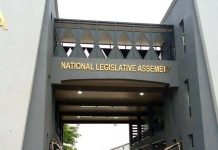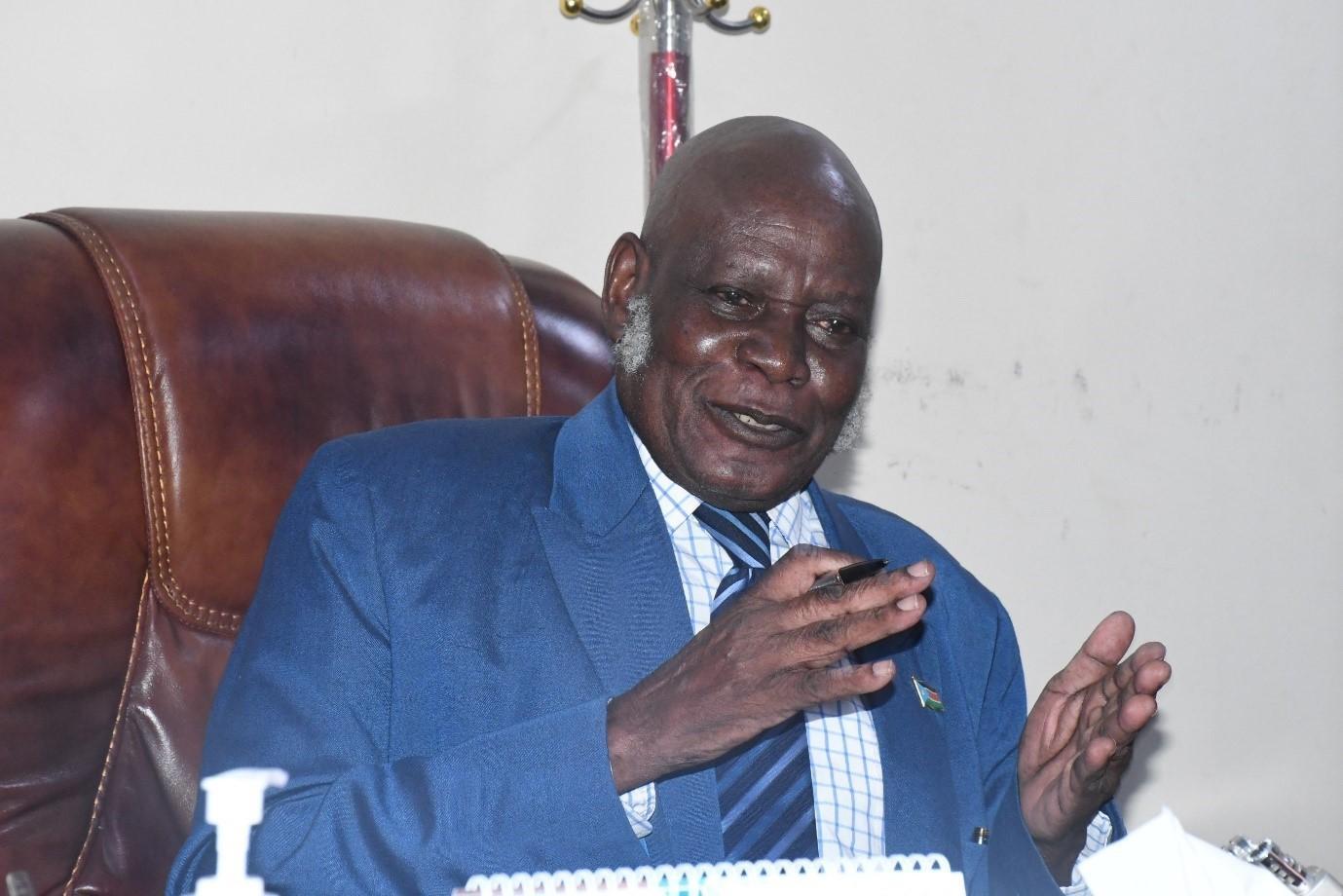
Africa-Press – South-Sudan. JUBA — South Sudan’s Minister of Justice and Constitutional Affairs, Michael Makuei Lueth, has tabled proposed amendments to the Revitalized Agreement on the Resolution of the Conflict in South Sudan (R-ARCSS) before the House Business Committee of the Transitional National Legislative Assembly, marking a key step in the legislative process to align the peace deal with current political and legal realities.
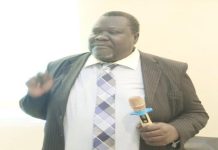
Parliament spokesperson Oliver Mori Benjamin said the proposals were presented through a letter addressed to Speaker Joseph Ngere Paciko on April 21, 2026, following consultations among the party’s signatories to the 2018 peace pact.
“The House Business Committee held an expanded meeting, and the first item was the submission of the amendment of the Revitalized Agreement,” Mori told Sudans Post on Friday.
He added that the amendments had already been endorsed by the signatories, adopted by the expanded presidency, and approved by the Council of Ministers before being submitted to parliament for consideration.
The Business Committee—comprising members from both the Assembly Business Committee and the Council of States Business Committee—unanimously agreed to forward the proposed amendments to the plenary for debate and final approval.
He said one of the most significant changes removes the requirement to complete a permanent constitution before elections and addresses the supremacy of the agreement.
In a major shift, the amendments remove the supremacy under Article 8.3 of the peace agreement.
The article says, “This revitalized agreement shall take precedence over any national legislation, any existing agreement to the contrary, and in the event that the provisions of a national legislation or previous agreement conflict with the terms of this agreement, the provisions of this agreement shall prevail.”
However, Mori noted that “when there is controversy, what comes in the agreement is above. Now, this is amended, and the new one now is amended to read as follows. Procedures for amendment of the agreement. There is no supremacy of this over that. This is a very big difference by the way.”
“The agreement is not the Holy Bible or the Koran. These are the two books on earth that nobody has the power to amend. It came from God, and it is like that. But constitutions, laws, and regulations are subject to amendment.”
He said the amendment delinked the elections from several key processes.
“You are aware that the permanent constitution is supposed to be done first before the election. Now, this can be delinked from the agreement,” Mori explained.
Under Article 6.4 of R-ACESS it says, “The permanent constitution shall be completed not later than twenty-four (24) months following the establishment of the Transitional Period and shall be in place to guide the elections toward the end of the Transition.”
Mori explained that under the amendment, elections will instead be conducted based on the Transitional Constitution of the Republic of South Sudan 2011.
“It is amended by deleting and substituting it to read as follows: The voter register shall be published three months prior to the holding of the elections. Note, in the agreement there, they say six months. Now, the amendment is three months, a big difference.”
The proposed reforms also shift responsibility for the national census to an elected government after polls, effectively removing it as a precondition for elections, he said.
Mori also criticized the leadership of the Reconstituted Joint Monitoring and Evaluation Commission (R-JMEC), accusing its chair of failing to convene a full meeting to consider the amendments.
Instead, he said, the chair conducted “personal consultations… which is not in conformity with the agreement.”
He said the amendments will be tabled before the full parliament next week, where lawmakers are expected to debate and decide whether to adopt the changes.
“These are the important points I have just extracted from all amendments as addressed to the speaker by minister Michael Makuei Lueth. And the speaker presented it to the High House Business Committee today.
“So, you will get all the details of this from A to Z when it will be presented in the plenary next week, and I hope some of you or all of you will be present to follow this and inform the public accordingly.”
If passed, the reforms could significantly reshape the roadmap to South Sudan’s anticipated December 2026 elections, he said.
For More News And Analysis About South-Sudan Follow Africa-Press