Africa-Press – South-Sudan. China’s defense of “sovereignty” in South Sudan at the United Nations Security Council is presented as a principled stand against external interference. In practice, however, it operates as a strategic framework that protects a political order tied to oil production and external revenue dependence. By limiting external pressure while the government in Juba delays reforms, restricts political space, and presides over recurring insecurity, this approach prioritizes regime continuity and uninterrupted oil flows over accountability. The result is a central contradiction: a model of stability that depends on tolerating the very instability it claims to contain. In this context, sovereignty functions less as a neutral legal principle than as a shield preserving existing power structures and strategic economic access.
If sovereignty is used to defend a stability that tolerates recurring violence and political delay, whose sovereignty—and whose stability—are being preserved?
At the center of China’s argument, presented by its deputy permanent representative to the United Nations, Sun Lei, is the claim that South Sudan’s internal affairs should remain free from external coercion. While formally consistent with UN principles, sovereignty in practice is not absolute. Its exercise is subject to scrutiny when states fail to meet obligations under international humanitarian and human rights frameworks, including civilian protection and adherence to political commitments. China’s expansive interpretation of non-interference diverges from these evolving norms. In contexts where political participation is restricted, peace implementation is delayed, and opposition figures such as Dr. Riek Machar are marginalized, sovereignty becomes a political instrument that shields incumbency from meaningful scrutiny.
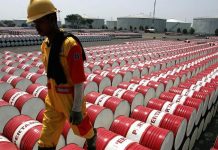
The decisive factor shaping China’s posture is its economic exposure to South Sudan’s oil sector. Through state-backed entities such as the China National Petroleum Corporation (CNPC), Beijing is deeply embedded in the country’s petroleum industry, which underpins state revenue. Oil accounts for the overwhelming majority of government income, making stability an operational necessity rather than an abstract principle. A predictable political environment sustains production, protects infrastructure, and secures long-term investment. China’s emphasis on non-interference is inseparable from this material interest. Yet prioritizing continuity carries risk: by reinforcing short-term stability, China may entrench the instability that threatens both its investments and its credibility as a development partner.
This alignment between economic interest and political doctrine produces a consistent structural effect: reinforcement of the existing balance of power. By opposing or diluting external pressure, Beijing helps insulate governing elites in Juba from sanctions and other accountability measures. The outcome is not neutral. It reduces the external costs of non-compliance and contributes to a system in which elite survival is prioritized over reform, widening the gap between political power and civilian conditions.
This pattern reflects observable outcomes rather than inferred intent. Across UN Security Council deliberations, China’s positions, voting behavior, and bilateral engagement converge on sustaining a political environment conducive to continued oil production. While framed as non-interference, there is limited evidence that China has used its leverage to press for reform or accelerate peace implementation. The issue is not stated intent, but structural effect.
At what point does restraint cease to function as neutrality and instead become alignment with particular political outcomes?
The consequences are visible in the gap between stability and accountability. South Sudan continues to experience recurring ceasefire breakdowns, delayed reforms, and localized violence. Under President Salva Kiir, political order rests on partially implemented agreements that sustain a fragile equilibrium rather than a durable settlement. This raises a broader question: are external actors supporting peace or managing instability?
China’s emphasis on non-interference also obscures a key distinction: not all external pressure is equivalent. There is a difference between coercive regime change and multilateral mechanisms—such as targeted sanctions, arms embargoes, and peacekeeping mandates—designed to enforce agreements and protect civilians. Treating these tools as illegitimate weakens enforcement capacity and risks undermining the multilateral system itself.
This dynamic is evident in China’s conduct at the UN Security Council, including its abstentions on Resolutions 2731 (2024) and 2781 (2025), where it opposed the extension of sanctions regimes. Citing concerns that such measures constrain state capacity, China has consistently advocated for easing restrictions on South Sudan, even as the government in Juba deliberately obstructs the implementation of the September 2018 revitalized peace agreement and delays its core reforms. The result is reduced enforcement coherence and weaker incentives for implementation.
This analysis does not rest on a binary comparison with Western intervention models. The issue is not moral superiority, but whether external engagement reinforces or constrains incentives for political compliance. China’s approach emphasizes economic cooperation and diplomatic restraint while reducing the role of accountability.
Although sanctions and conditional engagement have produced uneven results, their significance lies in imposing costs on non-compliance. Even imperfect enforcement maintains a link between political behavior and consequence. Eroding that link reduces incentives for reform.
At the same time, China supports stabilization mechanisms such as the United Nations Mission in South Sudan (UNMISS). However, this support is calibrated—prioritizing operational stability and humanitarian access while avoiding measures that would alter domestic political incentives. This reflects a preference for crisis management over governance transformation.
The result is a consistent approach: economic integration without political conditionality, and stability support without enforcement. While infrastructure and humanitarian access are maintained, the political system remains insulated from pressure, allowing underlying drivers of instability—weak accountability, exclusionary politics, and delayed reform—to persist.
South Sudanese elites bear primary responsibility for governance failures, but their behavior is shaped by external incentives. China’s engagement contributes to an environment in which the costs of delay are reduced, making partial implementation politically rational.
These dynamics are reinforced by internal political constraints. Despite public commitments to peace, the Kiir government has consistently delayed implementation and resisted structural reform. This reflects a strategic preference for preserving incumbency, as reform threatens established power structures. Regionally, the limited success of the Intergovernmental Authority on Development (IGAD) underscores the depth of these constraints. Without meaningful shifts in domestic incentives and in a context where external actors such as China are perceived as tolerating or accommodating Juba’s resistance to reform, the government has little incentive to alter its current approach, leaving external frameworks constrained in effectiveness.
China does not create these conditions, but it reinforces them by weakening enforcement pressures. By resisting coercive measures and providing support without governance conditions, it reshapes the incentive environment in ways that make delay and partial compliance sustainable.
For civilians in South Sudan, these effects are tangible. Political space remains severely constrained, opposition activity is restricted, and peace implementation is stalled. Appeals to “South Sudanese-led solutions” lose credibility when meaningful participation is structurally limited.
China’s defenders often frame its approach as an alternative to Western interventionism, prioritizing sovereignty and development. Yet infrastructure or oil investments do not address the core political problem: the absence of accountability. Development can coexist with political dysfunction, but it does not resolve it.
The broader debate is often framed as sovereignty versus intervention, but this is a false binary framing. The central question is whether engagement addresses the political conditions sustaining instability or merely manages its consequences.
Accountability mechanisms are not sufficient, but their absence reduces the likelihood of compliance. Without consequences, peace agreements become subject to delay and selective implementation. South Sudan’s experience reflects this gap.
In this context, China’s position is not passive. By prioritizing stability and non-interference amid governance failure, it contributes to an equilibrium that reduces enforcement costs, weakens reform incentives, and stabilizes existing power structures.
If lasting peace is the goal, stability alone is insufficient. Stability without accountability is fragile, and development without reform is incomplete. For a state seeking recognition as a leading global power, this tension is also reputational.
In South Sudan, the choice is not between sovereignty and interference, but between engaging with the political conditions that sustain instability or prioritizing strategic interests within them. China’s approach has leaned toward the latter.
This raises a broader question: when does restraint cease to function as neutrality and instead become an implicit alignment with political outcomes? As non-interference consistently shields South Sudan’s governing elites while preserving external economic interests, this distinction becomes harder to sustain.
Until then, non-interference will continue to coexist with stalled implementation, recurring violence, and a political order resistant to reform—where stability becomes indistinguishable from the interests it was meant to transcend.
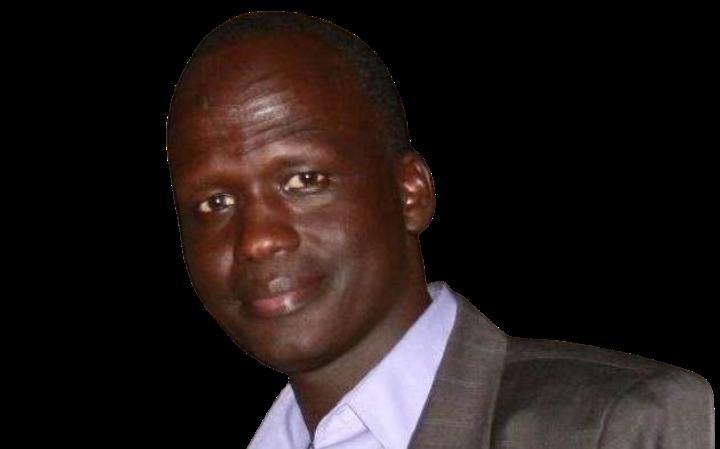
Duop Chak Wuol is an analyst, critical writer, and former editor-in-chief of the South Sudan News Agency. He is a graduate of the University of Colorado; his work focuses on geopolitics, security, and social issues in South Sudan and the broader East African region. His writing has appeared in leading regional and international media outlets. He can be reached at [email protected].
The views expressed in ‘opinion’ articles published by Radio Tamazuj are solely those of the writer. The veracity of any claims made is the responsibility of the author, not Radio Tamazuj.
Source: Radio Tamazuj
For More News And Analysis About South-Sudan Follow Africa-Press