Africa-Press – South-Sudan. Traders in Juba, the capital of South Sudan, have closed at least 10 shops, citing rising taxes and increasing operational costs that have made it difficult to sustain their businesses.
Business owners attributed the closures to increased tax burdens imposed by the Juba City Council.
The charges include annual service fees, town rates, rental value fees, ground rent, garbage collection fees, administrative charges, gliding fees, as well as general maintenance and environmental cleanliness levies.
The Juba City Council recently doubled monthly garbage collection fees, increasing charges for large shops from SSP 60,000 to SSP 120,000, medium-sized shops from SSP 45,000 to SSP 90,000, and small shops from SSP 32,000 to SSP 64,000.
Under the revised fee structure, monthly garbage collection charges for hotels were substantially increased, with first-class hotels from SSP 675,000 to SSP 5,000,000, second-class hotels from SSP 450,000 to SSP 4,000,000, and third-class hotels from SSP 225,000 to SSP 3,000,000.
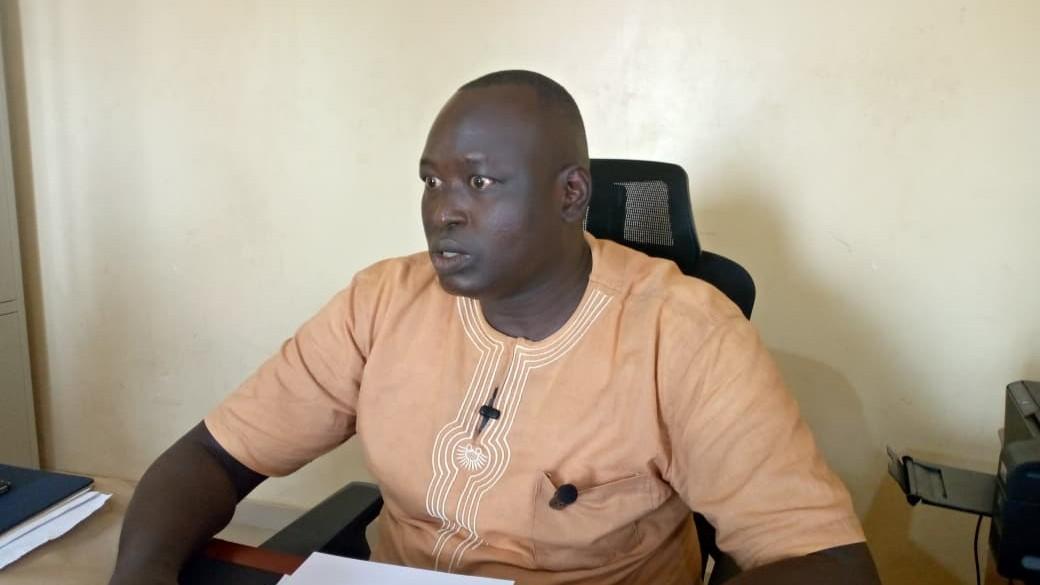
Addressing journalists at a press conference on Tuesday in Juba, Robert Pitia Francis, Chairperson of the Equatoria State Chamber of Commerce, said heavy taxes have forced at least 10 shops to close within a month in Juba.
“Every time we go to the market, you find that, per day or month, there are 10 shops closed. That’s why others start thinking of what other business they can do,” Francis said.
Francis disclosed that excessive taxation is driving many traders out of business, with some closing their shops and others relocating to parts of the country in search of a more favourable business environment.
“Some people will shift from here and go to other states. And some people from other states will come and see what the best thing that I can do here in Juba is,” he said.
He said the multiple taxes place an additional financial burden on businesses already grappling with high operating costs, including rent and taxes.
“If you introduce taxes, you are supposed to see the capital of businesses, operation costs of these businesses, and what they are doing. If they are employing our own people and what service are they offering to their own people,” he said.
Francis called on Juba City Council to ease the tax burden on businesses to prevent closures
“I am calling for reform. And for this reform, we need tax harmonisation. We want to make sure this tax harmonisation comes in. Because now, things are becoming hard. Our own people are suffering,” he said.
“Businesses are struggling. Some are closing. And at the end of the day, the few that you are charging or the few that you are taxing, if it goes beyond the limit, they close. I think you will not get anyone to tax.”
He called for a review of the tax regime, urging authorities to consider a more balanced approach that supports business survival while still generating public revenue.
“So, I am advising our government to make sure they address this matter. They need to find the best way to address this problem. They need to sit down to address this. Let them put aside their self-interest, and put forward the interest of South Sudanese people,” he said.
He argued that the continued pressure on traders could lead to job losses, reduced economic activity, and further strain on the already challenging business environment in the capital.
“I cannot give you the specific number, but per month, people are closing shops not because of anything but because of the heavy taxes. And these taxes are really unbearable. And it is real; our people are feeling it.”
For More News And Analysis About South-Sudan Follow Africa-Press