
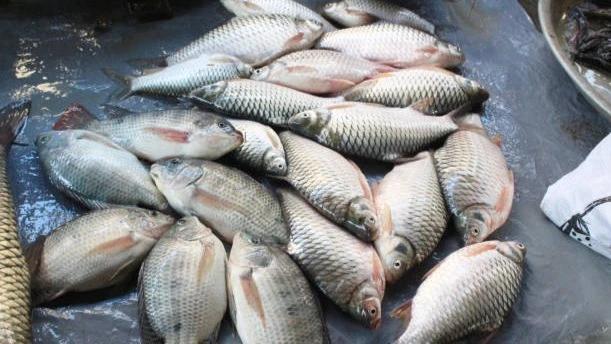
Africa-Press – Tanzania. Zanzibar’s Ministry of Blue Economy and Fisheries has launched a comprehensive program aimed at sensitizing artisanal fishermen on sustainable fishing following the rise in overfishing, illegal and unsustainable fishing practices.
The program targets at ensuring that both the community and the government benefits from sustainable marine resources.
Eng. Omar Mohamed, the Blue Economy Ministry Coordination Officer, told journalists yesterday during a workshop on the blue and circular economy for African journalists from the Indian Ocean region. The workshop was funded by the Geneva-based think tank, Africa 21.
The workshop brought together journalists from Tanzania, Kenya, Madagascar, and Zanzibar, along with participants from the UN Conference on Trade and Development (UNCTAD), the Swiss Embassy, and other experts.
Mohamed cited unsustainable fishing practices that cause overfishing as drag nets, seine nets and other illegal fishing practices.
“We are now taking serious measures to educate fishermen on the importance of following guidelines because overfishing and illegal fishing practices are rampant in Zanzibar. People from other regions are coming to engage in fishing activities here,” he said.
He asserted that local fishermen have expressed concerns about the scarcity of fish, citing that climate change and ongoing overfishing are limiting their catches. They are now seeking government support to access deeper waters for fishing.
“As the water warms and becomes more acidic, it impacts species of all sizes,” he added.
Zanzibar, as an island nation, is heavily dependent on marine resources, fisheries, tourism, and agriculture.
However, the island is now facing the negative impacts of climate change, including rising sea levels, which cause coastal soil erosion and land loss, an increase in cyclones and extreme weather events, and coral reef degradation, which affects both fisheries and tourism.
Furthermore, Zanzibar is grappling with marine pollution, chemical contamination, and plastic waste, all of which pose a significant threat to its marine resources.
Hamad Hamad, Principal Secretary at the ministry of blue economy and fisheries added that fisheries and tourism are the backbone of Zanzibar’s socio economic development, supporting the livelihoods of around two- thirds of the population.
Fisheries contribute 4.8 percent of GDP, while tourism accounts for over 29 percent and more than 95 percent of Zanzibar”s fisheries are near shore, directly employing 60,000 people with an additional 100,000 individuals working in the value chain, 17 percent of whom are women.
The aquaculture sector, dominated by seaweed farming, provides employment for 15,559 people.
He says, 80 percent of whom are women.
Other aquaculture activities such as Mud crab farming, sea cucumber and finfish (milkfish) also play vital roles.
In 2024, seaweed production alone reached approximately 19,000 tons.
Additionally, 99 percent of Zanzibar”s international trade is seaborne.
He also suggests that it is time to adopt new, sustainable methods of utilizing our oceans -methods that prioritize resilience and sustainability for both the environment and our communities.
Meanwhile, Swiss Embassy Representative Consuelo Natalie said the workshop will help the media to produce high quality public interest content and gain valuable insights into sustainable economic models and enhance their ability to report on these crucial issues.
“The Third UN Ocean Conference will be a key platform for Zanzibar to showcase its ocean protection and sustainability efforts. Journalism plays a vital role in shaping public opinion and advancing sustainable development,” she said
For More News And Analysis About Tanzania Follow Africa-Press