
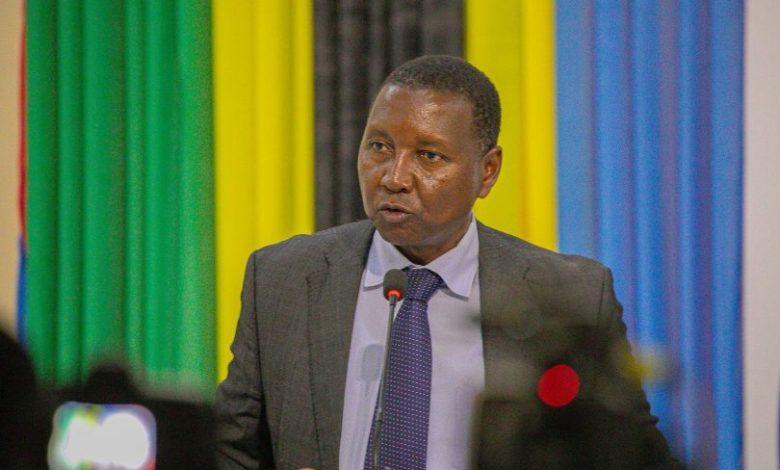
Africa-Press – Tanzania. THE Minister for Education, Science and Technology, Prof Adolf Mkenda, yesterday stressed the urgency of accelerating education reforms to keep pace with the global shift toward science and technology, warning that inadequate investment in these areas could impede the nation’s progress.
Speaking during the closure of the Annual General Meeting of Chairpersons and Heads of public primary schools from Mainland Tanzania, Prof Mkenda said the ongoing curriculum overhaul is intended to equip young Tanzanians with the skills needed to navigate a digital era defined by artificial intelligence (AI), cyber security, robotics, drones and other emerging innovations.
“A country that does not invest sufficiently in science and technology will be left behind,” Prof Mkenda warned. He urged head teachers to encourage pupils to pursue science subjects so that they can seize new global opportunities.
He explained that students who excel in science at A-level are fully sponsored by the government through university, part of a deliberate strategy to channel top talent into critical science and technology fields.
Prof Mkenda added that technological transformation is already reshaping labour markets worldwide.
“While AI may phase out some jobs, it is also creating vast opportunities that Tanzania must be prepared to harness. If we do not prepare our people, we will be forced to rely on foreign experts,” he cautioned.
As part of broader government efforts, 50 of the country’s top-performing students are currently attending a boot camp at the Nelson Mandela African Institution of Science and Technology (NM-AIST) in Arusha, preparing for government-funded degree studies abroad under the Samia Scholarship Extended Programme.
Prof Mkenda stressed that the long-term benefits of the education reforms will be realised by future generations, urging teachers to remain patient and continue providing feedback as the new curriculum rolls out.
On English proficiency, Prof Mkenda said new teaching approaches aim to ensure pupils who complete primary school are able to communicate confidently.
“Failing to speak English after seven years in school is a sign of a serious weakness in the system,” he said.
He added that preparations are underway for the reception of the double cohort in 2028, in line with the 2014 Education Policy (2023 Edition)
For More News And Analysis About Tanzania Follow Africa-Press