

Africa-Press – Tanzania. THE persistent struggle for gender equality remains one of the most defining challenges of global development, shaping not only the lived experiences of individuals but also the broader socio-economic and political landscapes of nations.
As societies evolve, so does the understanding of gender disparities, their root causes, and the urgent need for practical responses informed by evidence, policy, and community engagement.
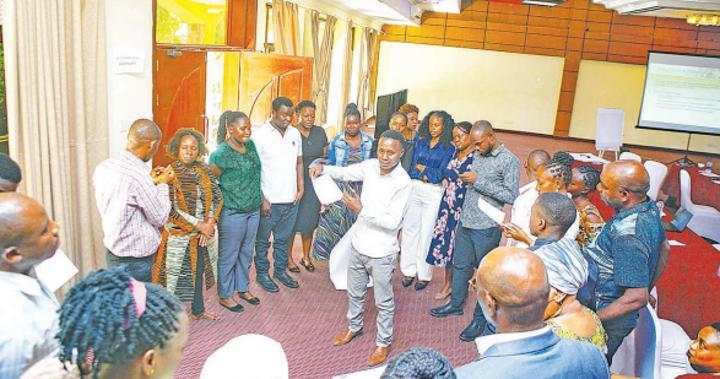
It is within this context that the recent training held in Dodoma, organized by HakiElimu under the SAUTI ZETU project, brought together various stakeholders for a capacity-building session aimed at advancing gender inclusion and strengthening gender accountability in the education sector.
The session, facilitated by Dr Consolata Sulley, a Political Science Lecturer from the University of Dar es Salaam (UDSM), provided a profound exploration of the gender gap, gender inequality, gender-based constraints, and the strategic approaches required to close these disparities.
The lecture opened with an examination of the Global Gender Gap Index 2025, a comprehensive benchmark that tracks progress across countries in achieving gender parity.
According to Dr Sulley, the 2025 report reveals that 68.8 per cent of the global gender gap has been closed, a figure that reflects gradual improvement but also underscores the long journey ahead.
At the current global pace, full gender parity is projected to be reached in 123 years, a sober reminder that despite decades of advocacy and policy reforms, inequality continues to persist across multiple spheres.
In her lecture, Dr Sulley emphasized that the Global Gender Gap Index measures progress in four critical areas economic participation, educational attainment, health and survival, and political empowerment. While health and education have seen the most significant progress closing 96.2% and 95.1% of their respective gaps economic participation and political empowerment remain dangerously behind.
“The economic gap continues to narrow at a slow rate, with projections indicating that it will take an additional 135 years to close. Even more distressing is the political empowerment gap, where only 22.9 per cent of the disparity has been closed, meaning full political gender parity may take up to 162 years if current trends persist,” he noted These figures, as presented by Dr Sulley, offered participants not only statistical insight but also a deeper understanding of the structural and systemic barriers that hinder meaningful progress.
The discussion then shifted to the realities observed within the Tanzanian context, particularly in the education sector. HakiElimu’s SAUTI ZETU project that aims to strengthen gender integration in community development and educational governance, recognizes the importance of equipping stakeholders with knowledge that enables them to identify and challenge gender-based constraints.
During the three-day training, participants acknowledged that gender inequality manifests in various forms including unequal access to opportunities, social norms that reinforce male dominance, and institutional practices that fail to consider the specific needs of girls, women, and other marginalized groups.
Dr Sulley contributed by narrating that one of the key themes addressed was the concept of gender-based constraints barriers that individuals face specifically because of their gender. These constraints may arise from cultural expectations, discriminatory policies, household responsibilities, or unequal power dynamics that restrict decisionmaking.
“For instance, while girls may have improved access to education globally, factors such as early marriage, gender-based violence, and limited access to menstrual hygiene products continue to hinder their academic progression and long-term economic participation. Similarly, women’s limited presence in political decision-making bodies results in policies that do not fully reflect the needs and perspectives of all members of society,” she remarked.
She mentioned that, “To guide communities and stakeholders in addressing these disparities their must be a framework of strategic gender needs. Unlike practical gender needs which respond to immediate necessities such as water access, safety, or basic health services strategic gender needs aim to confront the root causes of inequality.”
“These needs include longterm, transformative measures such as legal reforms, empowerment programs, education for leadership, and the dismantling of patriarchal norms. Strategic gender needs are essential for shifting power relations, enabling marginalized groups, especially women, to challenge and ultimately transform the structural conditions that perpetuate inequality,” she added.
“Another critical component of the training was exploring ways to avoid or reduce the gender gap. The gender gap requires both institutional commitment and community engagement. One of the most impactful approaches is promoting inclusive participation, ensuring that women and men have equal opportunities to contribute to and benefit from development initiatives.
“Increasing access to information, strengthening accountability systems, and fostering gender-responsive budgeting were also identified as essential tools for bridging disparities. Participants were encouraged to actively monitor service delivery within their communities and advocate for gender-sensitive planning in educational institutions and local government structures,” she advised.
The concept expands the gender discourse by acknowledging that not all women experience inequality in the same way marginalized subgroups face compounded disadvantages that require more tailored interventions.
Through case studies and group discussions, participants examined how intersectionality plays out in community settings and how inclusive strategies could help address the multiple layers of discrimination faced by diverse groups.
Dr Hildergade Mehrab, The Head of the Projects and Advocacy Department at Child Support Tanzania (CST) expressed that, As the training progressed, participants reflected on the significance of gender accountability and why it must be prioritized in Tanzania’s development agenda.
Accountability helps ensure that policies intended to promote gender equality are not only welldesigned but effectively implemented.
“It requires collaborative efforts involving government agencies, civil society, development partners, and the community. The HakiElimu training has reinforced the importance of community-driven oversight encouraging citizens to hold authorities accountable, demand transparency in resource allocation, and monitor progress in the delivery of gender-responsive services,” she noted.
“The participatory learning sessions, stakeholders gained crucial knowledge on identifying gender-based constraints, interpreting global and national trends, and applying strategic gender approaches to foster longterm transformation,” she emphasized.
She concluded that the alarming statistics from the Global Gender Gap Index serve as a powerful reminder that achieving gender equality is not simply a matter of policy creation but of sustained action, societal commitment, and continuous advocacy.
As Tanzania moves forward with projects such as SAUTI ZETU, empowered communities and informed stakeholders will be central to driving meaningful, systemic change toward a more inclusive and equitable future.”
The training delivered under the SAUTI ZETU project not only illuminated the current state of gender disparities but also underscored the urgency of adopting strategic, long-term solutions that challenge entrenched systems of inequality.
Through the insights shared on the training and contributions from other experts, participants gained a clearer understanding that bridging the gender gap requires more than statistics it demands deliberate action, informed policy-making, and community involvement at every level.
The discussions highlighted that while progress has been made in areas such as health and education, persistent gaps in economic participation and political empowerment continue to limit women’s full contribution to national development.
The training further reinforced the idea that gender equality cannot be achieved through isolated efforts. it must be driven by strong accountability mechanisms, inclusive decisionmaking, and transformative gender-responsive strategies that dismantle harmful social norms.
By equipping stakeholders with knowledge on gender-based constraints, strategic gender needs, and the importance of intersectionality, the program strengthened their capacity to advocate for systemic reform within their communities.
As Tanzania advances towards a more inclusive society, the lessons from this training serve as a crucial reminder that genuine gender equality is possible only when citizens, leaders, and institutions commit to sustained, collective action.
The journey may be long, but with empowered communities, evidence-based approaches, and persistent advocacy, transformative change is not only achievable but inevitable.
For More News And Analysis About Tanzania Follow Africa-Press