
Africa-Press – Tanzania. A representative of the Secretariat on Combating Human Trafficking, Mr Celestine Makoba has called on collaboration between the government institutions, non-governmental organizations, and stakeholders in strengthening efforts to combat human trafficking, noting that as technology continues to advance, those involved in human trafficking keep developing numerous new methods to sustain the illegal trade.
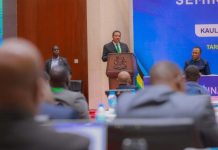
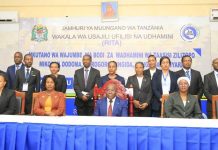
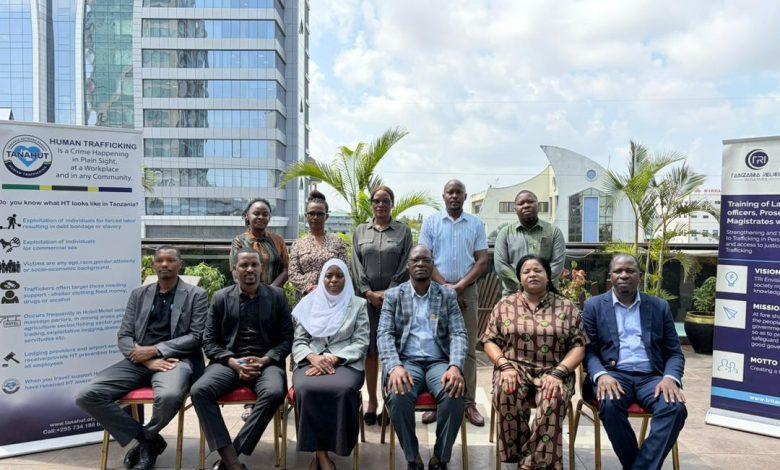
Mr Makoba made the statement during a two-day training organised by the Tanzania Relief Initiative (TRI) in collaboration with the Tanzania Network against Human Trafficking (TANAHUT) sponsored by Hanns Seidel Foundation today December 3, 2025, in Dar es Salaam noting that without a unique and shared understanding in the fight against the crime, they will not be able to achieve the goal of eliminating the crime in the country.
During the training that was attended by various lawyers and advocates, Mr Makoba outlined on various measures taken by the government in fighting human trafficking in the country, which include amending the law where the most recent amendment was made last year.
“One of the key improvements in these amendments is that once a suspect is found guilty, the first punishment is imprisonment, and the fine becomes an additional penalty,” he stated.
Elaborating, he said that in 2015, the government developed regulations that provide proper guidance in identifying victims or survivors of human trafficking and creating essential tools to help reconnect them with their families.
“These regulations also give clear direction on ensuring that survivors are protected because they are potential witnesses. We have also been preparing an action plan every three years, and the most recent plan, which ended last year, has already been completed. The new action plan for 2025–2028 is ready and awaiting launch,” he said.
Explaining the depth of the matter, Mr Makoba noted that the issue affects every place, everywhere, and in today’s world, no country has been spared; the only difference is the level of impact.
Executive Director for Tanzania Relief Initiatives (TRI), Advocate Edwin Mugambila noted that the training aims to build capacity and share experiences related to the problem of human trafficking and that through it participants expect to learn and identify the new methods used by criminals, examine the experiences of other countries, assess where they have failed, and determine what can be done to dismantle trafficking networks that continue to exploit and destroy the destiny and future of young people aged between 12 and 28.
Additionally, the advocate stated that Tanzania continues to be a source, transit, and destination country for human trafficking while mentioning regions like Morogoro, Dar es Salaam, Kagera, Geita, Mara, Mbeya, Songwe, and Zanzibar as the most affected areas.
Moreover, he said that Dar es Salaam and Zanzibar are the main sources and gateways of the crime.
“The most affected areas are rural communities where people lack education and do not have access to accurate information. The families or households most impacted are those living in poverty, making it easier for traffickers to lure their family members with enticing promises, only for them to end up in the hands of human traffickers,” he said.
He added, “Tanzania is one of the countries that are not safe, and more than 90 percent of the data shows that most victims are victims of internal (domestic) trafficking and over 70 percent of the victims are children and women.”
However, Advocate Mugambila said that they observed a serious problem in the area of prosecution and trial, as many of the cases they encounter either never make it to court, or when they do, the offenders end up being charged with petty crimes.
“In the presentations, we will highlight why children and women are affected, and we will examine the demand and supply aspects. These statistics indicate that there are areas where we as stakeholders have not fully fulfilled our responsibilities,” he said.
For More News And Analysis About Tanzania Follow Africa-Press