
Africa-Press – Tanzania. THERE is always something stirring about the early morning of Independence Day, the quiet beat of a country catching its breath before the celebrations begin, the feeling that time itself pauses long enough for us to look back at the road we have travelled.
Tanzania’s story has never been one of shortcuts or sudden miracles.
It is a narrative of patience, determination and a kind of collective courage that does not shout but lives steadily in the choices people make every day.
As we step into this year’s commemoration, the air carries not only memory but momentum.
The progress that has quietly taken shape over the past year, especially in 2025, feels like a reminder that, even in an unpredictable world, resilience remains one of our greatest national strengths.
Every Independence Day brings familiar reflections, but this year’s moment feels slightly different, more mature, more grounded.
It feels as if the country has arrived at a point where we can acknowledge both our accomplishments and our challenges without losing faith in the journey.
That balance, that willingness to face reality without letting go of hope, is at the core of our national identity. Furthermore, when you look at the transformation happening across the country, one story stands out, quite literally paved into our landscape.
It is the story of the roads that now stitch together communities that once existed apart, the story of physical and symbolic pathways that tell us how far we have come and how much farther we intend to go. When Tanzania gained independence in 1961, it inherited only around 1,500 kilometres of paved roads.
Most of them sat in towns, serving only a fraction of the population. Much of the country remained out of reach, geographically and economically. Farmers in remote areas carried produce for hours, sometimes days, to reach a buyer.
Students walked long paths to school. Medical care was often too far to reach in time. It was a freedom that still came with limits, a kind of independence still waiting for space to breathe.
However, even then, there was a quiet determination that someday the promise of independence would be felt just as strongly in the rural hills as it was in the capital.
Decades later, that dream began to take a more precise shape. The establishment of TANROADS in 2000 marked a turning point in the country’s development.
What started as a technical institution quickly became a symbol of the nation’s intention to bring the idea of freedom down to earth, something you could feel beneath your feet and the wheels of a bus, not just in the lines of a constitution.
By 2025, TANROADS manages over 37,000 kilometres of roads and more than 9,500 bridges, a scale unimaginable at independence.
These are not just numbers; they are stories, stories of mothers who can now reach hospitals in time, traders who can expand their businesses and students who no longer wake before dawn to arrive at school before the bell. This year has been significant.
Progress in 2025 has felt almost like a series of quiet but decisive steps forward. The Tanzanite Bridge in Dar es Salaam continues to reshape the city’s rhythm, softening the daily grind of traffic and giving the coastline a modern silhouette.
The Kigongo–Busisi Bridge, destined to be East Africa’s longest, is nearing completion, offering a glimpse of what cross-lake travel will soon look like: A five-minute smooth crossing instead of 45 minutes waiting for a ferry.
Even the more remote roads, like the Mpemba–Isongole stretch connecting Songwe to Malawi, carry significance that goes beyond engineering.
They bring dignity to communities that once felt peripheral to national life. They make Tanzania feel whole. Each time a new section of road opens, it is easy to forget what it replaces: The isolation, the exhaustion, the uncertainty.
A road seems simple until you imagine life without it. What TANROADS has been building, kilometre by kilometre, is not only infrastructure but confidence.
A country moves differently when its people feel connected, when a farmer knows the market is within reach, when goods can move steadily across regions, when students arrive at school without the journey stealing half their energy.
The road network has become a quiet enabler of inclusion, a bridge not only between places but between possibilities.
All of this is happening at a time when the world is shifting unpredictably. Global politics feels heavier than before, markets rise and fall with astonishing speed and countries everywhere, rich and poor, are tightening their belts.
Tanzania is not immune to these pressures. Borrowing has become more expensive, food systems face disruptions and even climate patterns seem to rewrite themselves every season.
It is in these moments that a nation’s character is tested, not in its celebrations, but in how it responds to difficulty. This is where Tanzania’s commitment to peace stands out as our most reliable shield.
No matter how tense international debates become or how loud global disagreements grow, Tanzania’s stability remains one of the region’s quiet anchors.
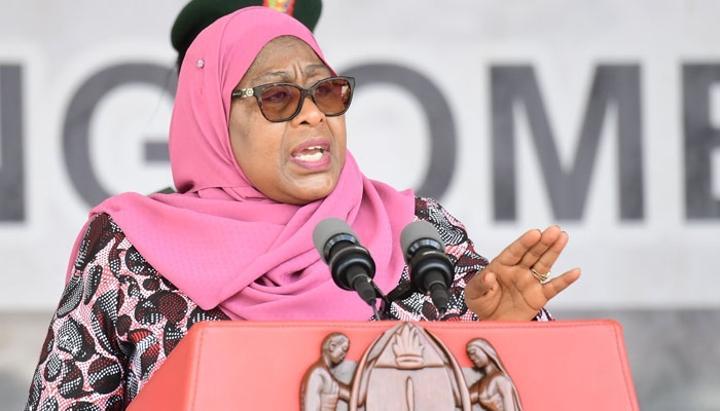
It is easy to underestimate peace until you live in a world where peace is increasingly rare. Nevertheless, peace is not a passive gift; it is an achievement that requires steady leadership, responsible dialogue and a public willing to protect unity even when frustrations rise. The President’s recent speech underscored that truth.
It leaned into the message that progress and responsibility must walk hand in hand, that national finances require careful stewardship and that development must be built on a foundation strong enough to withstand global shocks.
It was a reminder that the next phase of growth will demand more discipline from all of us, more innovation, more patience, more willingness to prioritise long-term gains over short-term comfort. “Kufunga mkanda” is no longer just an economic expression; it has become a cultural moment of maturity.
It suggests that we are willing to adjust our steps to match the rhythm of a world that has grown harder to predict. Nevertheless, as the country moves forward, it does so under the watchful eye of the international community.
Partners and observers continue to raise concerns about what they perceive as shrinking democratic space. For Tanzania, this moment requires careful navigation.
The nation must continue to strengthen dialogue, uphold transparency and reassure both citizens and allies that its long-standing commitment to peace includes openness and accountability.
A resilient nation listens without losing its voice, engages without compromising its stability, and that invites constructive criticism without surrendering its sovereignty.
The road ahead demands clarity, fairness and institutions strong enough to earn the trust of those they serve.
Still, when you step back and look at the broader picture, Tanzania’s journey remains one of upward movement.
The goal of expanding TANROADS’ network to over 45,000 kilometres by 2030, with expressways and smart highways, illustrates a country not defined by the anxieties of the moment, but by the ambition of its future.
Roads have become our national metaphor: Built slowly, carefully, sometimes under challenging conditions, yet always moving us forward.
As Independence Day approaches, the story of Tanzania feels like a long road trip, with each generation taking turns at the wheel. The scenery changes, the challenges shift, but the direction stays the same.
This year, there is a renewed sense that the country understands what it must do: Protect peace like a precious resource, invest wisely, listen more, argue responsibly, innovate boldly and remain steady even when the world shakes. Freedom gave us the chance to begin. Resilience ensures we continue.
Furthermore, as long as we keep building roads, schools, dialogue and trust, the Tanzania we pass to the next generation will be stronger, more connected and more confident than the one we inherited.
Source: Daily News – Tanzania Standard Newspapers