
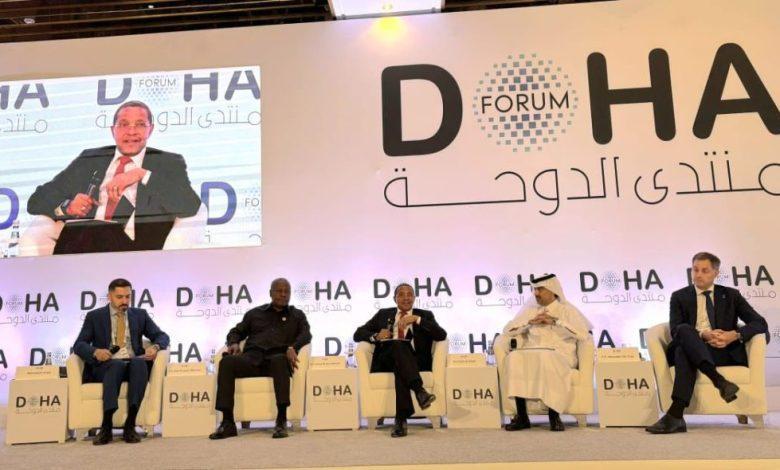
Africa-Press – Tanzania. FORMER President Jakaya Mrisho Kikwete is raising the country’s global profile through his leadership of the Global Partnership for Education (GPE), where he is helping drive efforts to secure quality schooling for vulnerable children worldwide.
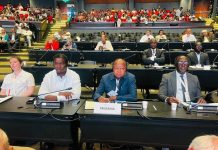
In his role as Board Chair, Dr Kikwete presided over the GPE’s endof-cycle board meeting in Brussels, Belgium, marking the conclusion of the fourth financing campaign (2021–2025).
The campaign mobilised around 4.1 billion US dollars to support early childhood and primary education in low-income and developing countries, particularly for girls and children affected by conflict, drought, displacement and natural disasters.
The Brussels meeting assessed the success of GPE’s fundraising model, which blends grants with co-financing arrangements. Under this system, partner countries commit their own resources to education and GPE adds further support based on shared priorities.
According to GPE’s latest report, funds raised during the 2021–2025 cycle have already improved learning conditions for an estimated 372 million children. A further 10 million children have been enrolled in school and 4.7 million teachers have received additional training.
For Tanzania, one of GPE’s 90 beneficiary nations, this progress underscores the value of strong international partnerships in helping expand access to education.
Since joining GPE in 2013, the country has received over 344 million US dollars to support early childhood and primary education reforms. The meeting in Brussels also reviewed plans for GPE’s next five-year financing campaign, which will run from 2026 to 2030.
The upcoming drive aims to raise 5 billion US dollars to extend the organisation’s reach and support quality education for at least 750 million children worldwide.
The new campaign will be co-chaired by Nigerian President Bola Ahmed Tinubu and Italian Prime Minister Giorgia Meloni, a pairing that reflects growing collaboration between Africa and Europe on global education goals.
Germany has already pledged 320 million US dollars for the next cycle, signalling strong donor confidence in GPE’s approach. More commitments are expected as the campaign develops.
The meeting also took note of changes in the global financial environment, where some long-standing donors are shifting resources to new economic and geopolitical priorities. In response, GPE plans to sharpen its use of available funds and broaden its donor base.
This includes engaging non-traditional donors, particularly countries in the Middle East, to align their international education initiatives with GPE programmes and boost longterm support for children most in need.
As part of these efforts, Dr Kikwete attended the 23rd Qatar International Forum, holding discussions with senior Qatari leaders. He reiterated GPE’s willingness to deepen cooperation with Qatar and acknowledged the country’s major contributions to global education through institutions such as the Education Above All Foundation.
He praised Qatar’s commitment to supporting disadvantaged children and affirmed GPE’s readiness to strengthen collaboration in the coming years. Established in 2002 by the G7, GPE works to accelerate progress towards universal access to free, fair and quality basic education for every child, regardless of gender, age or social circumstances.
For Tanzania, Dr Kikwete’s leadership offers a strategic advantage. It places the country at the centre of global education dialogue and aligns with its long-term goal of ensuring that every child gains the foundational skills needed for future success.
GPE funding has already supported government efforts to improve classrooms, teacher training, education planning and inclusion, particularly for marginalised children.
Continued engagement ensures that Tanzania remains part of a wider global movement seeking to boost education outcomes for millions. Dr Kikwete’s work at GPE reflects a long-standing commitment to education, a sector he championed throughout his presidency.
His leadership demonstrates Tanzania’s capacity to contribute meaningfully to global development solutions and signals a broader ambition to strengthen education systems across the world.
As GPE prepares for its next phase, Tanzania stands to gain not only from heightened global visibility but also from sustained investment in the education of its young people, reinforcing national development priorities and future opportunities.