
Africa-Press – Tanzania. THERE are moments in a nation’s political calendar that appear unassuming yet carry a profound sense of collective attentiveness.
This year, December 9, Tanzania’s cherished Independence Day, unfolded not with the exuberance usually associated with the occasion, but with a poised calm that ultimately reflected the country’s commitment to stability, responsibility and national unity.
From the early hours, the government acted with clarity and purpose, issuing firm updates to counter rising online speculation. Its message was unequivocal: The nation remained peaceful, orderly and fully under control.
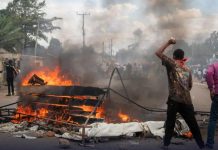
Reports and images suggesting otherwise were promptly addressed, many were confirmed to be outdated, misleading, or taken from unrelated events.
The Tanzania Police Force reiterated that security agencies were “actively safeguarding peace”, urging citizens to disregard social media content designed to provoke fear or confusion.
This confidence from Dodoma and Dar es Salaam stood in contrast to developments elsewhere on the continent. In Kenya, six human rights defenders were arrested outside the Tanzanian Embassy while attempting to submit a petition relating to allegations tied to October’s political climate.
The Kenya Human Rights Commission reacted sharply, creating a regional moment of tension that underscored how closely Tanzania’s domestic narrative was being watched beyond its borders. Online, a swirl of videos, some authentic but old, others entirely disconnected from current events, added to the noise.
ALSO READ: Tanzania explores strategies to promote Kwala Industrial Park
Several clips circulating widely were tracked back to incidents from October and at least one was traced to a Maasai cultural event months earlier in Arusha. Tanzania’s authorities responded with transparency, using regular briefings and visual evidence to dispel confusion.
State broadcasters, including TBC, moved through areas rumoured to be sites of unrest, capturing live footage of ordinary life carrying on uninterrupted.
Regional commissioners echoed this approach with on-the-ground updates, reinforcing the message that nationwide calm was genuine, not manufactured. Despite this visible normality, the day carried a subtle weight less about imminent danger and more about the lingering memory of late-October tensions.
Although December gatherings were legally prohibited under constitutional and public order provisions, questions circulated quietly among some citizens regarding the boundaries between public assembly and national security. Such conversations remained mostly in private spheres, reflecting a population that is thoughtful, observant and invested in safeguarding the nation’s peace.
The Kenyan arrests added another dimension to public reflections. With activism unfolding outside Tanzania’s borders, it became clear that political narratives do not always respect geography.
For many Tanzanians observing from home, the images served as a reminder of how responsibly their own government had worked to maintain calm and prevent escalation within the country.
The economy, too, played a background role in the day’s atmosphere. While commercial activity continued smoothly, shops opening, buses operating, markets functioning, there was a subtle conservatism in the air.
Some traders preferred caution, reflecting the wider regional and online speculation rather than any domestic instability. Yet this restraint also demonstrated the public’s trust in the Government’s steady handling of the situation: Tanzania remained open, functioning and peaceful.
Across the regions, life quietly affirmed the country’s resilience. Children walked to school, markets in Dodoma, Morogoro and Mbeya maintained a steady hum, and families prepared for evening routines.
Despite the narrative contest unfolding across social media, Tanzania itself remained composed. The Government’s assurances were matched by the lived reality on the ground. This coexistence of calmness and caution defined the day.
The atmosphere held a seriousness shaped not by events, but by the absence of the very unrest that rumours had predicted. Yet it also revealed a population capable of navigating uncertainty without panic, anchored by a government intent on preserving national harmony.
As evening settled, the picture remained unchanged: No demonstrations, no disruptions, no security incidents. Just a country quietly going about its business, reaffirmed by its own stability.
The discussions about what this calm represented, ongoing vigilance, strengthened stability, or the lessons of recent months, continued in households and community circles, but without overshadowing the day’s peaceful reality.
And that is what makes this December 9 notable. Not because of what unfolded, but because of what did not. Tanzania demonstrated the strength of its institutions, the maturity of its citizens and the effectiveness of its leadership in guiding the nation through a moment of heightened attention.
In the end, the calm was complete and the country’s unity unmistakable. If anything, the day served as a reminder that peace is not simply the absence of unrest, it is the product of deliberate choices, collective responsibility and a shared commitment to the wellbeing of the nation.
Tanzania held its breath, and then exhaled into an evening defined by stability, confidence and quiet pride.
Source: Daily News – Tanzania Standard Newspapers