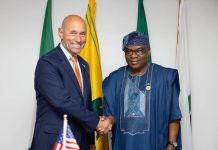


Africa-Press – Tanzania. WHEN news surfaced that Tanzania had signed a $1.08 million, two-year contract with a Washington consulting firm led by a former Republican congressman, the reaction followed a script that has become almost automatic. Headlines hardened within hours.
Social media, particularly among Tanzanians in the diaspora, treated the disclosure less as information than as evidence. To critics already suspicious of the government, the contract was not a publicrelations move at all; it was a confession. There was an emotional logic to that response.
Tanzanian politics over the past few years have not been abstract. Elections were not distant rituals but deeply felt moments that strained trust and widened generational divides. So, when a clean dollar figure appeared, foreign, precise and easily repeated, it became a vessel for frustration.
The number itself acquired a moral weight it was never meant to carry. Watching the debate unfold, however, it became clear how quickly Tanzania stopped being discussed as a country and started being treated as a symbol, a symbol of surrender to some, of defiance to others.
The reality of a society under pressure from within and without was flattened into a single act: hiring a lobbyist. What mattered was not what the contract did, but what people needed it to prove.
That does not mean the context that produced such reactions can be dismissed. Tanzania did experience a contentious electoral period, and the criticism that followed was not invented. Opposition actors raised concerns about political space. Civil society questioned institutional independence.
Many ordinary citizens, especially younger ones, spoke openly about fatigue and a sense that democratic promises were falling behind lived reality. Any serious analysis has to begin there. But it cannot end there either.
What followed that period matters, even if it has drawn less attention. Since President Samia Suluhu Hassan assumed office, the political atmosphere has shifted in ways that are visible but incomplete. Opposition rallies resumed after years of restriction. Media engagement widened, cautiously and unevenly.
ALSO READ: Chiefs, citizens unite to defend peace
The tone of governance softened, replacing confrontation with dialogue. None of this erased past damage and none of it resolved every grievance. Still, it altered the direction of travel.
Democratic repair is rarely dramatic. It is slow, uneven, and often frustrating, particularly for younger citizens who feel time slipping away. Tanzania now sits in an uncomfortable middle ground, no longer frozen in crisis, not yet fully trusted again. It is precisely in this space that outside judgment is most unforgiving. It was into this atmosphere that the Washington contract landed.
To some observers, it looked like proof that reforms were cosmetic. To others, it seemed like a misunderstanding of how power actually works. Washington is not just another capital. It is a gatekeeping ecosystem where policy, funding, security cooperation and reputations intersect.
Think tanks shape donor priorities. Congressional staff influence trade and aid. Editorial boards frame entire regions before policymakers ever engage them. A country under scrutiny can either enter that system or allow others to define it. Engagement, however, comes with ethical discomfort. The contract’s emphasis on third-party validators, academics, former officials, policy institutes, raised legitimate concerns.
There is a thin line between explanation and influence laundering. In an era of deep mistrust toward elite consensus, such strategies risk reinforcing cynicism rather than dispelling it.
Acknowledging this risk is essential to any honest defence. Still, Tanzania did not invent this playbook. Under US disclosure laws, governments across the world spend far more navigating Washington. Japan and South Korea routinely spend tens of millions of dollars annually on lobbying and strategic communications.
Saudi Arabia has, in some years, exceeded $30 million. Developing countries do the same on a smaller scale: Kenya, Nigeria, and Ethiopia have all retained US firms at costs comparable to or higher than Tanzania’s. Normalisation, however, should not be confused with endorsement.
A widespread practice can still be ethically fraught. Much of the intensity surrounding the contract has less to do with elections than with minerals. Strip away the outrage, and the subtext becomes clearer. The United States is racing to diversify supply chains for critical minerals essential to electric vehicles, renewable energy, and defence technology. China’s dominance has turned this into a geopolitical priority.
Tanzania, with its graphite, nickel, gold, and rare-earth prospects and an established mining sector, sits squarely in that recalibration, whether it seeks it or not. President Samia has been blunt on this point. Tanzania will not accept lectures about its resources from countries whose interests sharpened only when supply chains became vulnerable. Partnerships, she has argued, must be negotiated, not imposed.
For many Tanzanians, this position resonates less as defiance than as a memory of earlier periods when African resources were treated as entitlements rather than as assets that require consent. Scepticism is still warranted. Mining has long brought both revenue and resentment.
Contracts exist, but debates over transparency, local benefit, and environmental cost remain unresolved. If Tanzania wants to present itself as a strategic partner rather than a resource frontier, it will need to show that governance keeps pace with ambition, not merely promise it. Criticism directed at Dar es Salaam often slips into moral absolutism.
Why spend money abroad when challenges persist at home? It is a fair question. Nevertheless, it becomes less convincing when asked selectively, without acknowledging that global politics routinely subordinates democratic ideals to strategic interests. Pointing this out does not excuse Tanzania; it situates the scrutiny. More troubling is how dissent has sometimes been flattened into distortion.
Activists raising concerns about elections, youth unemployment, or political inclusion are not enemies of the state. Many speak from lived frustration. However, exaggeration, claims that the government is spending “billions” to erase wrongdoing, does real damage.
It corrodes trust not only in government but in critique itself. Inside Tanzania, the work that will ultimately matter continues without much spectacle. Youth engagement initiatives exist, though outcomes remain uneven. Dialogue has reopened, though scepticism persists.
Prime Minister Mwigulu Nchemba’s emphasis on stability and inclusion reflects an understanding that legitimacy cannot be narrated into existence. It must be felt, especially by a generation that measures democracy less by slogans than by opportunity. History also weighs heavily.
ALSO READ: Arrest in Tanzania: Where the question begins
Tanzania’s political culture, shaped since the era of Julius Nyerere, has long prioritised unity and peace, sometimes at the expense of speed. That legacy is debated and reinterpreted by each generation, but it still informs how change is pursued: cautiously, sometimes frustratingly so.
Watching Tanzania navigate international criticism today can be exhausting. Standards shift. Patience thins. Context is often optional.
Nevertheless, sovereignty in the modern world is not silent. It is engagement, imperfect, risky, and frequently misunderstood. Hiring a Washington firm will not resolve Tanzania’s democratic questions, nor should it. Those answers must be forged at home, through accountability as much as dialogue.
What the contract represents, then, is neither scandal nor surrender. It is something more ordinary and more human: a country under pressure choosing to speak for itself in a system that rarely waits to listen. That choice may fail. It may even backfire.
However, it is not proof of guilt. Sometimes nations explain themselves not because they are certain or innocent, but because they are tired of being spoken for, and unwilling to fade quietly into someone else’s story
For More News And Analysis About Tanzania Follow Africa-Press