

Africa-Press – Tanzania. TANZANIA has firmly set its sights on a bold and transformative future as outlined in its comprehensive Vision 2050.
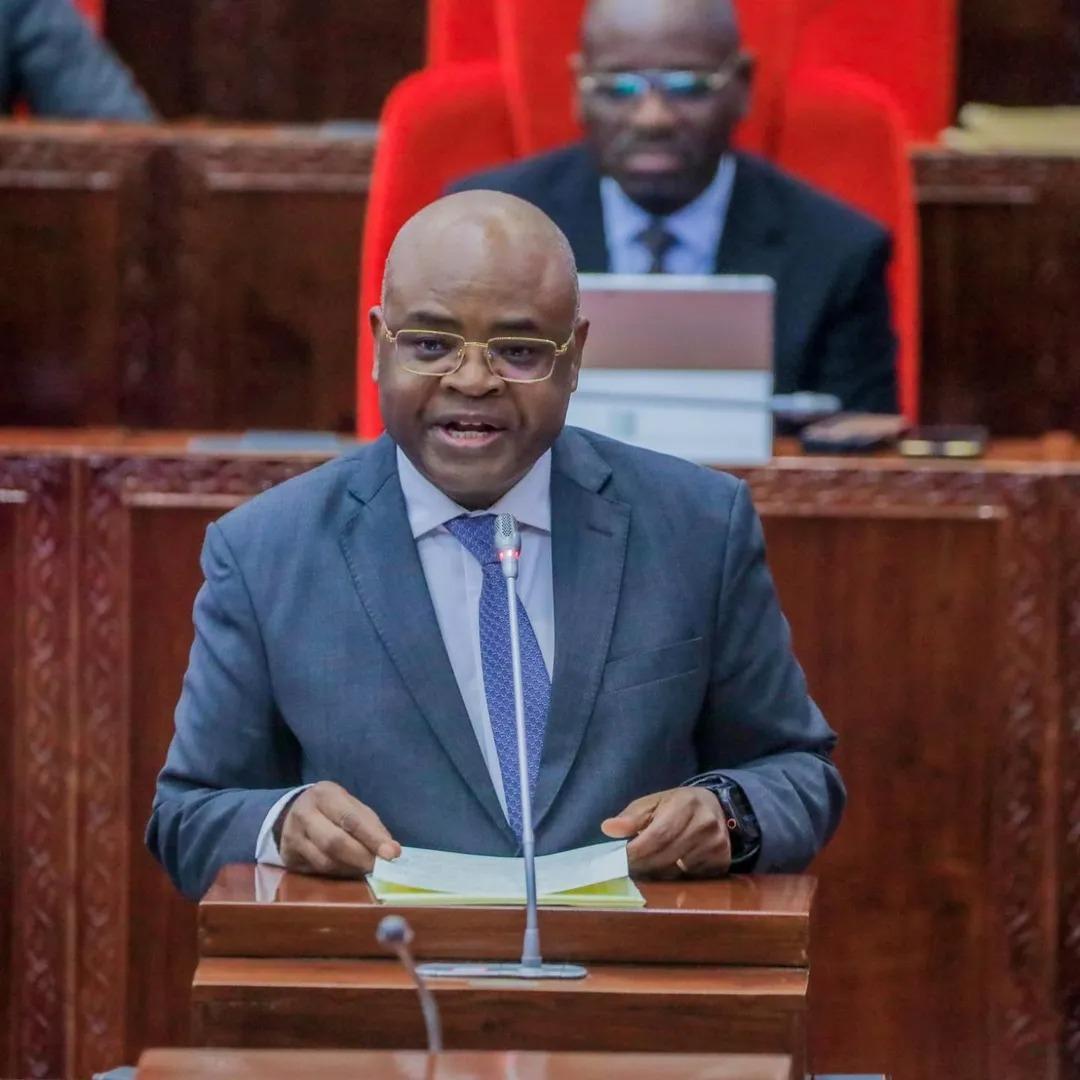
Presenting the government’s development agenda before the National Assembly in Dodoma yesterday, Minister for Planning and Investment, Professor Kitila Mkumbo, unveiled a compelling road map that signals a decisive shift from ambition to action as the country embarks on implementation of the new national vision.
At the heart of the minister’s address was a clear message: Planning alone is no longer enough.
What matters now is disciplined execution, accountability and a fundamental change in how the public sector delivers results.
“Perhaps translating our vision into action is a much bigger task than planning itself,” Prof Mkumbo told the House.
The speech marked a historic moment as the National Development Plan for 2026/27 becomes the first operational step in implementing the Fourth Five-Year Development Plan (FYDP IV) and the newly launched Vision 2050.
FYDP IV, covering the period 2026/27–2030/31, is the first medium-term plan under Vision 2050 and aims to transform Tanzania into a competitive, inclusive and resilient economy. The annual plan for 2026/27 sets the pace by focusing on priority sectors that will drive productivity, job creation and longterm growth.
The proposed priority areas include building a strong, inclusive and competitive economy through institutional reforms and good governance, strengthening human capital and social development, accelerating digital, energy and integrated transport infrastructure, boosting productive sectors and value addition, and enhancing environmental conservation and climate resilience.
Prof Mkumbo highlighted encouraging economic trends that provide a strong foundation for the new development phase.
He said that between January and June 2025, Tanzania’s economy grew by 5.8 per cent, up from 5.2 per cent during the same period in 2024.
This performance was driven by strategic public investments in energy and transport infrastructure, the commencement of power generation at the Julius Nyerere Hydropower Project, increased credit to the private sector and improved agricultural output.
Other contributing factors included growth in financial and insurance services, as well as sustained investment in education, health, water and social protection.
The minister said inflation remained subdued at 3.1 per cent in June 2025, while foreign exchange reserves stood at 5.97 billion US dollars, enough to cover 4.8 months of imports.
The Tanzanian shilling also showed signs of stabilisation, depreciating at a slower rate compared to the previous year.
Building on gains made under the Third Five-Year Development Plan, Prof Mkumbo said a mid-term review shows solid progress.
However, challenges such as low productivity, limited value addition, slow poverty reduction and modest private sector participation persist.
He said FYDP IV seeks to address these gaps while driving transformation under the vision of “Transformation for Inclusive Economic Growth and Job Creation.”
The plan prioritises youth employment, inclusive and sustainable growth, good governance, domestic revenue mobilisation, human capital development, digital transformation, climate resilience, national unity, rural development and stronger integration into regional and global markets.
Its ultimate goal is to position Tanzania as a regional hub for transport, logistics, industry and trade.
Anchored on the three pillars of Vision 2050, a competitive economy, human and social development, and environmental sustainability, the plan places strong emphasis on industrialisation, value addition, private sector-led growth and climate resilience.
To accelerate impact, FYDP IV introduces seven flagship programmes supported by 45 anchor projects, including the Bagamoyo Eco-Maritime City, the Lindi LNG Programme, the Liganga–Mchuchuma Iron and Steel Complex, and major agro industrial, mining, logistics and urban development initiatives nationwide.
The plan targets real GDP growth of 10.5 per cent, a nominal GDP of 118.1 billion US dollars and per capita income of 1,638 US dollars by 2031.
Implementation will involve 79 objectives, 215 targets and 737 interventions at an estimated cost of 477tri/-, with 70 per cent of financing expected from the private sector.
This highlights the central role of investment, public–private partnerships and a strengthened business environment in delivering Tanzania’s Vision 2050.
The minister also said the government has set ambitious but achievable macroeconomic targets for 2026/27, with GDP growth expected to rise to 6.3 per cent in 2026 and 6.9 per cent in the medium term.
Inflation will be maintained within a 3–5 per cent range, domestic revenue is projected to reach 17.1 per cent of GDP, tax revenue is targeted at 13.7 per cent of GDP and the budget deficit will be capped at 3 per cent of GDP.
Foreign reserves will be maintained at levels sufficient to cover at least four months of imports.
‘Business Unusual’ was the minister’s call for a change in mindset, echoing President Samia Suluhu Hassan’s message during the official launch of Vision 2050 last year. Prof Mkumbo stressed that achieving these goals requires a shift in working culture.
“We must abandon business as usual. Routine approaches will not deliver extraordinary results,” he emphasised.
This call for transformation extends beyond policy design to the very way public institutions operate, coordinate and deliver services. He said a new results-based accountability framework has been established to ensure that plans translate into tangible outcomes.
“The government has introduced a results-based monitoring, evaluation, learning and accountability framework, which rests on three pillars; clear prioritisation across all sectors, discipline of implementation and strong accountability mechanisms,” he explained.
Under this system, every sector must define measurable targets and performance indicators, monthly implementation reports will be submitted to the National Planning Commission (NPC), ministers will report progress to the Prime Minister every quarter and annual implementation reports will be publicly released.
He said the NPC has been empowered by law to summon senior officials to resolve bottlenecks and fast-track solutions.
The minister underscored that successful implementation will be anchored on peace, democracy and political stability, strong rule of law and good governance.
It will also rely on expanded energy and transport infrastructure aligned with Vision 2050, digital innovation in service delivery and production, Public– Private Partnerships (PPPs) and regional cooperation within the East African Community (EAC) and the Southern African Development Community (SADC).
“Preparedness for climate change, natural disasters, pandemics and global economic shocks will also be critical,” he added.
Prof Mkumbo formally invited Parliament to receive, deliberate on and advise on the Long-Term Perspective Plan 2026/27–2050/51, marking another important step in shaping Tanzania’s future.