

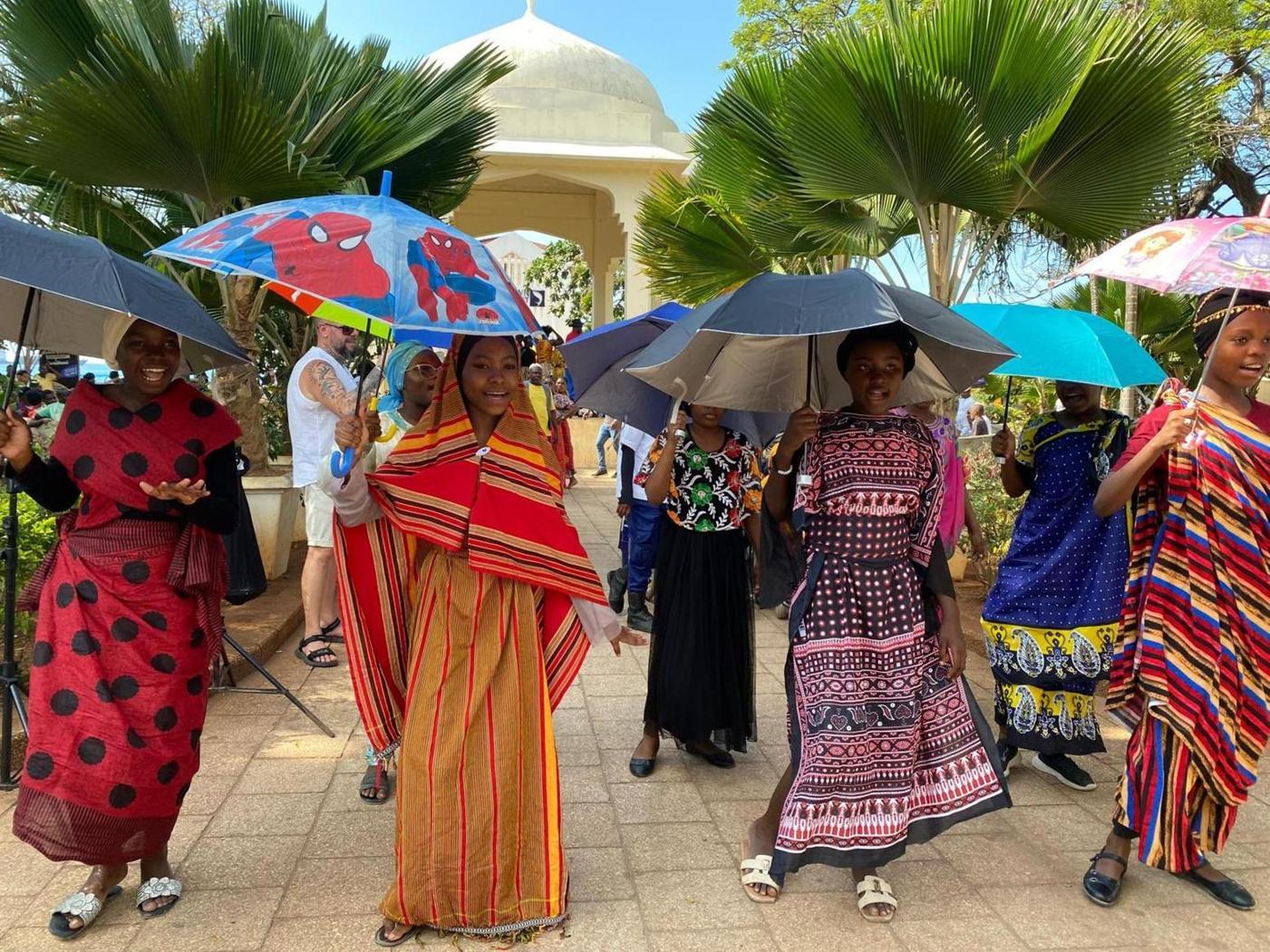
Africa-Press – Tanzania. THE heart of Zanzibar began to beat at exactly 4:30pm, and its rhythm was unmistakable. At Forodhani Gardens, the opening of the Sauti za Busara Festival announced itself not with speeches, but with movement, sound and soul. Men and women, children and elders, people of all abilities all gathered as one living orchestra, drumming, dancing and marching in perfect conversation with the streets of Stone Town.
The parade was the beginning, and celebration had already begun. Sticks struck drums in matching numbers, arms rose and fell in disciplined harmony, and bare feet met the earth with purpose.
Black-clad performers, dressed from head to toe, held sticks firmly in their right hands, moving like soldiers on ceremonial duty, proud, precise, and deeply committed to the festival they were bringing to life.
A drum, a step. A trumpet, a step. Then dance. Uniforms blended with vibrant cultural attire, colours flashing under the afternoon sun. Every participant gave their best not for applause, but for culture itself. From above, the scene transformed. ALSO READ: TCRA hails the residential address system for creating efficiency in service delivery
Seen from a rooftop, or imagined through a bird’s-eye view from a drifting drone, the crowd revealed its hidden choreography. Umbrellas dotted the parade not because of rain, but because of heat, beauty and design. At first glance, they offered shade. On closer watching, they told a different story.
The women holding them rotated their umbrellas in time with the drums, stepping, turning, and moving in rhythm. It was no accident. This was planned poetry, movement shaped into pattern,
colour turned into motion. Melodies floated through the air. Familiar voices sang, “Jambo, habari gani…”, and the crowd answered not with words, but with bodies in motion.
Among the procession walked figures dressed as spiritual ancestors with their faces painted white with flour, beads draped across their bodies, each design unique, deeply personal. As they moved, soft sounds followed them as shells, beads, and unseen instruments whispering history with every step.
Adding another layer of wonder, a circus team threaded through the parade, turning the streets into a moving stage of suspense and skill. Men rose above the crowd on tall wooden stilts, their feet balanced carefully on the narrow planks as they walked with calm confidence, defying gravity with every step.
Nearby, acrobats prepared for daring displays, bodies leaning head to head, weight balanced on trust alone, poses so dangerous they drew silent gasps from those who understood the risk. Yet the audience saw only beauty.
Unaware of the danger, they watched in awe, cheering and smiling, captivated by the grace, courage and discipline unfolding before them. The performers did not hesitate, and neither did the crowd, the moment carried everyone forward together.
The parade flowed like a river of memory and celebration, winding its way from Forodhani through Mnazi Mmoja, Darajani and Malindi Road. Streets that usually carry traffic carried culture instead.
This was more than an opening ceremony. It was a celebration of heritage, rhythm and identity, walking hand in hand through the very soul of Zanzibar.