
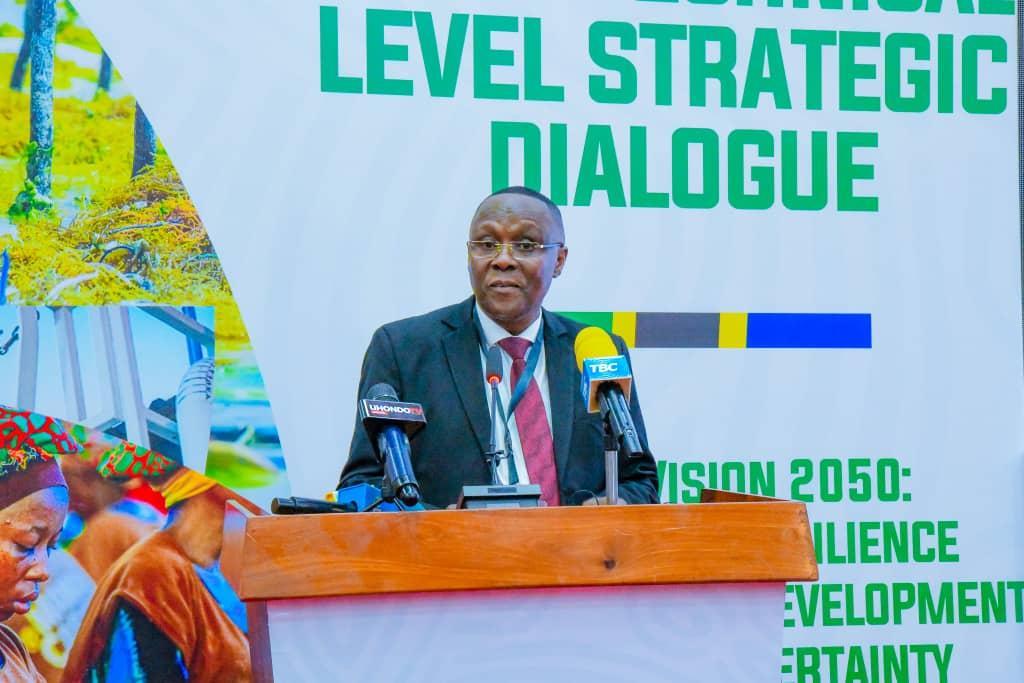
Africa-Press – Tanzania. ZANZIBAR plans to raise spending by 17.69 per cent to 8.27tri/- for the next financial year starting July, ramping up investment in infrastructure, industry and its Blue Economy strategy as it pushes toward upper-middle-income status under Vision 2050.
The spending plan, tabled in the House of Representatives by Finance and Planning Minister Juma Malik Akili, yesterday targets a real GDP growth rate of 7.5 per cent.
The expansion follows a 6.98tri/- budget in the current year and aligns with the government’s ‘Vision 2050’ strategy to reach upper-middle-income status.
“This budget reflects our commitment to accelerating economic transformation while strengthening service delivery and maintaining macroeconomic stability,” Dr Akili told lawmakers.
He said the increase reflects a continued expansion in public spending aimed at consolidating recent economic gains and sustaining momentum in key productive sectors.
A significant share of the proposed budget will go to infrastructure, including expansion of road networks in Unguja and Pemba, continued development of the Mangapwani Integrated Port, airport upgrades and strengthening electricity generation and distribution systems.
Investment in sports facilities linked to AFCON 2027 and the proposed AFCON City also forms part of the plan.
“The Blue Economy remains central to our strategy. We are investing in deep-sea fishing infrastructure, fish processing industries, seaweed farming expansion and marine tourism, including conference and medical tourism,” he said.
He added, “The aim is to increase value addition, boost export earnings and raise incomes in coastal communities.”
Under economic reforms, Dr Akili said the government will revive dormant factories, expand Free Economic Zones, promote agro-processing and support local manufacturers through policy and tax reforms.
“Strengthening domestic production will reduce imports, create employment opportunities and improve our trade balance,” he said.
In the social sectors, the plan prioritises healthcare expansion through the Zanzibar Health Services Fund, hospital upgrades, education quality improvements, skills development and broader social protection for elderly citizens.
Nearly half of the population has already been registered under the health fund. On governance and public finance, the framework focuses on improving efficiency, strengthening financial management systems, expanding digital revenue collection and promoting Gender Responsive Budgeting to ensure equitable allocation of resources.
For 2026, the government projects real GDP growth of 7.5 per cent, inflation at around five per cent, domestic revenue reaching 33.4 per cent of GDP and a fiscal deficit below three per cent. Per capita income is expected to rise to 1,449 US dollars.
“Our objective is to drive structural transformation, expand private sector participation and ensure sustainable growth that benefits all citizens,” Dr Akili said.
The 8.27tri/- budget will be financed through domestic revenue, development loans, bonds and support from development partners. Public debt currently stands at 36.29 per cent of GDP, which the government says remains within sustainable levels.
The debt level remains below regional sustainability thresholds, giving the government fiscal space to finance priority development projects without undermining macroeconomic stability.
The framework is aligned with the Zanzibar Development Plan and the 2025–2030 ruling party manifesto, which prioritise economic diversification and inclusive growth.