
What You Need to Know
The Tanzanian government is preparing for a significant educational transition in 2028, where two cohorts of pupils will complete primary education simultaneously. This change is part of the revised Education and Training Policy, which aims to ensure that all children, including those with disabilities, receive quality education. A special committee has been established to assess infrastructure, a
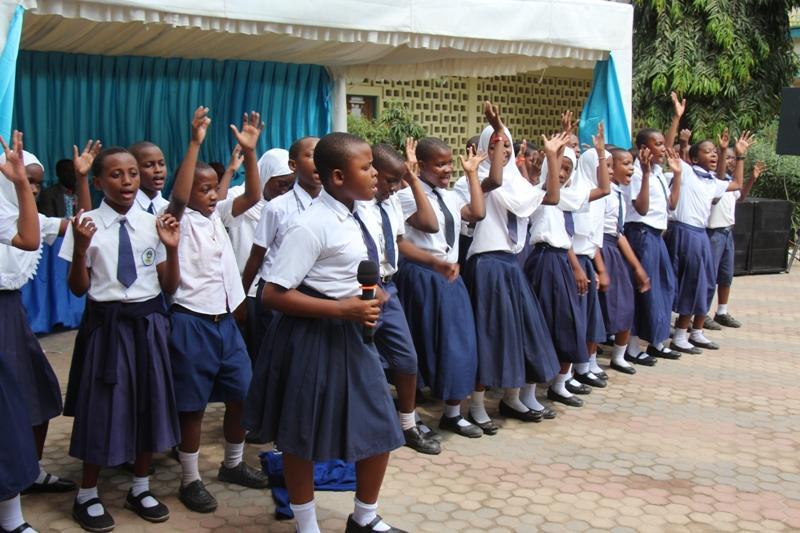
Africa-Press – Tanzania. THE government has commenced preparations to accommodate two cohorts of pupils who will complete Standard Six and Standard Seven simultaneously next year and transition to secondary school in 2028.
The move follows the implementation of the Education and Training Policy of 2014 (2023 revised edition) and new curriculum basic education become compulsory for ten years his covers six years of primary education and four years of lower secondary education.
According to the policy, key reforms have been approved in the education system, including the abolition of Standard Seven and the completion of primary education at Standard Six.
Under the revised framework, compulsory education will span ten years, comprising one year of preprimary education, six years of primary education and four years of lower secondary education.
Pupils will complete primary schooling through a Standard Six assessment, replacing the national Standard Seven examination.
Following the changes pupils who started Standard One in 2021 will complete primary education at the same time as those who began Standard One in 2022.
According to President’s Office–Regional Administration and Local Government (PO-RALG), statistics more than 1,581,823 million pupils were enrolled in Standard One in 2022.
Of these, 788,620 were boys and 793,203 were girls. In 2021, a total of 1,549,279 pupils were enrolled, comprising 775,339 boys and 773,940 girls.
The figure also included 10,645 pupils with special needs, among them 5,724 boys and 4,921 girls. Basing on these statistics more than 3 million pupils are expected to complete Standard Seven next year and transition to secondary school in 2028.
Speaking in an exclusive interview with the Daily News on Friday, the Deputy Permanent Secretary in the Ministry of Education, Science and Technology, Dr Hussein Omar, said the government has already established a special committee to assess the requirements for implementing the plan.
Dr Omar said the committee, chaired by Prof Makenya Maboko, has completed its assessment and is now finalising the necessary infrastructure requirements and associated costs to ensure all preparations are completed on time.
“As directed by President Samia Suluhu Hassan, I wish to assure the public that no child will be left behind. This programme will accommodate all pupils regardless of their background, including those with disabilities or other challenges,” Dr Omar said.
He added: “By 2028, all pupils from both cohorts will join Form One and receive quality education that will enable them to contribute meaningfully to national development.” Dr Omar explained that the main objective of establishing the committee was to ensure that the expected increase in the number of pupils joining Form One does not compromise the quality of education.
He noted that the assessment had identified overall requirements, including the number of teachers needed per classroom and the quantity of teaching and learning materials.
Dr Omar said the committee’s recommendations are intended to ensure full implementation of the reviewed Education Act and the new policy, stressing that the government is ready to receive the double cohorts by 2028.
He further explained that the committee is in its final stages and is expected to present its report to a ministerial committee comprising the Ministry of Education, Science and Technology and the President’s Office – Regional Administration and Local Government (PO-RALG), after which an official report will be released to the public by the responsible ministers.
Dr Omar called upon the private sector to cooperate with the government, especially in the construction of infrastructure, to ensure that the reforms are successfully implemented.
Recently, Prime Minister Dr Mwigulu Nchemba directed District Executive Directors to prepare projections of the resources and infrastructure needed as the country transitions to compulsory education, where every pupil will be required to complete primary education through Form Four, a tenyear cycle.
The Prime Minister emphasised that if education up to Form Four becomes part of compulsory primary education, it will necessitate the establishment of at least one secondary school in every ward. He further noted that under this system, every child who begins primary school must progress through to Form Four.
“Education must be compulsory in practice. Every child who starts primary school should be able to complete Form Four. Those currently in primary school must be supported to reach that level,” he said.
Tanzania’s education system has undergone various reforms over the years, with the most recent changes aimed at improving access and quality. The 2014 Education and Training Policy, revised in 2023, emphasizes a ten-year compulsory education framework, which includes six years of primary and four years of lower secondary education. This shift is designed to enhance educational outcomes and ensure that all children can progress through the system without barriers. The government’s commitment to inclusivity is evident in its focus on accommodating all students, regardless of their background or challenges.