
What You Need to Know
The European Union has donated €443,989 to four Tanzanian institutions to train health workers in managing cross-border diseases. The project, known as BRIDGE, aims to enhance education and awareness among health professionals regarding diseases that affect multiple countries, particularly in Africa. Institutions involved include Kairuki University and St Francis University, which will develop new
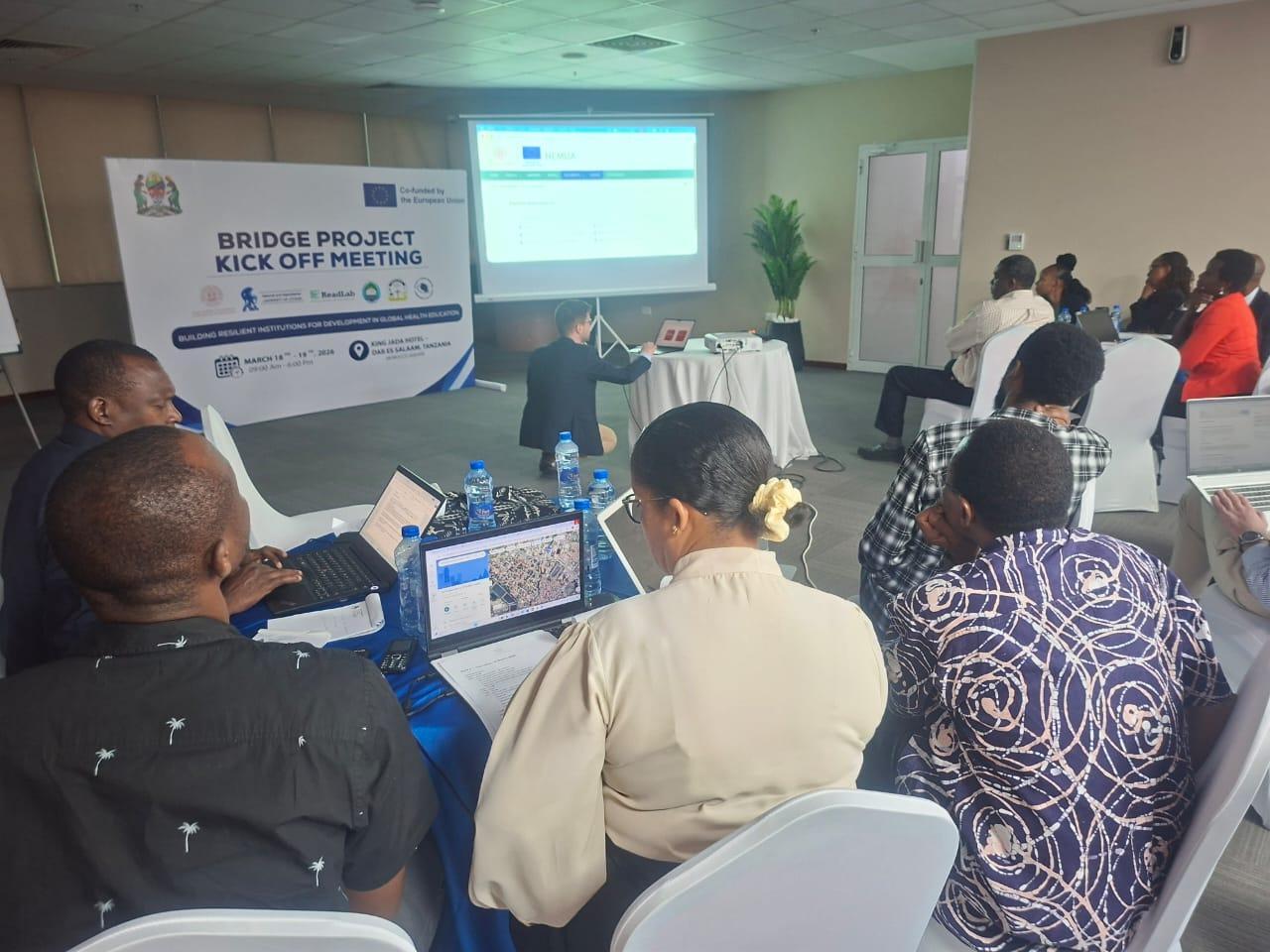
Africa-Press – Tanzania. THE European Union (EU) has provided 443,989 Euros to four institutions in the country for a project to train doctors and health workers on how to control and treat diseases that cross borders around the world.
The beneficiaries of the project are Kairuki University, ReadLab, St Francis University, Ifakara, and the Tanzania Training Center for International Health, Ifakara.
Speaking yesterday at the training of the project known as BRIDGE, the Coordinator of the project from St Francis University, Ifakara, Prof Senga Pemba, said the project aims to manage and promote higher education.
He said the project aims to provide cross-border education to health professionals so that they have the knowledge to identify and treat diseases that cross borders.
He said the diseases are those found in African countries, which are also found in various countries around the world.
“In this project, we are focusing on three things: one is to check whether there is awareness of cross-border diseases among our specialists. In our understanding, awareness is very low, so we will develop courses to strengthen their understanding of how to treat these diseases,” he said
“Also in this project, we will build centers of excellence that will oversee the provision of education on identifying cross-border diseases, we will strengthen education by collaborating with our colleagues abroad,” he said.
“We will develop short course curricula that will include people from abroad and we will go abroad to learn how they can identify and treat cross-border diseases,” he said.
The Vice Chancellor of Kairuki University, Prof Yohana Mashalla, said the project is the result of a project document written by Kairuki University and St Francis Ifakara University.
“We, the institutions that train doctors and nurses, sat down and saw that there was a deficiency in issues of controlling cross-border diseases (global health), so we decided to have a project to train a few who will train others in various hospitals in the country,” he said.
Prof Mashalla said they have looked more at how to control non-communicable diseases (NCDs), some of which are caused by climate change.
“We will prepare courses to train our health sector professionals and after three years, when the project ends, we will look for another donor to make the project sustainable,” he said.
Saturini Manangwa, Assistant Director of Quality and Nursing and Midwifery Services, Ministry of Health, said the project is important as it will build the capacity of local institutions to identify and treat cross-border diseases.
He said the professionals will develop international courses that will contribute to building the capacity of local service providers and that priority areas such as strengthening service delivery.
He said they will look at other areas such as emergency services, surgical services, and non-communicable disease services, which have currently become a major global pandemic.
“We, the ministry, hope that this project will yield good results for the relevant institutions, service providers, and the general public,” he said.
The European Union has been actively involved in supporting health initiatives in Africa, particularly in response to the growing challenges of cross-border diseases. This donation reflects a broader commitment to enhancing healthcare education and capacity in developing countries. The BRIDGE project aims to address the gap in knowledge and training among health professionals, ensuring they are equipped to handle diseases that transcend national borders. By collaborating with local universities, the project seeks to create a sustainable model for health education in Tanzania.