

What You Need to Know
The Controller and Auditor General of Tanzania, Charles Kichere, presented the 2024/25 audit findings, revealing financial control weaknesses in several government institutions. While 99% of the 1,553 audits conducted received clean opinions, some entities, including the Tanzania Tea Board and TEMESA, faced serious financial reporting issues, indicating areas needing improvement in public sector’s
Africa-Press – Tanzania. TANZANIA’S public sector audit findings for 2024/25 have exposed pockets of financial control weaknesses in several government institutions, even as the majority of entities received clean audit opinions, Controller and Auditor General Charles Kichere has said.
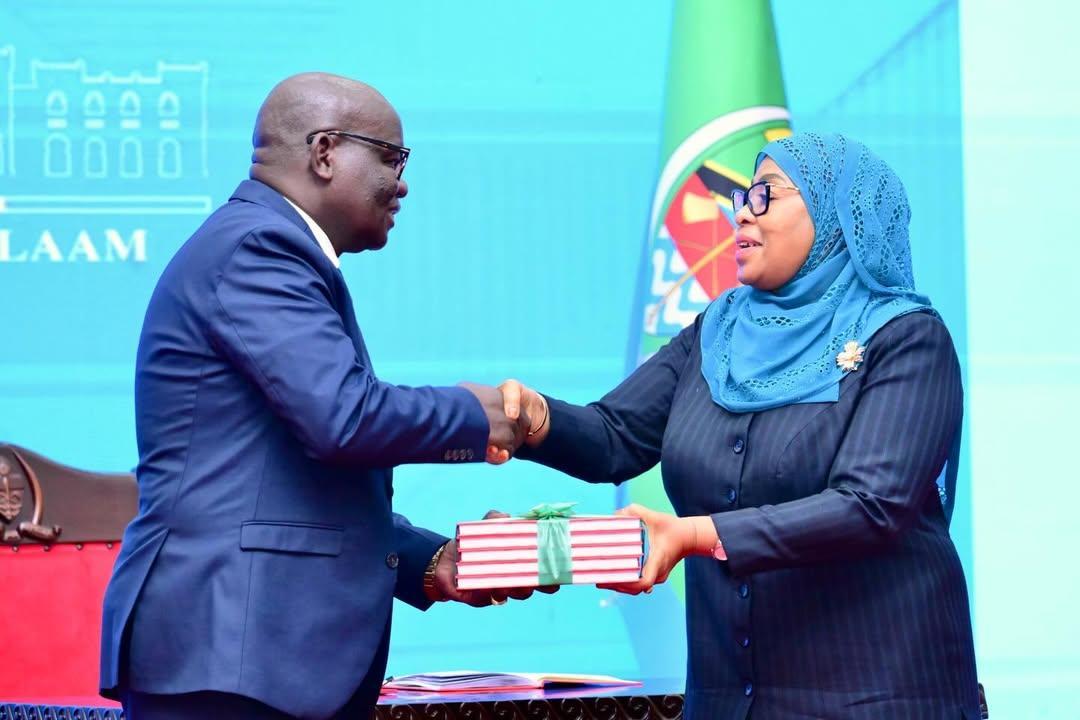
Presenting the annual audit report to President Samia Suluhu Hassan at the State House in Dar es Salaam today, March 30, 2026, the CAG, Charles Kichere, said a total of 1,553 audits were conducted across various categories, covering financial statements, performance reviews, real-time technical audits, ICT systems audits, and special investigative audits.
Elaborating, he said the audits included 1,339 financial statement audits, 18 performance audits, 12 real-time technical audits, 137 ICT system audits and 147 special investigative audits, with 38 of the investigative audits completed and nine still at various stages of completion.
Out of the special and investigative audits, 45 were initiated following requests from government institutions, leaders and stakeholders, while two were launched on the CAG’s own initiative.
Kichere said a total of 1,339 audit opinions were issued during the year, covering local government authorities, public corporations, central government entities and development projects.
Of these, 1,326 opinions, equivalent to 99 per cent, were clean, indicating satisfactory financial reporting compliance across most institutions.
However, 10 audit opinions received doubtful opinions, one was adverse, while two institutions received disclaimer opinions due to inability to provide sufficient audit evidence.
Institutions that received doubtful or adverse opinions include the Tanzania Tea Board, the Tanzania Tobacco Board, and the Keko Pharmaceutical Factory, all of which were flagged for financial reporting concerns.
The Tanzania Electrical, Mechanical and Electronics Services Agency (TEMESA) received an adverse opinion, while water authorities including Kyela Urban Water Supply and Sanitation Authority, Handeni Urban Water Supply and Sanitation Authority and Kondoa Urban Water Supply and Sanitation Authority were among those with qualified opinions.
At local government level, the Kibaha Town Council and Msalala District Council were also flagged for qualified audit opinions.
“overall audit results show that most institutions are complying with financial reporting standards and adhering to established accounting procedures, underscoring general improvement in public sector financial management,” the CAG said.
The role of the Controller and Auditor General (CAG) in Tanzania is crucial for ensuring accountability and transparency in public financial management. Established to oversee government spending and financial reporting, the CAG conducts audits across various sectors to assess compliance with financial regulations. Over the years, the CAG has played a significant role in identifying weaknesses and promoting improvements in financial governance, which is essential for fostering public trust and effective resource management.