
What You Need to Know
Tanzanians are being urged to prioritize forgiveness over vengeance to sustain peace and unity in the country. Retired Colonel Joseph Simbakalia emphasizes the importance of learning from past challenges, particularly following the unrest during the October 29, 2025 General Election. He calls for collective reflection and the guidance of religious leaders to foster a spirit of reconciliation.
Africa-Press – Tanzania. AT a time when the nation is focused on sustaining peace, unity and solidarity, Tanzanians are being urged to draw lessons from the past rather than carry the burden of vengeance.
The importance of reconciliation and forgiveness has been underscored as essential to maintaining peace and cohesion that have defined the country since independence.
Citizens are being encouraged to view the challenges experienced during the October 29th 2025 General Election as an opportunity for reflection and self-correction, ensuring that Tanzania continues to thrive on the values of peace and unity that are central to its identity.
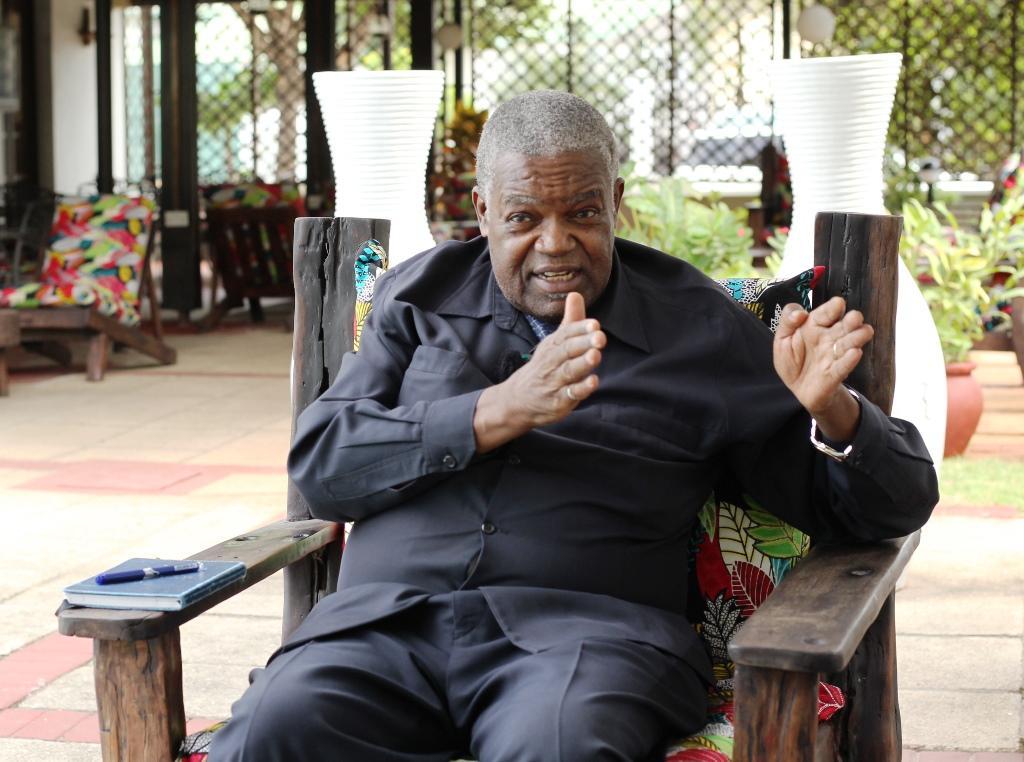
In a recent interview with a local television station, retired Colonel Joseph Simbakalia, stressed the need for Tanzanians to accept the decision by President Samia Suluhu Hassan to establish a Commission of Inquiry, following the unrest of October 29, 2025.
Col (rtd) Simbakalia said that although the events of that period were unfortunate, they should not lead to despair or derail the country from its longstanding tradition of peace, which has endured for more than 60 years.
“Let us accept the president’s decision to appoint a commission, whose members are largely respected elders. What happened was tragic. Even if only one person died, that person was a father, a brother, or an uncle to someone. The pain is real. So let us forgive one another,” he said.
He warned that failure to forgive would only perpetuate a cycle of vengeance and endless retaliation.
Drawing from Christian teachings, he cited the example of Jesus Christ, who, despite being crucified, forgave those who persecuted him, saying: “Father, forgive them, for they know not what they do.”
“We must come together with a spirit of forgiveness. If we continue to seek vengeance, peace will never return,” he added.
He also referred to the wisdom of Mahatma Gandhi, who rejected calls for retaliation during a turbulent period in India, arguing that the “eye for an eye” philosophy would ultimately leave everyone blind.
Similarly, he pointed to South Africa under Nelson Mandela as an example of reconciliation over revenge.
Despite years of imprisonment under the apartheid regime, Mandela chose unity, a decision widely credited with enabling the country’s peaceful transition to democracy.
“If Mandela had chosen vengeance, South Africa would not be the unified nation it is today. Reconciliation, rather than retribution, was essential to its healing,” he said.
The retired senior army officer also called on religious leaders of all faiths to take a leading role in guiding their communities toward forgiveness and the release of anger and resentment.
“The first step is reflection, to correct our mistakes and learn from them. Without forgiveness, we risk descending further into conflict. Religious leaders have a responsibility to guide us in this regard,” he said.
While elections themselves are not inherently problematic, he noted that the tension and unrest that sometimes accompany them can be damaging.
Recalling his first voter registration in 1970, when Tanzania was a one-party state, he said elections remain an important opportunity for citizens to validate their government and assess its performance.
“When this process is disrupted, it becomes a serious concern. More troubling is the loss of life. Even a single death is a tragedy and a stain on the nation’s history,” he said.
He stressed that Tanzania’s reputation as an “island of peace” should not be taken for granted, noting that the country has remained stable despite being surrounded by neighbours that have experienced conflict.
“This peace did not come by chance; it was built by our forefathers. We must safeguard it,” he said.
Referring to the National Anthem, he noted that its lyrics emphasise unity, peace and prosperity, with multiple references to God, reflecting the central role of faith and harmony in the nation’s identity.
“This shows how deeply peace and faith are rooted in who we are. We must continue to uphold these values,” he added.
He said that peace requires active effort from every citizen.
“It is not enough to celebrate peace, we must protect and nurture it. Every individual has a role to play, whether by respecting the law or showing consideration for others,” he said.
Reflecting on the country’s history, he acknowledged that not everything has been perfect, but stressed the importance of learning from both successes and failures.
“We must draw lessons from every experience, good or bad and correct our course where necessary,” he said.
He added that continuous reflection and self-correction are vital for sustaining national peace.
While differences of opinion are inevitable in any society, he said it is important to create platforms where people can engage in dialogue and express themselves freely without resorting to violence.
He also urged young people, who make up a large portion of the population, to seek guidance from elders.
“Young people may make mistakes, often due to limited guidance or mentorship. That is why the wisdom of elders remains invaluable as we move forward as a nation,” he said.
Tanzania has a long-standing reputation as an island of peace in East Africa, largely attributed to its founding principles of unity and reconciliation. Since gaining independence in 1961, the nation has navigated various challenges, including political unrest and economic difficulties, while maintaining a commitment to peaceful coexistence. The legacy of leaders like Julius Nyerere, who championed social harmony, continues to influence contemporary efforts toward national cohesion and stability.