

What You Need to Know
The Teacher Education Support Project (TESP) has successfully concluded, enhancing the quality of teacher education in Tanzania. Over eight years, the initiative improved resources, trained tutors, and graduated nearly 73,000 student teachers. The government and partners emphasize the importance of sustaining these gains for future educational outcomes.
Africa-Press – Tanzania. THE government has expressed satisfaction with the achievements recorded in strengthening the quality of teacher education, as the eight-year Teacher Education Support Project (TESP) officially comes to an end.
The government noted that the initiative has transformed teacher preparation, improved systems and enhanced institutional resilience across the country.
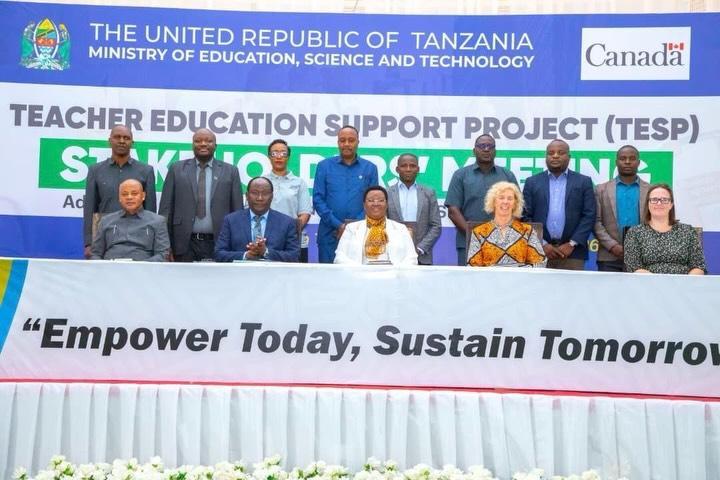
Speaking on behalf of the Permanent Secretary during the opening of the TESP stakeholders’ meeting held on Thursday in Dodoma, an event that also marked the project’s closure, Deputy Permanent Secretary for Science, Technology and Higher Education, Prof Daniel Mushi, said the partnership extended far beyond financial support, significantly improving the quality of education delivered in all 35 government teacher colleges.
“This is not just a closing meeting; it is a moment of accountability, reflection and transition. We are marking the end of a successful partnership phase and, at the same time, the beginning of a new responsibility to ensure that what has been built is sustained, scaled up and strengthened,” he said.
Prof Mushi recalled that when TESP was launched in 2017, teacher training institutions faced major challenges, including limited teaching resources, inadequate infrastructure and gaps in tutor capacity.
“Today, the situation has greatly improved,” he noted.
He said the project has significantly enhanced access to learning resources, with 196,022 textbooks distributed to teacher colleges and integrated into the Consortium of Tanzania University Libraries, thereby expanding access to academic materials.
Additionally, more than 1,400 ICT devices including computers, projectors and printers have modernised teaching and learning environments. The construction and rehabilitation of libraries, laboratories and ICT facilities have further strengthened practical and competency-based training.
Prof Mushi also cited the construction of Kabanga Teachers College as a national model for clean energy use in education facilities.
The project trained over 1,300 tutors in modern pedagogy, inclusive education, gender responsiveness and ICT integration.
Over the eight-year, nearly 73,000 student teachers graduated, boosting the national teaching workforce. The development and implementation of a Gender Equality Strategy also promoted inclusive learning environments across institutions.
“These are not just achievements; they are investments in the future of our education system and in the learning outcomes of our children,” he said.
Prof Mushi commended the government of Canada, through Global Affairs Canada, for its continued support, noting that the partnership strengthened institutional capacity, improved teaching and learning outcomes, and promoted sustainability and gender inclusion in all government teacher colleges.
He emphasised that, as the project concludes, the responsibility now shifts to national systems to sustain the gains made.
He said sustainability will depend on continued government commitment and financing, strong leadership in teacher colleges, effective maintenance of infrastructure and ICT systems, and ongoing professional development for tutors. Integrating lessons learned into national policy and planning, he added, will be crucial.
“The project may be ending, but the systems it strengthened must endure,” he stressed.
Head of Cooperation at Global Affairs Canada, Ms Carol Mundle, said Canada is proud to have partnered with Tanzania in strengthening teacher education, describing it as a fundamental investment in every child.
She noted that achievements such as operationalising the Mathematics Development Centre, connecting 25 colleges to the internet and expanding professional development have significantly improved teaching outcomes.
She added that strengthened management systems and college development plans reflect the depth of TESP’s impact, stressing that sustaining the results will require continued action and full integration of lessons learned into daily college operations.
“As this project closes, it is time to reflect on what worked, address remaining gaps and ensure the strengthened systems become part of everyday practice,” she said.
The Teacher Education Support Project (TESP) was launched in 2017 to address significant challenges in Tanzania’s teacher training institutions, including inadequate resources and infrastructure. Over its eight-year duration, TESP has transformed the educational landscape by providing essential resources, training, and modern facilities, ultimately enhancing the quality of teacher education across the country. The project has also focused on gender equality and inclusive education, ensuring a more equitable learning environment for all students.