
What You Need to Know
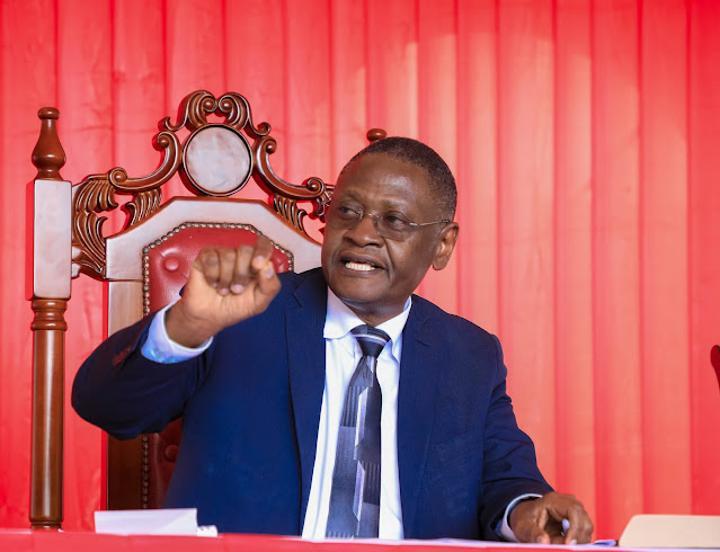
Former Chief Justice of Tanzania, Prof Ibrahim Juma, emphasized the significance of the Independent Commission of Inquiry formed after unrest during the last General Election. He noted that this initiative showcases Tanzania’s institutional strength and commitment to transparency, allowing the country to manage its internal affairs independently.
Africa-Press – Tanzania. FORMER Chief Justice of Tanzania, Prof Ibrahim Juma, has said the establishment of the Independent Commission of Inquiry following unrest during and after last year’s General Election reflects the country’s ability to address and resolve its own challenges without external interference.
He noted that the formation of the commission demonstrates Tanzania’s institutional strength, maturity and commitment to transparency in handling sensitive national matters.
“By having this commission, the country is showing that we are capable of handling major issues like these. We are working more openly and we have institutions that can carry out such responsibilities. Our report must meet these expectations,” Prof Juma said.
Speaking to journalists yesterday, he emphasised that Tanzania is sending a clear message to the international community that it has the capacity to manage its internal affairs effectively.
Prof Juma further stressed that the commission operates independently and is not influenced by external institutions or individuals.
He added that it carries an international outlook, as it is guided not only by Tanzanian laws but also by recognised global legal standards.
He pointed out that the commission is composed of highly experienced experts with significant international exposure. Citing the commission’s chairperson, retired Chief Justice Mohamed Chande Othman, Prof Juma said he has served on several international inquiry panels, including those investigating the death of a former United Nations Secretary-General, as well as commissions in Sudan and Ethiopia.
According to Prof Juma, the chairperson has consistently underscored the importance of applying both domestic and international legal frameworks, noting that the final report will be assessed against global benchmarks.
He added that the commission’s technical experts, including specialists in video analysis and cyber investigations, are Tanzanians with extensive international experience, having previously worked on similar assignments in countries such as South Africa and the United Kingdom.
“Their expertise will help uncover the truth to be presented to the public,” he said.
Prof Juma further revealed that the commission has engaged with all affected parties, including the injured, families of the deceased and those whose relatives went missing, noting that evidence has been collected through both oral testimonies and sworn affidavits.
Meanwhile, the commission has been granted an additional 21 days to complete its work, extending its deadline to April 24 this year.
In a notice issued through the Government Gazette on April 4, the appointing authority approved the extension to allow for the completion of key tasks.
These include detailed analysis of collected evidence, reports and public submissions, as well as allowing forensic experts sufficient time to conduct comprehensive examinations.
The extension will also enable the commission to review newly submitted exhibits, finalise its report for submission to President Samia Suluhu Hassan and prepare translations of the document.
This is the second extension granted to the commission, following an earlier 42- day extension.
The commission began its work on November 20 last year and was initially expected to complete its mandate within 90 days. However, due to various factors, including a higher-thananticipated public response, the timeline was extended.
According to the statement, the first extension resulted in a surge of citizen participation, which prevented the commission from concluding its work within the revised timeframe.
“The Commission continued to receive substantial public submissions beyond expectations, making it impossible to conclude its work within the initial extension period,” the statement reads.
It adds: “The public is hereby informed that the appointing authority has approved the request for additional time and has extended the Commission’s deadline by twenty-one (21) days, requiring it to complete its work on or before April 24, 2026.”
The establishment of the Independent Commission of Inquiry in Tanzania follows unrest during the last General Election, reflecting the nation’s efforts to address internal challenges without external influence. This commission aims to investigate the events surrounding the election and ensure accountability, demonstrating Tanzania’s commitment to democratic principles and transparency.
Historically, Tanzania has faced various political challenges, particularly during election periods. The formation of such commissions is part of a broader trend towards enhancing governance and public trust in state institutions, aiming to foster a more open and participatory political environment.