
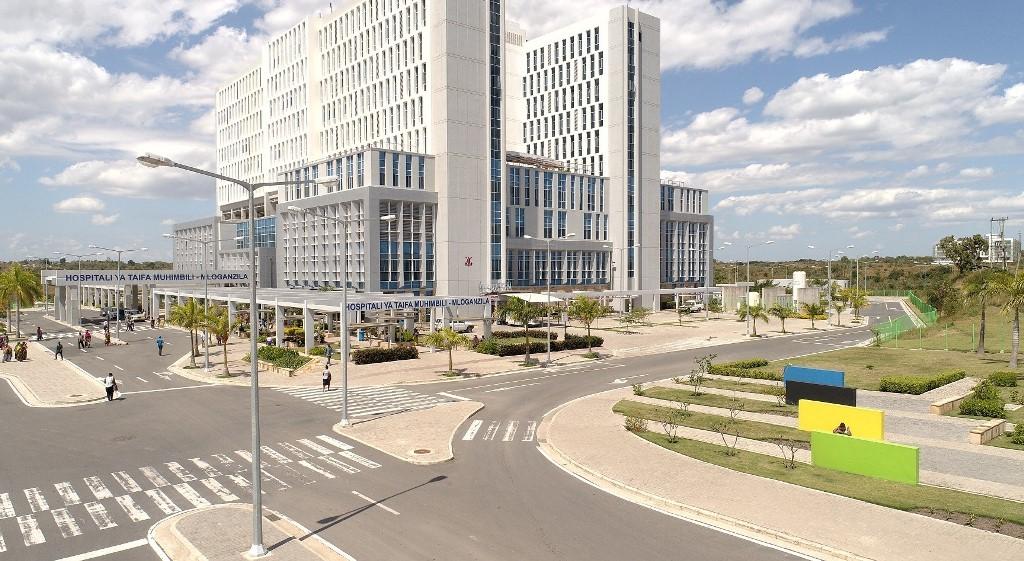
Africa-Press – Tanzania. WITH enhanced medical and healthcare services, Tanzania is now seeking global accreditation for its top-notch health facilities as the country eyes to become a medical tourism hub in the region.
Plans are already underway to have the hospital and healthcare accreditation board which is expected to boost medical tourism in the country.
The board, under the Ministry of Health, Community Development, Gender, Elderly and Children, would be assessing and accrediting hospitals for national and international standards.
Hospital accreditation has been defined as “A self-assessment and external peer assessment process used by healthcare organisations to accurately assess their level of performance in relation to established standards and to implement ways to continuously improve.
The accreditation helps hospitals to earn trust from people within and outside the country who seek high standard health services.
Dr Chrisogone German, a medical officer, revealed this in Dar es Salaam when representing the Director of Health Quality Assurance Department in the Ministry of Health, Community Development, Gender, Elderly and Children, over the weekend during the meeting meant to discuss quality improvement in private health facilities.
Participants of the meeting were from private hospitals and shared their experiences from their hospitals over how they do for improving the quality of healthcare.
The meeting was organised by the PharmAccess Foundation and the Christian Social Services Commission (CSSC).
Dr German explained that the process to form the accreditation board started about three years ago, and currently the ministry was finalising paper works before going to the cabinet and the Parliament for endorsement.
“The process to have the accreditation board is currently in midway,” Dr German noted, adding that the board is very essential for the country’s health sector because hospitals will be getting performance certifications, a service which currently most of the hospitals cannot afford to pay foreign companies performing assessment and accreditation.
He revealed that foreign companies charge more than $25,000 for hospital and healthcare assessment and accreditation services.
Only the Aga Khan Hospital in Dar es Salaam has so far managed to secure accreditation from the Joint Commission, the major accrediting board in the United States.
This is one of the most expensive accrediting organisations, with annual fees that can run into the tens of thousands of dollars, with additional costs of surveys.
He said the national accreditation board would be charging low fees for the assessment and accreditation services which are internationally recognised.
Dr German said health quality assurance was a cross-cutting issue which needed collaboration of both the private and public sectors.
He said that is why the Tanzania quality improvement strategic framework for healthcare 2020-2025 has also taken consideration of the private sector in the health sector.
An official from the PharmAccess, Ms Nicole Spieker said health service provision should not only be about access but also quality of healthcare.
“Innovation and creativity is important in improving quality of health care. The private sector should not only comply with the country’s regulations and policy but also strive to meet excellence in service provision,” she advised.
Dr Pascal Katunzi, one of participants of the meeting from Mugana Hospital in Kagera region, said the issue of quality service at a hospital has to be communicated to all staff of the facility.
Dr Peter Risha, Safecare Programme Director for the PharmAccess, said the programme has been helpful in assessing and certifying hospitals in Tanzania.
The government has recorded tremendous achievements in improving delivery of health services to Tanzanians.
Huge investments in the country’s health sector, has helped enhance availability of not only routine health services but also specialised healthcare, hence positioning Tanzania as a healthcare hub for medical tourism.
Investments in specialised services have reduced the number of patients seeking medical treatment abroad from between 200 and 300 patients annually to less than 60.
The East African nation has eventually placed herself as a healthcare hub for medical tourism.