
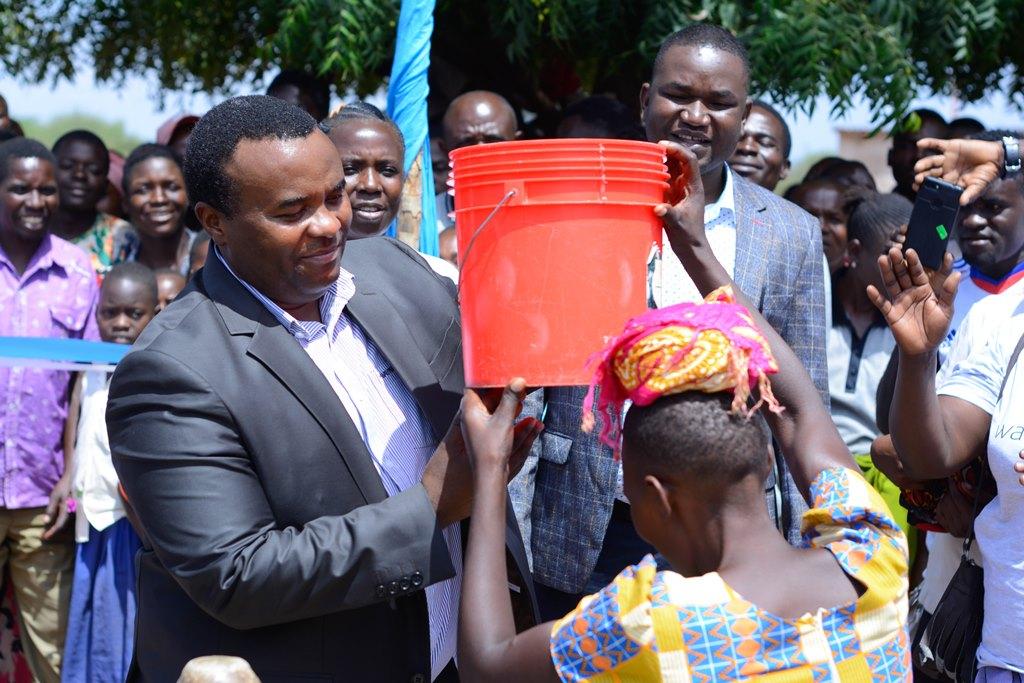
Africa-Press – Tanzania. RESIDENTS of Msamalo ward in Chamwino District have every reason to smile following the launch of a new water project in their area to provide reliable water supply.
The project, the brainchild of the government through the Rural Water Supply and Sanitation (RUWASA) in collaboration with Water Mission Tanzania, will benefit more than 4,000 people.
Speaking at the project launch, Water Mission Country Director Mr Benjamin Filskov said the goal is to support the community with a financially sustainable system that will bring reliable safe water accessible to households.
“We understand the need for safe water in this area. We are happy to launch this project that will help to eradicate water shortage to the community,” he said.
The achievement demonstrates cooperation between RUWASA and the Ministry of Water to make water available to the community.
The project will also benefit schools, dispensaries, markets and religious institutions in the surrounding area.
Permanent Secretary for the Ministry of Water Eng. Anthony Sanga said the project is implemented to fulfill the government goal of water-for-all.
“We thank President John Magufuli who during his election campaigns promised to deliver water services closer to the people,” he said.
He praised Water Mission for supporting the project which will minimise water scarcity at Msamalo ward.
The project will use two solar-powered pumps from a borehole to a treatment and storage point, and then to 18 strategically located taps.
The safe water will be distributed through a gravity-fed system from the 30,000 litre water storage tank to the entire community.
The modality of this financially sustainable project can be replicated across the country.
Water Mission is a non-profit engineering organization that designs, builds and implements best-in class safe water, sanitation and hygiene (WASH) solutions for people in developing countries and disaster areas.
In 2020, about 350,500 people benefited directly from Water Mission Tanzania’s safe water solutions brought to rural communities, flooding emergencies, refugee camps, and hospitals across Tanzania.