

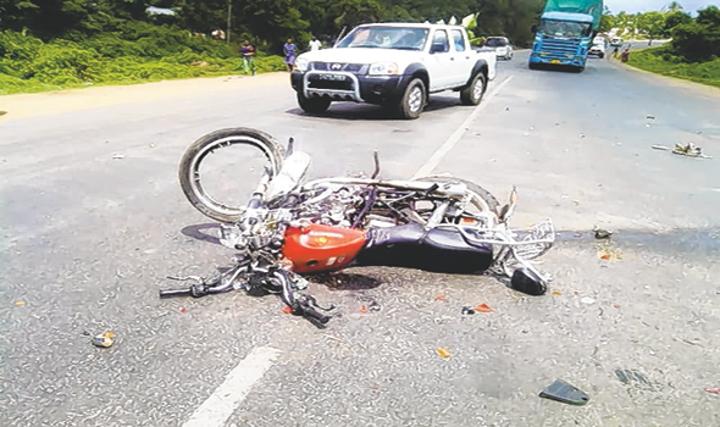
Africa-Press – Tanzania. YESTERDAY, our Kiswahili paper-Habarileo featured a scene in Kibaha District, Coast Region, where five children carried in a bodaboda as pillion passengers died after being knocked by a Lorry under the watchful of the public and life continues.
It is time the society stopped behaving like everything must be done by the police to bring sanity in the community, because no country can employ a cop for every individual.
When these children were boarding the motorcycle (we assume being ridden by an adult) other members of the society were there and nobody took the responsibility to condemn the culture, simply because that is the work of the police? Surely, that is not reasoning.
With reputable Word Health Organization (WHO) latest report indicating that approximately 1.35 million people die every year globally as a result of road traffic crashes and African region registering the highest traffic fatality rate of 26.6, while Europe with the lowest (9.3), one might be tempted to ask, why is this preventable death still persisting.
As Tanzanians also in the African continent, we must ask ourselves why we must allow our brothers and sisters to perish on roads as pedestrians, cyclists, motorcyclists and motorists going about their daily chores, yet these deaths are preventable.
To address this, one must not need to be a rocket scientist to note that the leading causes of these deaths are carelessness, I- don’t-care attitude, speeding, driving under the influence of alcohol and other psychoactive substances; you name it on the side of the drivers, collectively all manmade causes.
There is no way road accidents would be addressed without bringing onboard also pedestrians, passengers in vehicles and as pillion passengers in motorbikes showing a concern.
This is a common problem that is caused to some extent by all the parties, because they ignore use helmets, seat-belts, and child restraints, and lack of road signs or low education on using these signs by policy makers not reminding them and laying routine emphasis.
As the government and stakeholders facilitate and provide education in public, those who already have the knowledge should be ambassadors to the grassroots not only in rural areas, but also in the urban population, where there is great percentage of the accidents.
Measures such as footpaths, cycling lanes, safe crossing points, and other traffic calming measures can be critical in reducing the risk of injury among these road users, but they will not help if the culture of carelessness and it-is-the work-of- police is still fresh in the public mind.