

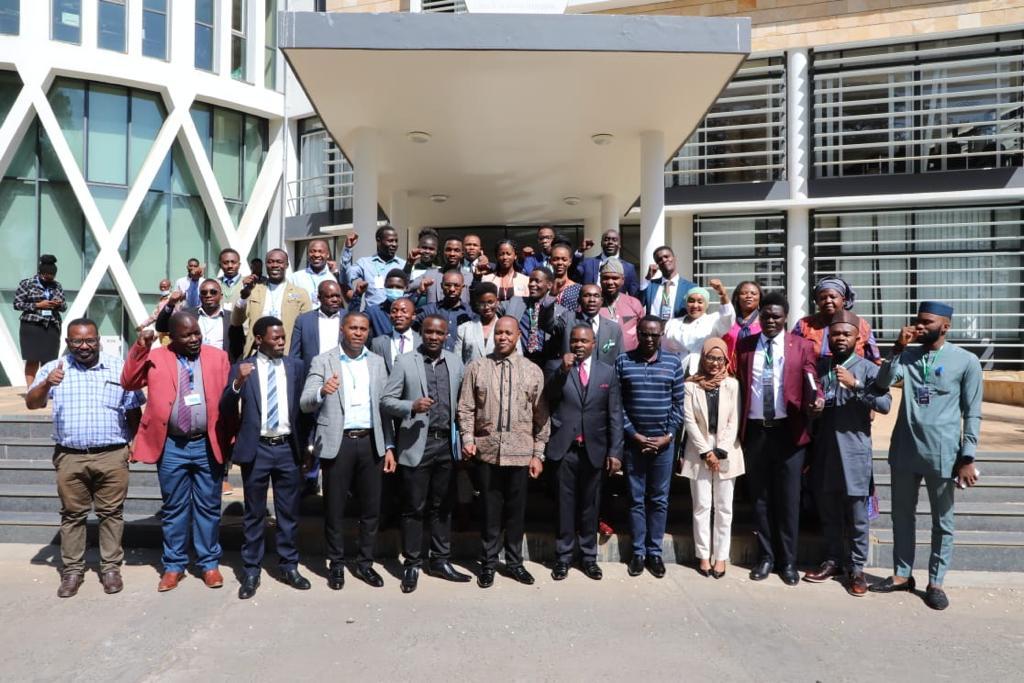
Africa-Press – Tanzania. Student unions in the East African Community (EAC) Partner States have committed to work closely with the EAC Secretariat to amplify the voice of students in the regional integration process.
The student unions under the East African Students Union (EASU), an umbrella body encompassing national students’ organizations in the Partner States, held its swearing in ceremony at the EAC Headquarters, with the student leaders being sworn in to take up their rightful positions within their respective student Unions.
Speaking during the ceremony, the EAC Secretary General, Peter Mathuki, who was the chief guest, commended the students for their zeal and interest in contributing towards the integration process.
“With youths constituting over 60 per cent of the Community’s population, it is clear that the Community belongs to the youth and thus the EAC is keen on involving them in policy and decision making,” said Dr Mathuki.
Dr Mathuki informed the students of the existence of the EAC Youth Policy that was adopted in August 2013, adding that the youth policy provides a binding framework for the effective implementation, monitoring and evaluation of youth programmes and projects.
“Article 102 of the Treaty establishing the East African Community articulates EAC’s commitment in supporting education and training and we are keen on students taking up their rightful role as active members of the society,” Dr Mathuki added.
The EAC boss urged the student leaders to follow up on youth activities in the region such as the upcoming YouLead Summit slated for 8th to 12th November, 2021.
On his part, EALA Speaker Martin Ngoga commended the newly sworn-in EASU Executive Committee for conceptualizing the idea of forming a regional students union keen on participating in regional issues.
“Leadership comes with great responsibility and you thus need to ensure that you utilize this opportunity to make positive change in the region,” he said.
EASU’s newly elected President Antony Manyara pointed out the challenges in cross border movement which have been heightened by the Covid-19 pandemic and also called for inclusion of youths in more activities by EAC Partner States.
“A prosperous EAC is beneficial for us all. We as students have the time and energy of learning and understanding how the EAC works and are keen on supporting the regional integration process,” he