

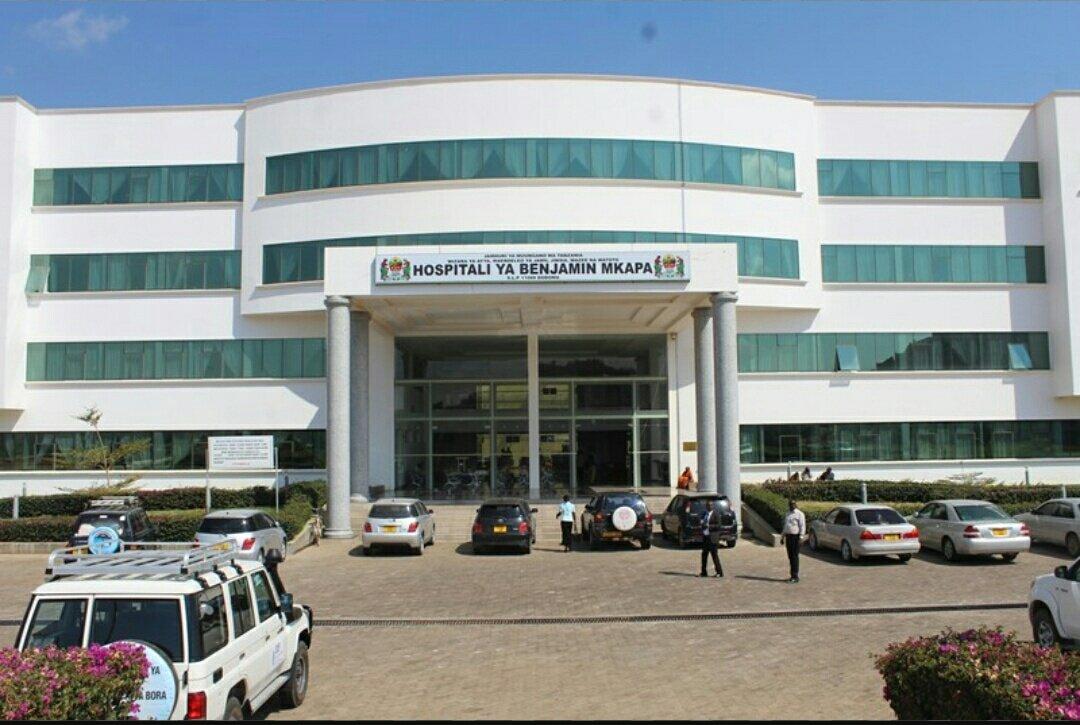
Africa-Press – Tanzania. THE Dodoma-based Benjamin Mkapa Hospital (BMH) has said it intends to start providing artificial insemination services from January next year to
Artificial insemination or intrauterine insemination (IUI) is a procedure to help conception in a woman experiencing infertility.
It involves inserting the male partner’s (or donor’s) prepared semen through the neck of the womb (cervix) and into the uterus, close to the time of ovulation.
This plan was unveiled on Wednesday by the BMH Executive Director Dr Alphonce Chandika, adding that the facility would also introduce In-vitro fertilization (IVF) service.
Dr Chandika was speaking here during his tour to the Tanzania Standard Newspapers (TSN) Limited, publishers of the Daily News, Sunday News, Habari Leo, Habari Leo Jumapili, Spoti Leo and YouTube Channel-Daily News Digital.
“The BMH will start providing artificial insemination service to the needy; we have already procured all modern equipment and have specialist who has received training in Algeria,” he said.
He also seized the occasion to explain achievements that BMH has recorded as it marks its 6th anniversary as a living health facility.
The facility’s top official said since its official launch by fourth phase President Jakaya Kikwete on October 13, 2015, the BMH has, among other things, managed to introduce kidney transplant medical service that has so far served 23 patients.
“Initially, the service was being offered under the auspices of Japan-based Tokushukai Medical Group. Right now BMH through our specialist is able to perform the kidney transplant successfully,” he said.
Adding: “12 out of 23 patients who have received a kidney transplant service were attended by our specialists; this is a huge achievement that has been achieved within a short period”.
According to him, the facility has also installed a state-of-the-art Extracorporeal Shock Wave Lithotripsy (ESWL) machine for gallstones and kidney stones treatment.
The ESWL uses shock waves to break down stones, with the surgeon using a machine called a lithotripter to aim sound waves directly at the stones through the body.
He said the extracorporeal shock wave lithotripsy is a nonsurgical alternative for the treatment of kidney, gallbladder or liver stones, which are common cases in central regions.
“It does not harm muscle, bone, or skin. After the treatment, a person should pass the stone particles through urination,” he said, assuring of the facility’s commitment to keep issuing better services.
Other services that the facility has managed to introduce within six years include hips placement, cardiac and Orthopaedic surgeons.
“Moreover, we have been allocated 2bn/- for construction of Radiotherapy facility that will reduce the congestion at the Dar es Salaam based Ocean Road Cancer Institute.
Currently, the BMH attends an average of 600-700 outpatients and around 250 inpatients; however the facility has a bed capacity of 400 patients.
“The modern technology we are using in attending patients plays a great role in reducing the number of those who are to be admitted, this also is a great achievement,” said the BMH boss noting that the government has invested a total of 52bn/- to improve service provision at the facility.
For her part, the TSN Managing Editor Tuma Abdallah assured the BMH delegation of the company’s willingness to partner with the Dodoma based specialized health facility.
“TSN is impressed with the achievement attained by MBH. We are ready to work together in promoting the hospital’s different services offered to the public,” she vowed.
For More News And Analysis About Tanzania Follow Africa-Press