

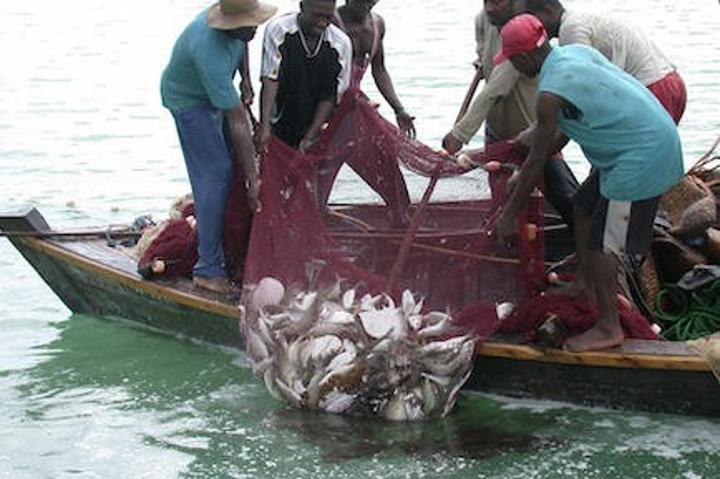
Africa-Press – Tanzania. AUTHORITIES in Muleba District have impounded a consignment of six tonnes of fish and several fishing gear worth 25m/-, as the district continues with a crackdown to contain illegal fishing in Lake Victoria.
Muleba District Commissioner (DC), Mr Toba Nguvila said that the impounded equipment followed a massive operation mounted in Lake Victoria and Lake Burigi.
“People are warned to avoid illegal fishing. Nile perch, which is the most commercially viable, should not be harvested until it is 50cm long or weighing two kilogrammes or more. Fish processors, on the other hand, should reject undersize and underweight fish,” he warned.
A few weeks ago, authorities in Muleba District impounded a consignment of Nile Perch that was being smuggled. Mr Nguvila explained that the consignment was impounded at Luhanga fish landing site in Kikukwe Ward.
“Initial investigations revealed that the fish consignment was being transported on Lake Victoria to Karagwe district. Several suspects are helping in police investigations and they will be arraigned in court when investigation is completed,” he said.
He explained that surveillance teams were on the alert to ensure that the government does not lose revenue due to smuggling.
The incident comes barely five days after the Deputy Minister for Works and Transport, Mwita Waitara, toured Kagera region, where he announced that the government is in the process to legalise a total of 693 unofficial ports in the country in a bid to improve marine transport, curb narcotic drugs and unlicensed firearms.
According to scientists, a 50kg Nile perch has the capacity of producing about seven million eggs at a go, and it is capable of going through the cycle at least thrice a year.
The East African Community (EAC) has designated the Lake Victoria Basin as an economic growth zone, with the potential to develop into a major economic region. The fisheries are vital in creating employment opportunities, mostly rural-based, thereby helping to reduce rural-urban migration.
Fish is also a rich source of protein for human consumption and provides raw material (fish meal) for processing animal feeds. The fish industry contributes to GDP and has continued to be an important source of foreign exchange earned from fish products.
Besides, the fish industry contributes to the national and local government revenue, through levying of various taxes, and license fees.
For More News And Analysis About Tanzania Follow Africa-Press