By Nanteza Sarah Kyobe
Africa-Press – Uganda. Uganda last week hosted its first-ever Africa Industrialization Week, bringing together representatives from more than 40 countries and over 450 participants at the Munyonyo Commonwealth Resort. The week-long event focused on accelerating Africa’s industrialization agenda.
The launch of this inaugural continental gathering comes at a moment of significant growth in Uganda’s own industrial sector—driven by strategic government policies, rising foreign direct investment in the oil sector, and a steadily expanding manufacturing base. Uganda is currently home to more than 5,000 industrial enterprises, which employ an estimated 1.3 million people.
Held under the theme “Transforming Africa’s Economy through Sustainable Industrialization, Regional Integration, and Innovation,” the event underscored the importance of sustainable industrial growth, deeper regional collaboration, and innovation as key pillars for Africa’s structural transformation.
Africa Industrialization Week ran from November 17th to 21st, concluding with the annual observance of Africa Industrialization Day on November 20th. Discussions centered on critical issues including women-led industrial parks, gender-sensitive industrial policies, and the creation of an enabling environment for industrial expansion.
A major point of emphasis was the need to improve access to finance through development finance institutions, commercial banks, venture capital, and public–private partnerships. The forum also highlighted skills development—focusing on certification, quality standards, digital tools, and ESG compliance—as essential to supporting industrial competitiveness.
Participants further stressed the role of innovation and digitalization in enhancing production efficiency and expanding market access.
Key recommendations included increasing financial support for young entrepreneurs, advancing technological skills, and establishing an African Youth Start-up Network aligned with industrial initiatives.
Africa Industrialization Week 2025 opened with remarks from the State Minister of Industry, Hon. David Bahati, who acknowledged delays caused by changes in procurement legislation but also celebrated progress across the continent.
He noted advancements in automotive manufacturing in South Africa and Morocco, rapid expansion of industrial parks in Ethiopia, and Uganda’s proactive efforts to attract investors through land access, tax incentives, and benefits in both public and private industrial parks.
During a panel discussion on skills development, Ms. Allen Kagina, Chairperson of the TVET Council, called for a mindset shift to close the skills gap.
She emphasized the need to strengthen training institutions, update curricula, and re-certify trainers—measures she said would improve the quality and portability of industrial skills across borders.
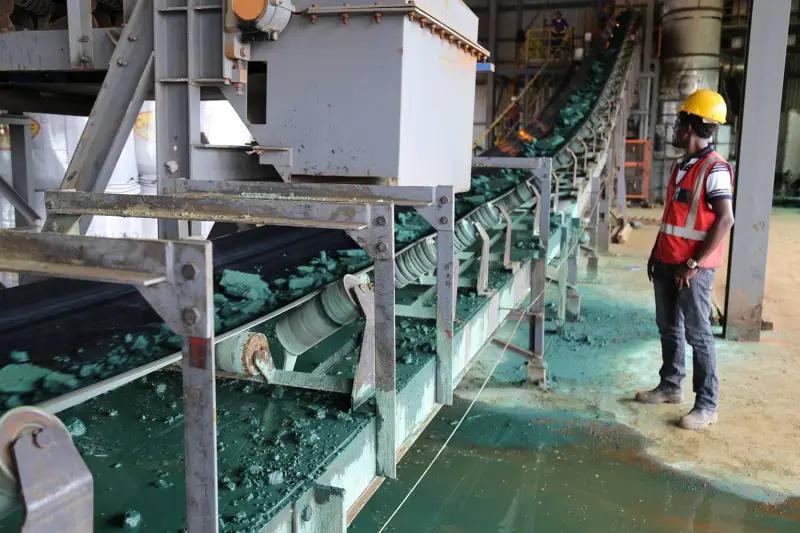
Calls for unity and value addition—echoing President Museveni’s long-standing message—were prominent throughout Africa Industrialization Week 2025. This sentiment was reinforced by Dr. Amany Asfour, President of the Africa Business Council, who stressed the need for Africans to unite to maximize the continent’s potential, especially in value addition. She noted Africa’s significant losses from exporting raw materials and urged the continent to focus on processing goods domestically to boost profits and economic independence.
In her remarks delivered on behalf of President Museveni during the closing ceremony, H.E. Major Jessica Alupo, Uganda’s Vice President, reiterated the President’s position against exporting unprocessed raw materials while importing finished goods made from those same resources.
He highlighted Africa’s heavy dependence on imported machinery, mineral fuels, electronics, pharmaceuticals, and even food items—despite the continent’s vast natural resource wealth. The continent holds approximately 85 percent of the world’s platinum reserves, 50 percent of manganese reserves and production, 90 percent of chromium reserves, 40 percent of global gold reserves, and 75 percent of phosphate reserves.
The President also outlined the key challenges hindering Africa’s industrialization, including ideological disorientation, interference with the private sector, inadequate infrastructure, limited industrialization and value addition, underdeveloped agriculture, weakened governance, and the underdevelopment of human resources.
Overall, Africa Industrialization Week offered a rich and insightful discussion on the continent’s industrial journey. If the ideas shared are carefully documented and implemented beyond the conference halls, Africa’s industrial future holds remarkable promise.
The writer works with the Uganda Media Centre.
For More News And Analysis About Uganda Follow Africa-Press