Africa-Press – Uganda. Senior presidential advisor on oil and gas Kaliisa Kabagambe has advised the government to fund the construction of the Hoima oil refinery using public resources instead of waiting for a foreign investor, arguing that continued delays threaten the country’s energy security and industrial ambitions.
Kabagambe, a former permanent secretary in the Ministry of Energy and Mineral Development, said foreign investors tend to prioritise projects where they retain direct control and reap high returns, conditions he said are less attractive in a domestically focused refinery.
He said if government lacks immediate funds, it should deliberately ring-fence revenues from first oil production to finance the refinery, rather than allocating the money elsewhere.
“If government has no funds now, it can plan to use the first oil revenues and not divert them. Build the refinery first. It brings security, attracts investors and stimulates other industries,” Dr Kabagambe said.
For nearly three years, government has sought foreign investors to finance the estimated USD 4 billion Hoima oil refinery.
However, as Uganda targets first oil by July 2026, construction of the refinery has yet to commence.
In contrast, progress on other components of the oil and gas value chain has been significant.
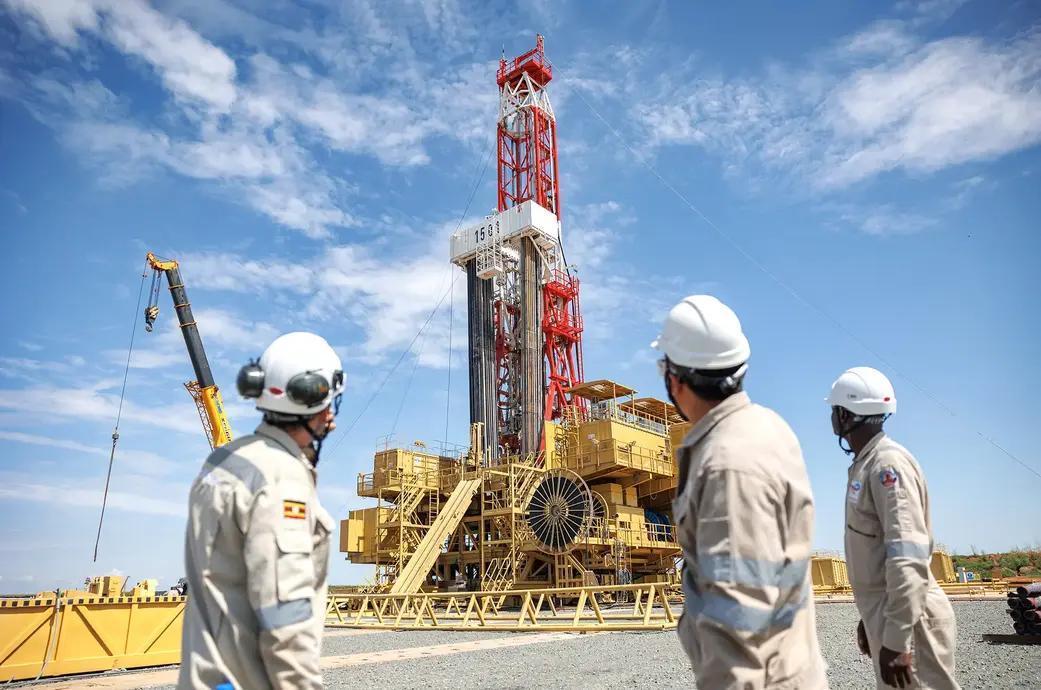
The Tilenga oil project in Buliisa District is about 65 per cent complete, the Kingfisher oil project in Kikuube District stands at about 95 per cent, while the East African Crude Oil Pipeline to Tanzania is reported to be roughly 80 per cent complete. Pump station one in Kabale is also steadily progressing.
So far, development of the refinery has been limited to completion of a feasibility study and the securing of about five square kilometres of land out of the 29.6 square kilometres earmarked in Kabale, Hoima District.
The wider area is intended to host the Kabalega Industrial Park and Kabalega International Airport, which is expected to facilitate transportation of heavy refinery equipment.
Once completed, the refinery is planned to process 60,000 barrels of crude oil per day.
Dr Kabagambe said the refinery’s strategic importance goes beyond fuel production, noting that it would spur petrochemical industries, enhance energy security and anchor broader industrial development in the region.
“The refinery is not like the oil pipeline. Investors see it as benefiting Ugandans more than themselves. They worry about foreign exchange, security and control, and that is why they hesitate,” he said.
He urged government to design a new financing strategy, including reserving first-year oil revenues specifically for refinery construction, saying this would ultimately attract investors once the core infrastructure is in place.
“I know government has many demands like health, but if we intentionally put aside the first year oil money, the refinery can be funded without much problem. Investors will then come,” he said.
However, the Executive Director of the Petroleum Authority of Uganda, Ernest Rubondo, said financing decisions are guided by the Ministry of Finance, which is currently prioritising the search for a foreign investor.
“The issue of financing is with the Ministry of Finance. When they say they have money, we allocate it. When they say look for a foreign investor, that is what we do. For now, they have directed us to pursue a foreign investor, and that is what we are doing,” Rubondo said, adding that an investor has already been identified.
Government maintains that key oil and gas sector milestones will be achieved between February and April.
Officials have confirmed that 175 oil wells required for first oil production in Buliisa have been drilled, while the Kingfisher project, though largely complete, will undergo a three-month testing phase before production begins.