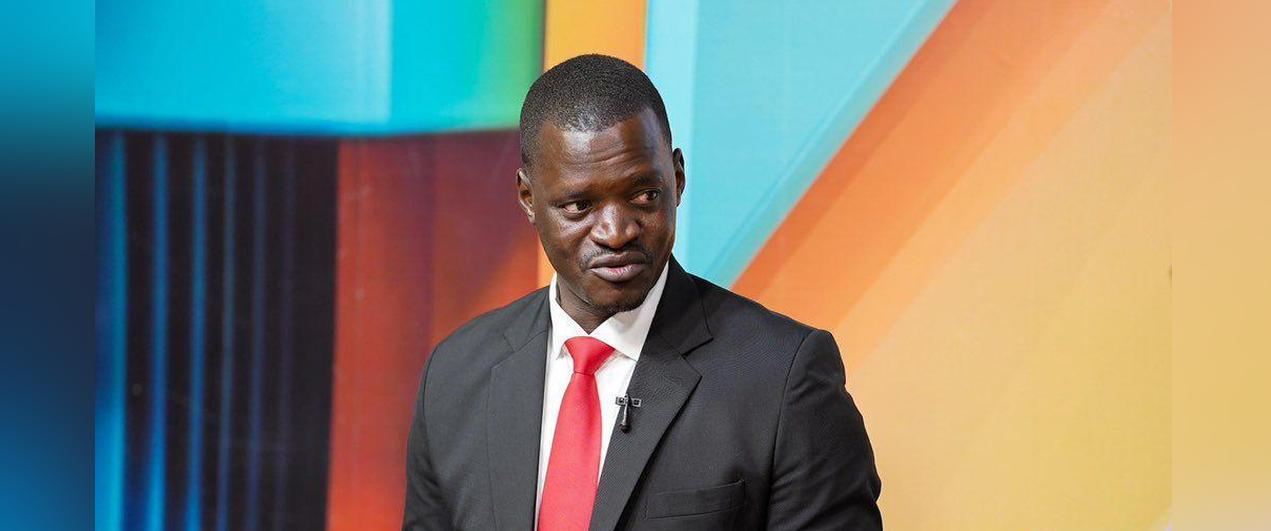
Africa-Press – Uganda. The Secretary General of the Common Man’s Party (CMP), Moses Bigirwa, has said recent political dialogue between opposition legislators and President Yoweri Museveni is weakening the opposition, amid growing debate within opposition ranks.
Speaking during Sanyuka Morning Xpress on Wednesday, Bigirwa addressed both his party’s recent electoral performance and the broader state of opposition politics in Uganda.
“In politics, there is no number two; we all performed poorly. As the Common Man’s Party, we were a new political party and were gazetted only 20 days before nominations,” he said.
CMP, chaired be former Kawempe South Member of Parliament Mubarak Munyagwa Sserunga, was launched after Munyagwa publicly distanced himself from the Forum for Democratic Change (FDC) in June 2024, citing poor management under the current leadership. According to the official tally, Munyagwa emerged seventh polling 31,666 votes, representing 0.29 percent. Bigirwa acknowledged the party’s challenges but emphasized that its late registration significantly limited its ability to mobilize and compete effectively.
Bigirwa criticized the recent engagement between a group of opposition Members of Parliament and President Museveni, arguing that such dialogue risks weakening collective opposition efforts.
“The dialogue is weakening the opposition. Opposition members took that step because they no longer see anything meaningful happening within the opposition,” he said.
Bigirwa’s remarks come amid intensified debate following last week’s meeting between President Museveni and a delegation of opposition legislators led by Mawokota South MP Yusuf Nsibambi (FDC). The delegation included Okot Bitek (Kioga County, FDC), Moses Kabusu (Kyamuswa County, PFF), Roland Ndyomugyenyi (Rukiga County), Fred Kayondo (Mukono South, DP), Richard Lumu (Mityana South, DP), and former Kawempe North MP Latif Ssebagala Ssengendo, among others.
In an exclusive interview with NBS Television on Friday, Nsibambi said the discussions focused on national stability, peace, and reconciliation in the wake of what he described as a tense post-election environment.
“The talks were about easing political tensions and promoting unity for development and stability,” he said.
According to Nsibambi, the delegation raised concerns about the continued detention of individuals arrested in connection with political activities and appealed to President Museveni to consider pardoning hundreds of political detainees.
They also called for an independent investigation into the continued detention of Muhammad Muwanga Kivumbi, the Buganda Deputy President of the National Unity Platform (NUP) and Member of Parliament for Butambala County.
However, Nsibambi’s decision to engage the President without broader consultation has drawn criticism from sections of the opposition. Some leaders accused him of acting unilaterally and undermining collective opposition positions.
Defending his actions, Nsibambi maintained that he acted independently and in the national interest.
“No one sent me. I am an elected MP, and I will engage with whoever I believe is necessary for the good of my constituents and the country,” he said.