Africa-Press – Uganda. The Private Sector Development (PSD) Programme Secretariat at the Ministry of Finance, Planning and Economic Development has convened its annual review, placing business formalisation at the centre of discussions as Uganda records mixed performance under the Third National Development Plan (NDP III).
Held under the theme, “Strengthening Formalisation under the NDP IV,” the review provides PSD programme members an opportunity to assess progress against NDP III targets and identify priorities for the next planning cycle.
The meeting brings together policymakers, private sector players, academia, and development partners to evaluate achievements and agree on reforms to strengthen private sector competitiveness.
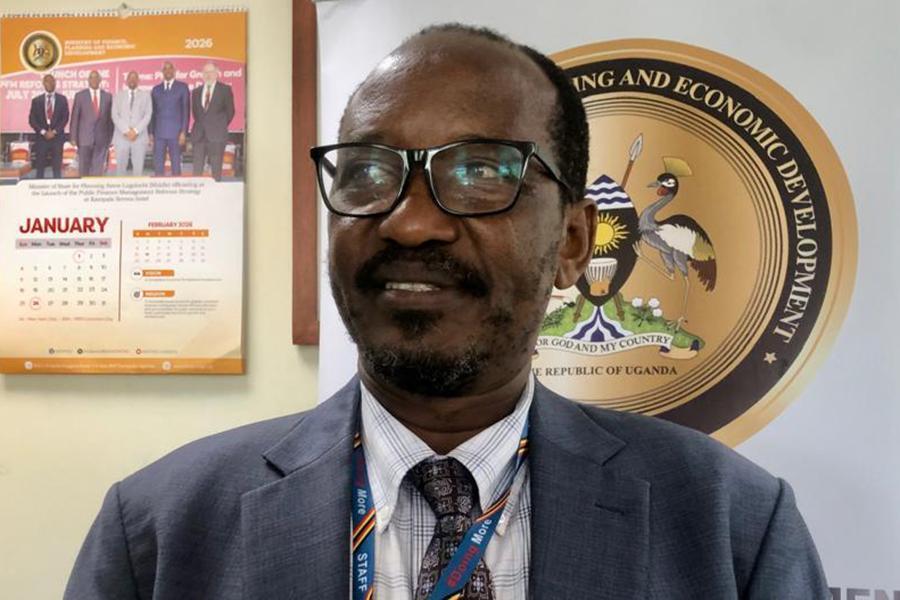
According to Anthony Kintu Mwanje, Head of the PSD Programme Secretariat, the programme under NDP III aimed to enhance the competitiveness of the private sector and drive sustainable, inclusive growth through targeted interventions addressing structural challenges.
“These interventions were designed to mitigate constraints faced by businesses, particularly micro, small, and medium enterprises,” Kintu said.
Key challenges continue to weigh on private sector growth, including low survival and transition rates of MSMEs, high costs of doing business, limited access to key markets, a large informal sector, and the private sector’s limited ability to benefit from public investment opportunities.
During the annual review, stakeholders are expected to receive detailed feedback on the programme’s performance, while private sector representatives will share their perspectives on the real impact of achievements reported by Ministries, Departments, and Agencies (MDAs).
Performance across the programme’s key results was mixed. Strong performance was recorded in exports, with total exports reaching $13,190.6 million, exceeding the NDP III annual target of $7,356 million.
Access to affordable credit also improved, as non-commercial lending to key growth sectors rose to 4% of GDP, above the target of 3%.
However, other targets were missed. Public contracts awarded to local firms remained low at 59.9%, against the NDP III target of 80%, and the informal sector’s share of the economy stayed high at 54.75%, above the targeted 45%.
“These results underscore the need to intensify business formalisation, strengthen local supplier development, and deepen reforms that enable Ugandan firms to compete effectively in domestic, regional, and global markets,” Kintu said.
He noted that NDP III recognised informality as a major constraint to private sector development, inclusive growth, and socio-economic transformation.
The plan targeted a reduction in informality from 51% in FY 2018/19 to 45% by FY 2024/25.
However, Uganda Bureau of Statistics data shows informality accounted for about 54.5% of GDP by the end of FY 2023/24.
“This increase in informality partly explains the persistently low tax-to-GDP ratio Uganda has recorded over the years,” Kintu observed.
Informal employment has also risen, from 90.7% of total employment in FY 2016/17 to 92% in FY 2020/21, according to the National Labour Force Survey.
He partly attributed the rise to COVID-19, which forced many people into home-based and online work outside formal regulatory frameworks.
Despite these challenges, some positive developments emerged. Average lending rates declined from about 22% at the start of NDP III to around 18% by the end of the plan period, easing financing conditions for businesses.
To encourage formalisation, government has implemented several reforms, including the Taxpayer Register Expansion Programme (TREP), the Electronic Fiscal Receipting and Invoicing System (EFRIS), physical and electronic one-stop business centres by the Uganda Registration Services Bureau, instant Tax Identification Number registration, and online trade licence registration at Kampala Capital City Authority.
The high-level review is expected to attract the Speaker of Parliament, ministers responsible for the PSD programme, ministers from complementary sectors such as Trade, Finance, Works, Energy, and Culture, as well as permanent secretaries, chief executives of more than 20 PSD institutions, and representatives from academia.