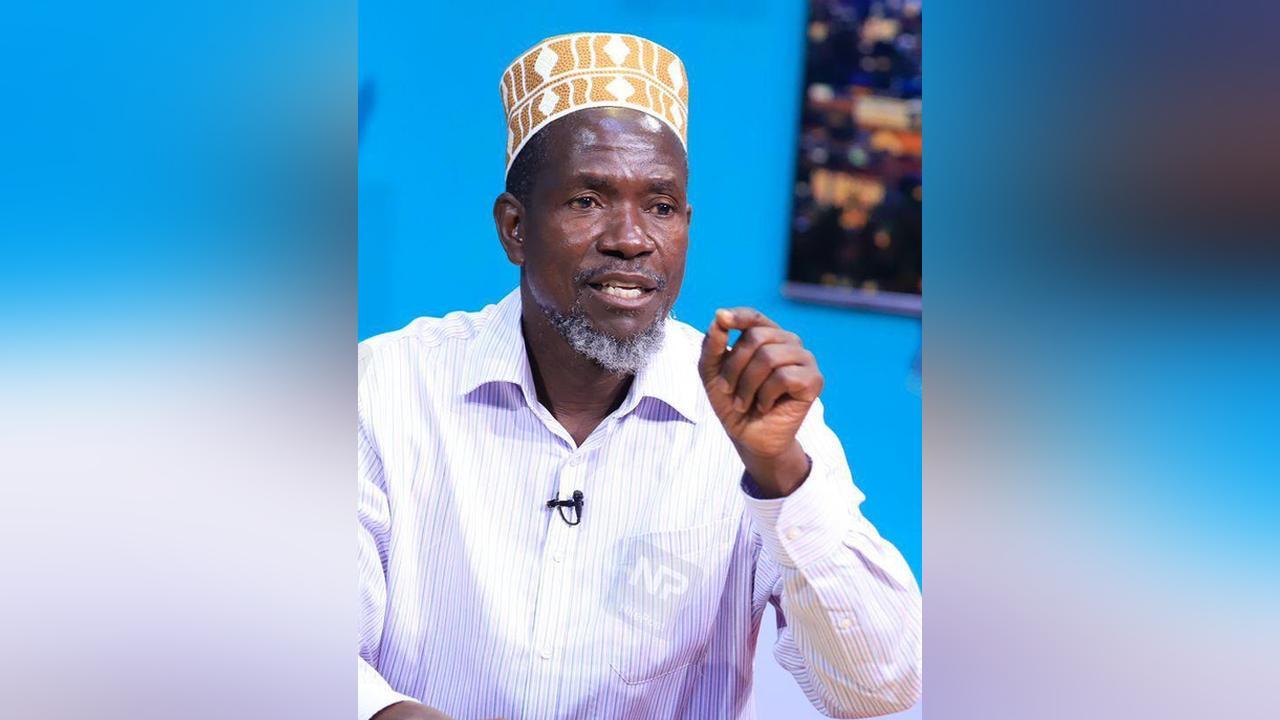
Africa-Press – Uganda. Academic and political analyst Idd Kasozi has described the annual commemoration of Archbishop Janani Luwum as both sensitive and emotional, arguing that public reactions to the slain church leader’s legacy are shaped largely by personal experience and political perspective.
Speaking on Monday morning on NBS Television’s Morning Breeze programme, Kasozi said the long-running debate over whether Luwum’s memorial should be viewed as a celebration or a solemn reflection remains unresolved.
“It depends where you are standing. This matter is both sensitive and emotional,” he said.
Luwum was killed in 1977 during the regime of Idi Amin, in circumstances that remain historically contested.
While he is widely regarded as a martyr who stood against state brutality, Kasozi said differing accounts and political interpretations continue to shape public opinion about his death.
“When you read different writers, you find different stories,” he said, pointing to conflicting narratives surrounding the archbishop’s killing.
Kasozi stressed that, regardless of interpretation, Luwum’s death was unjustifiable.
“He was a human being. The way his life was taken brutally is not acceptable. Nobody should justify it, nobody should wish it,” he said.
However, he argued that Uganda’s history contains many other painful episodes that have not received similar national recognition, creating what he described as contradictions in public memory.
“There are families who lost loved ones in similar circumstances who may ask why this one is commemorated and theirs is not,” he said, referring to past politically charged killings and unresolved deaths.
Kasozi also questioned whether it is contradictory for a government accused of human rights violations to champion Luwum’s commemoration as a public holiday.
“The same government that declared the day a public holiday has, for years, neglected the memorial site,” he said. “Is it a contradiction? Somehow it is.”
He urged Ugandans to move beyond political symbolism and instead treat the commemoration as a collective commitment to preventing future violence.
“Let us look at it from a human perspective,” he said. “All of us should stand up and say never again in our history should we see people killed in unstable political transitions.”
He warned that ongoing incidents of violence and unresolved grievances suggest the country has yet to fully learn from its past.
“We are seeing it,” he said. “There are families still crying.”
Luwum died on February 16, 1977, after being arrested and later killed on the orders of President Amin. The third Archbishop of the Church of Uganda had spoken out against human rights abuses and extrajudicial killings.
Although authorities initially claimed he died in a car crash, it later emerged that he had been shot.
Uganda commemorates him every February 16, with 2026 marking the 49th anniversary of his death.
He is honoured globally as a Christian martyr, with a statue at Westminster Abbey. National prayers, pilgrimages to Mucwini, and community events continue to mark his legacy.