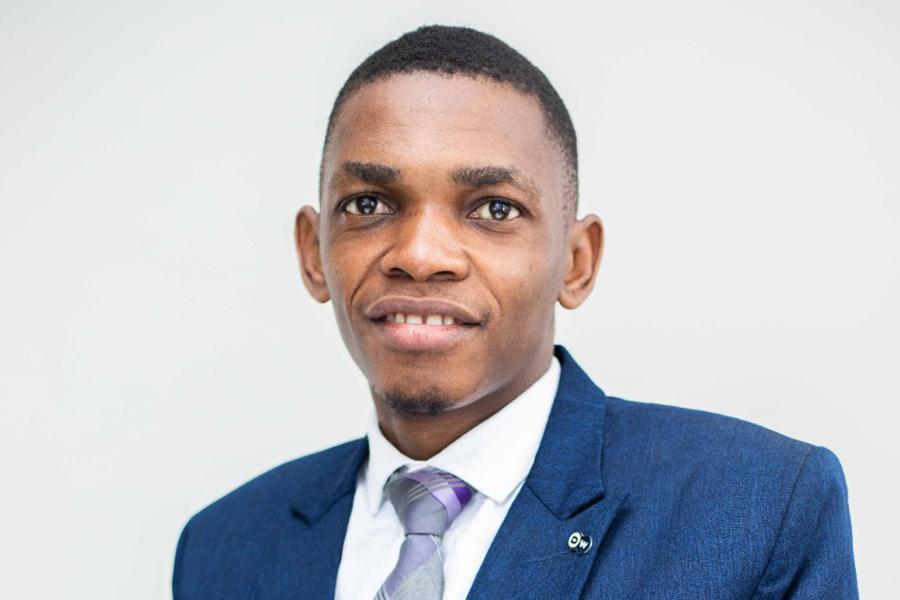
Africa-Press – Uganda. NBS News Editor Paul Kayonga has published a landmark peer-reviewed study in the International Journal of Advanced Research, advancing scholarly and professional understanding of investigative journalism in Uganda.
The study, titled “The Practice of Investigative Journalism in Uganda,” was published on March 17, 2026, and has earned Kayonga a certificate of publication from the East African Nature and Science Organization, marking a significant recognition of his work.
Kayonga, a senior reporter and editor at Next Media, examines how investigative journalism is practiced within Ugandan newsrooms, revealing that the discipline is largely driven by individual initiative rather than structured institutional support.
Drawing on in-depth interviews with 10 investigative journalists, the research provides one of the most detailed accounts of the field, highlighting both its strengths and systemic challenges.
According to the study, “becoming an investigative journalist is often a personal initiative driven by passion and circumstances,” rather than a result of formal recruitment systems within media organisations.
The findings show that most journalists transition into investigative reporting from general newsroom roles, building expertise through experience, curiosity, and exposure to complex stories.
“No journalist in Uganda’s newsrooms is recruited specifically to be an investigator,” one respondent is quoted as saying.
The study outlines investigative journalism as a structured and demanding process involving multiple stages, including identifying story ideas, verifying their authenticity, developing a pitch, and executing the investigation.
Story ideas, the research finds, often originate from tips provided by trusted sources, patterns observed in news coverage, or persistent questioning by journalists seeking deeper explanations.
However, the study emphasises that rigorous verification is essential before pursuing any investigation. Journalists must assess credibility, gather preliminary evidence, and evaluate potential risks.
“It starts with you doing the prima facie. Is there evidence to what you’re saying? What else can you point me to?” one participant explained.
The research warns that failure to properly verify information can lead to flawed and costly investigations.
Once a story is deemed viable, journalists develop a pitch outlining scope, targets, tools, and safety considerations, a stage described as critical for maintaining clarity and direction.
Execution involves a range of techniques, including observation, cultivating sources, interpersonal communication, and, in some cases, covert recording. However, the study underscores that trust and credibility remain central to the process.
“I cultivate sources that become comfortable with talking to me… It also helps that they have seen me doing that work,” one journalist said.
Ethical considerations also feature prominently, with journalists expected to protect sources, ensure accuracy, and provide a right of reply.
“It can’t be complete when it is one-sided,” a respondent noted, stressing fairness in reporting.
The study further highlights the “duty of care” journalists must observe to avoid causing unnecessary harm while pursuing public interest stories.
Despite its importance, investigative journalism in Uganda faces significant challenges, including threats, intimidation, and financial constraints. Journalists often operate in high-risk environments with limited institutional backing.
The research notes that investigative journalism “faces challenges such as risk concerns, coercion, and intimidation,” factors that can discourage deeper reporting.
It also points to budget constraints within media organisations, where resource-intensive investigative work is often deprioritised in favour of routine news coverage.
In addition, many investigative journalists work in isolation, limiting collaboration and reducing the overall impact of their work.
Historically, investigative journalism in Uganda gained prominence during media liberalisation in the early 1990s, initially within print before expanding into broadcast platforms.
The study reaffirms the role of investigative journalism as a watchdog in democratic societies, exposing wrongdoing and shaping public discourse.
“Investigative journalism has the potential to set the agenda on public affairs,” the study states.
However, it also identifies a gap in academic research on how investigative journalism operates within mainstream newsrooms in Uganda.
To address these challenges, Kayonga recommends increased investment by media organisations, including dedicated budgets for investigative reporting and improved working conditions for journalists.
The study also calls for the creation of collaborative networks to enable resource-sharing among journalists and media houses.
“Media houses should collaborate and share resources to foster investigative journalism,” the study advises.
Additional recommendations include strengthening editorial independence and conducting further research into factors that influence impactful investigative journalism, such as media ownership and audience engagement.
Overall, the publication marks a significant contribution to both academia and the media industry, positioning Kayonga’s work as a reference point for understanding and strengthening investigative journalism in Uganda.