Africa-Press – Uganda. The Netherlands Institute for Multiparty Democracy (NIMD), in partnership with the National Council for Persons with Disabilities, has intensified efforts to promote inclusive governance by empowering leaders representing persons with disabilities (PWDs) in Eastern Uganda.
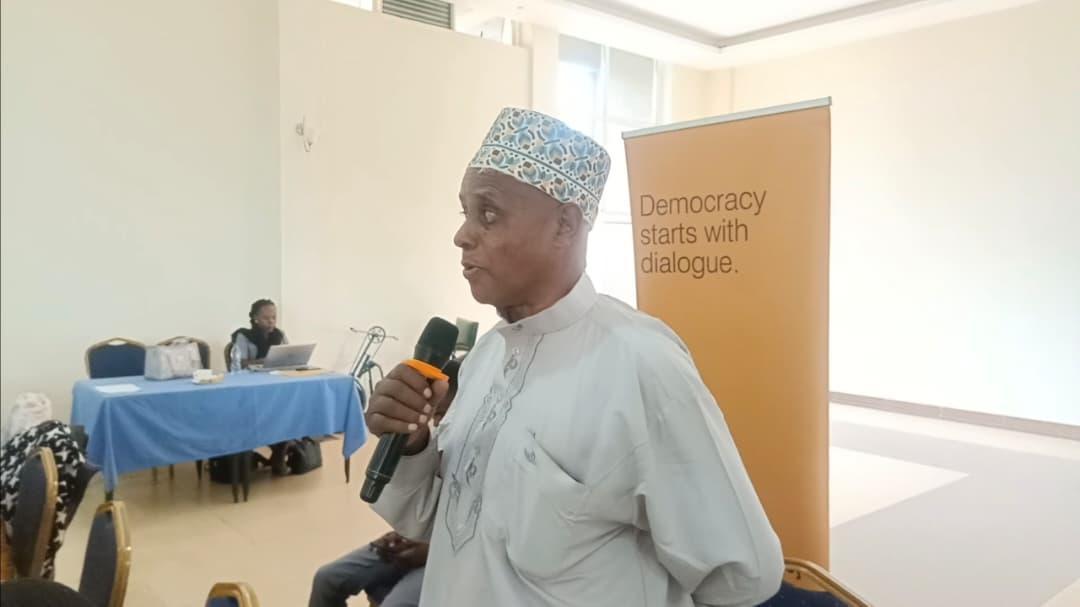
The initiative, held in Mbale City, brought together newly elected district leaders representing persons with disabilities from selected districts. It aimed to equip them with critical skills to effectively advocate for the rights and interests of PWDs within government structures.
The program also seeks to address persistent challenges, including limited exposure, low confidence among leaders, and weak participation in governance processes.
David Mugara, Programme Manager at NIMD, said the intervention is informed by a 2015 study that revealed significant gaps in inclusion and leadership capacity among special interest groups.
“Many leaders take up positions without adequate knowledge of their mandate or the skills needed to influence decision-making. This training is part of building quality leadership,” Mugara said.
He described the political and administrative space as highly competitive, often placing leaders with disabilities at a disadvantage. Mugara also noted that the high turnover following recent elections has further compounded the challenge.
“From the sample in this room, only about five or six leaders have returned from previous terms. The majority are new and likely to face similar challenges,” he added.
Participants received training in legislation, lobbying, advocacy, and strategic communication—skills considered essential for engaging in policy processes and advancing opportunities for persons with disabilities.
The program also highlighted existing government initiatives, including development programs with designated slots for PWDs, and urged leaders to actively push for inclusion.
Namukasa Lilian, Programmes Manager at the National Council for Persons with Disabilities, said the training forms part of broader efforts to strengthen the role of PWD leaders following the recent elections.
“We are equipping them with practical skills to advocate effectively, lobby for resources, and ensure that government programs such as the Parish Development Model (PDM) are inclusive,” she said.
Namukasa emphasized that empowered leadership is key to advancing the rights of persons with disabilities and influencing policy decisions. She added that strengthening leadership among PWDs will be critical in achieving inclusive development goals and ensuring that no one is left behind.
“We will not stop at hotels. We will go to the communities, to the barazas, where people can easily access this information,” she said.
Despite the existence of legal frameworks promoting inclusion, participants noted that enforcement remains weak. Some cited inconsistencies in employment practices, where quotas for persons with disabilities are often overlooked.
“The laws are there, but they are not being implemented. You are told to point to specific provisions, and even then, they are dismissed,” one participant said.
Others highlighted operational challenges, including inadequate funding and staffing within disability councils.
“We are expected to monitor entire districts with minimal facilitation. The mandate is big, but the support is small,” another participant noted.
As Uganda advances toward its long-term development agenda, including Vision 2040, initiatives like this are expected to bridge gaps in representation and amplify the voices of persons with disabilities in shaping policies that affect their lives.
“Vision 2040 must work for everyone, including persons with disabilities,” Kasariri emphasized.